Future of Learning: Innovative US K-12 Pedagogies 2026
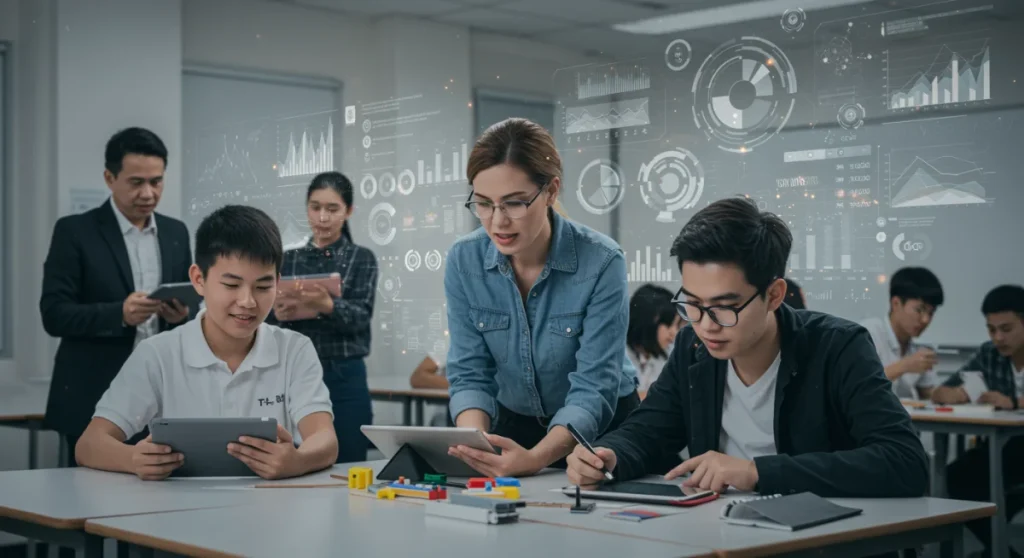
The future of learning in US K-12 education by 2026 is being shaped by groundbreaking pedagogies such as personalized learning, project-based learning, and an intensified focus on digital literacy, moving beyond traditional models.
The landscape of education is constantly evolving, and by 2026, US K-12 schools are set to embrace transformative approaches. This article explores how future learning pedagogies are redefining the classroom experience, moving beyond rote memorization to foster deeper engagement and relevant skills for a rapidly changing world.
personalizing the learning journey: tailored education for every student
Personalized learning is not a new concept, but its implementation in US K-12 education by 2026 is reaching unprecedented levels of sophistication. This approach recognizes that each student is unique, possessing distinct learning styles, paces, and interests. Technology plays a pivotal role in making this a reality, allowing educators to customize curricula and assignments to meet individual needs effectively.
The goal is to move away from a one-size-fits-all model, ensuring that every student receives an education that is not only challenging but also deeply relevant to their personal growth and future aspirations. This shift requires a flexible educational framework and robust digital tools that can adapt to diverse learning pathways.
adaptive learning platforms and AI tutors
One of the most significant advancements in personalized learning is the rise of adaptive learning platforms. These platforms leverage artificial intelligence to assess a student’s current understanding and then deliver content and exercises that are precisely matched to their skill level. This ensures that students are continually challenged without being overwhelmed, fostering a sense of accomplishment and sustained motivation.
- AI tutors provide instant, individualized feedback, helping students grasp complex concepts.
- Algorithms identify learning gaps and recommend targeted resources for remediation.
- Students can progress at their own pace, mastering topics before moving on.
- Data analytics inform teachers about student progress, allowing for timely interventions.
The integration of AI also extends to virtual tutoring systems, which offer on-demand support outside of traditional classroom hours. These systems can explain concepts in multiple ways, provide practice problems, and even simulate real-world scenarios, making learning more interactive and accessible.
flexible learning environments and student agency
Beyond technology, personalized learning also emphasizes creating flexible learning environments where students have a greater say in their educational journey. This includes offering choices in how they learn, what resources they use, and how they demonstrate their understanding. This fosters a sense of ownership and responsibility, key components of lifelong learning.
Teachers transition from being sole knowledge providers to facilitators and mentors, guiding students through their personalized pathways. This requires a strong understanding of each student’s strengths and areas for development, as well as the ability to curate diverse learning experiences. The ultimate outcome is a generation of learners who are self-directed, resilient, and deeply engaged in their education.
project-based learning: cultivating real-world skills and critical thinking
Project-based learning (PBL) is gaining significant traction in US K-12 education, recognized for its ability to develop critical thinking, collaboration, and problem-solving skills essential for the 21st century. Instead of passively receiving information, students actively engage in extended inquiries, tackling complex, real-world challenges that require them to apply knowledge from various subjects.
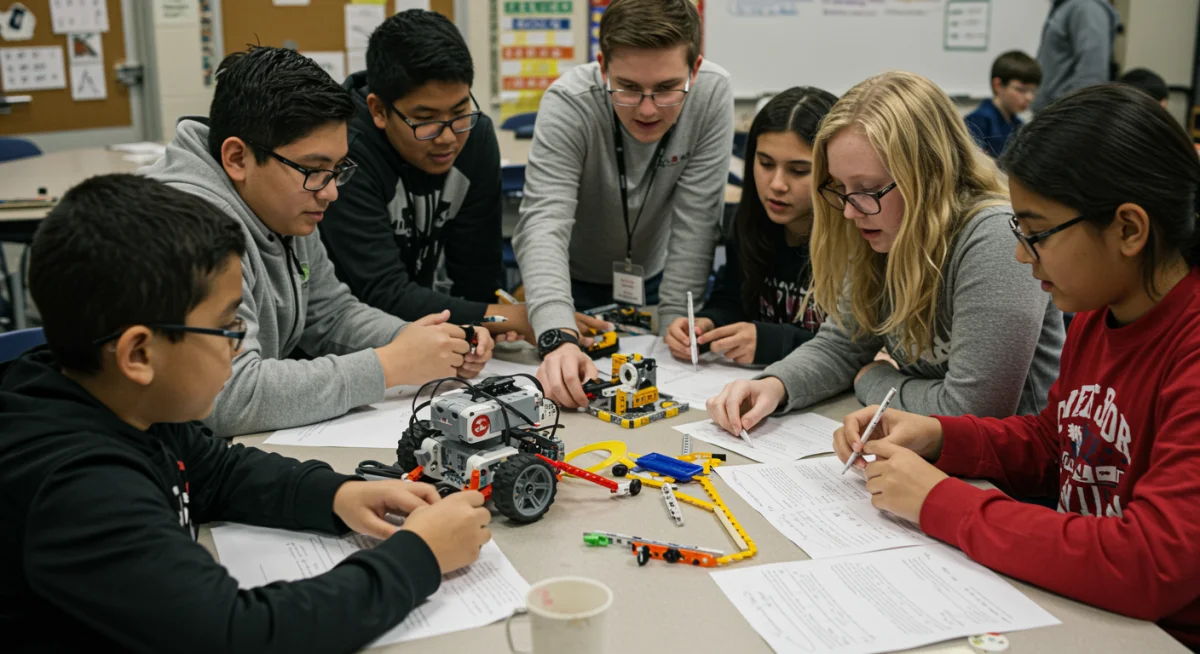
This pedagogical approach transforms the classroom into a dynamic workshop where students work individually and in teams to create tangible products or solutions. The authenticity of these projects often involves community engagement, bringing real-world context directly into the learning process and making education more meaningful.
interdisciplinary exploration and authentic problems
PBL inherently encourages interdisciplinary learning, breaking down the traditional silos between subjects. A single project might require students to apply concepts from science, mathematics, literature, and social studies, mirroring the interconnected nature of real-world problems. This holistic approach helps students see the relevance of their learning and how different areas of knowledge converge.
- Projects often address local or global issues, making learning relevant and impactful.
- Students develop research skills by gathering information from diverse sources.
- The process involves critical analysis, synthesis of information, and creative problem-solving.
- Authentic problems motivate students to delve deeper and take ownership of their learning.
Educators design projects that are open-ended, allowing for multiple pathways to solutions and encouraging innovative thinking. This contrasts sharply with traditional assignments that often have a single correct answer, preparing students for a world where ambiguity and complex challenges are the norm.
collaboration, communication, and presentation skills
A cornerstone of PBL is the emphasis on collaboration and communication. Students learn to work effectively in teams, negotiate ideas, resolve conflicts, and leverage each other’s strengths. These are invaluable soft skills that are highly sought after in higher education and the professional world.
Furthermore, students are typically required to present their projects to an audience, which could include classmates, teachers, parents, or even community members. This develops crucial presentation skills, including public speaking, visual communication, and the ability to articulate complex ideas clearly and persuasively. The iterative nature of PBL, involving feedback and revision, also instills resilience and a growth mindset.
digital literacy and citizenship: preparing for a connected world
In an increasingly digital world, digital literacy and citizenship are no longer optional but essential components of K-12 education. By 2026, these skills are being explicitly integrated across the curriculum in US schools, preparing students not just to use technology, but to do so responsibly, critically, and effectively.
This pedagogy extends beyond basic computer skills, encompassing media literacy, data privacy, cyber ethics, and the ability to navigate online information with discernment. The goal is to empower students to be informed, safe, and productive digital citizens who can contribute positively to the online community.
media literacy and critical evaluation of information
The proliferation of information online, both factual and misleading, necessitates strong media literacy skills. Students are being taught how to critically evaluate sources, identify bias, and distinguish between credible and unreliable information. This is crucial for developing informed opinions and making sound decisions in a complex digital landscape.
- Analyzing news articles, social media posts, and online videos for accuracy and intent.
- Understanding the algorithms that shape online content and personal feeds.
- Identifying phishing attempts, scams, and other online threats.
- Developing strategies for fact-checking and cross-referencing information.
Educators are designing lessons that challenge students to deconstruct digital messages, understand their persuasive techniques, and recognize the impact of media on perceptions and beliefs. This fosters a healthy skepticism and an analytical approach to consuming digital content.
cyber ethics, safety, and responsible online behavior
Digital citizenship also involves understanding the ethical implications of online actions and practicing safe online behaviors. Schools are implementing comprehensive curricula on cyberbullying prevention, data privacy, and the responsible use of social media. The aim is to cultivate a culture of respect and empathy in online interactions.
Students learn about their digital footprint, the permanence of online content, and the importance of protecting personal information. Discussions around intellectual property rights, online etiquette, and the legal aspects of digital content are becoming standard. This prepares them to navigate the complexities of online interactions with integrity and awareness, fostering a positive and secure digital presence.
integrating social-emotional learning with academic rigor
Beyond academic content, US K-12 education in 2026 is placing a greater emphasis on integrating social-emotional learning (SEL) with academic rigor. This pedagogy recognizes that a student’s emotional well-being, self-awareness, and relational skills are fundamental to their academic success and overall life satisfaction. SEL is no longer a separate program but is woven into the fabric of daily classroom activities and school culture.
The approach aims to equip students with the tools to manage emotions, set and achieve positive goals, feel and show empathy for others, establish and maintain positive relationships, and make responsible decisions. This holistic development ensures that students are not only intellectually capable but also emotionally intelligent and socially competent.
developing emotional intelligence and self-regulation
Curricula are being designed to explicitly teach emotional intelligence, helping students identify and understand their own feelings and those of others. This includes strategies for self-regulation, such as mindfulness techniques, conflict resolution skills, and stress management. By fostering these abilities, students are better equipped to handle academic pressures and personal challenges.
- Activities that encourage self-reflection and personal goal setting.
- Role-playing scenarios to practice empathy and perspective-taking.
- Mindfulness exercises integrated into daily routines to reduce anxiety.
- Opportunities for students to lead and collaborate, building confidence.
Teachers are trained to create supportive classroom environments where students feel safe to express their emotions and learn from their mistakes. This involves active listening, validating feelings, and providing constructive feedback that focuses on growth rather than judgment.
fostering positive relationships and community engagement
SEL also emphasizes the importance of building positive relationships within the school community and beyond. Students learn about effective communication, teamwork, and how to resolve disagreements constructively. This strengthens peer bonds and creates a more inclusive and harmonious learning environment.
Community engagement initiatives are often linked to SEL, providing students with opportunities to apply their social-emotional skills in real-world contexts. Volunteering, mentorship programs, and collaborative projects with local organizations help students develop a sense of civic responsibility and understand their role in contributing to a larger community. This integration ensures that academic achievements are complemented by strong character development.
assessment evolution: moving beyond standardized tests
The future of learning in US K-12 education by 2026 also necessitates a significant evolution in assessment practices. While standardized tests may still have a role, there’s a growing recognition that a more comprehensive and authentic approach to evaluating student learning is needed. This involves a shift towards continuous, formative assessments, performance-based tasks, and portfolio evaluations that reflect the diverse ways students demonstrate mastery.
The goal is to provide a more accurate and holistic picture of student progress, moving beyond mere recall of facts to assess deeper understanding, critical thinking, creativity, and the application of knowledge in various contexts. This also empowers students by giving them a clearer understanding of their strengths and areas for improvement.
formative assessment and feedback loops
Formative assessments are becoming central to the learning process, providing ongoing feedback that guides both teaching and learning. These are low-stakes assessments designed to monitor student learning during instruction and provide continuous feedback to students and teachers. This allows for timely adjustments to instruction and personalized support.
- Daily checks for understanding through quick quizzes or exit tickets.
- Peer and self-assessment activities that encourage metacognition.
- Constructive feedback that focuses on growth areas rather than just grades.
- Technology-enabled tools that provide immediate feedback on assignments.
This continuous feedback loop helps students understand where they are in their learning journey and what steps they need to take to improve. It also enables teachers to identify common misconceptions and adapt their teaching strategies accordingly, ensuring that no student is left behind.
performance-based assessments and digital portfolios
Performance-based assessments require students to apply their knowledge and skills to complete a task or create a product, mirroring real-world challenges. These can include presentations, experiments, debates, or complex problem-solving scenarios. Such assessments provide a richer understanding of what students truly know and can do.
Digital portfolios are also gaining prominence as a way to showcase a student’s growth over time. These online collections of student work, including projects, essays, artistic creations, and reflections, offer a comprehensive view of their learning journey. Portfolios allow students to curate their best work, reflect on their learning process, and effectively communicate their capabilities to a wider audience, including future employers or higher education institutions.
teacher as facilitator: empowering educators for innovation
The successful implementation of these innovative pedagogies hinges significantly on the role of the teacher. By 2026, the traditional image of a teacher as a lecturer dispensing information is increasingly being replaced by that of a facilitator, mentor, and guide. This shift requires ongoing professional development, access to new tools, and a supportive administrative environment that empowers educators to embrace innovation.
Empowering educators means providing them with the autonomy to experiment with new teaching methods, personalize their instruction, and continuously refine their craft. It also involves fostering a collaborative culture among teachers, allowing them to share best practices and collectively address challenges.
continuous professional development and collaborative networks
To effectively implement personalized learning, PBL, and digital literacy, teachers require continuous professional development that goes beyond one-off workshops. This includes training in new technologies, pedagogical strategies, and assessment methods. Many districts are investing in ongoing learning communities where teachers can share experiences, receive coaching, and develop new skills.
- Workshops focusing on integrating AI tools into classroom instruction.
- Peer-to-peer mentoring programs for new pedagogical approaches.
- Online collaborative platforms for sharing resources and lesson plans.
- Opportunities for teachers to attend conferences and bring back new ideas.
These collaborative networks are vital for fostering a sense of community among educators and ensuring that they feel supported in their efforts to innovate. Sharing successes and challenges allows for collective problem-solving and accelerates the adoption of effective practices across schools.
administrative support and resource allocation
Administrative support is crucial for creating an environment where innovative pedagogies can thrive. This includes providing the necessary technological infrastructure, allocating resources for professional development, and establishing clear guidelines that encourage experimentation while maintaining accountability. Leaders must champion innovation and communicate its value to all stakeholders.
Furthermore, administrators play a key role in advocating for smaller class sizes, which can facilitate more personalized instruction, and ensuring that teachers have adequate planning time. By investing in their educators, schools are investing in the future of their students, creating a dynamic and responsive educational system that prepares learners for success in an ever-changing world.
| Key Pedagogy | Brief Description |
|---|---|
| Personalized Learning | Tailoring education to individual student needs, pace, and interests using technology and flexible environments. |
| Project-Based Learning (PBL) | Students engage in real-world challenges, fostering critical thinking, collaboration, and problem-solving through hands-on projects. |
| Digital Literacy & Citizenship | Equipping students to use technology responsibly, critically evaluate information, and navigate online environments safely. |
| Social-Emotional Learning (SEL) | Integrating emotional intelligence, self-regulation, and positive relationship skills into the core curriculum. |
frequently asked questions about future learning pedagogies
Personalized learning is an educational approach that tailors the curriculum, instructional methods, and pace of learning to meet the unique needs, interests, and learning styles of individual students. It often leverages technology to provide adaptive content and feedback.
Project-based learning (PBL) helps students develop critical thinking, problem-solving, collaboration, and communication skills by engaging them in extended, real-world inquiries. It makes learning more relevant and encourages deeper understanding through hands-on application.
Digital literacy is crucial because it equips students to navigate the digital world responsibly and effectively. It encompasses critical evaluation of online information, understanding cyber ethics, protecting privacy, and using technology safely and productively for communication and learning.
Teachers transition from traditional instructors to facilitators, mentors, and guides. They curate learning experiences, provide personalized support, foster collaboration, and empower students to take ownership of their learning journey, requiring continuous professional development and adaptability.
Assessments are evolving beyond standardized tests to include more formative, continuous evaluations, performance-based tasks, and digital portfolios. This provides a holistic view of student progress, assessing deeper understanding, critical thinking, and application of knowledge rather than just memorization.
conclusion
The transformation of US K-12 education by 2026 through innovative pedagogies like personalized learning, project-based approaches, and a strong emphasis on digital literacy signals a profound shift towards more student-centered and future-ready educational models. These changes are not merely incremental; they represent a fundamental reimagining of how students learn, how teachers teach, and what skills are prioritized. By fostering adaptability, critical thinking, and social-emotional intelligence, these pedagogies are preparing a generation of learners who are not only academically proficient but also well-equipped to thrive in an increasingly complex and interconnected world. The commitment to continuous innovation, supported by robust professional development and administrative backing, will ensure that the future of learning remains dynamic, equitable, and profoundly impactful for every student.
Autor