Real Estate Market Outlook 2026: US Investment Trends

The 2026 US real estate market is poised for dynamic shifts, presenting both compelling investment opportunities and inherent risks across residential, commercial, and industrial sectors, influenced by evolving economic factors and demographic trends.
As we cast our gaze towards the future, understanding the Real Estate Market Outlook 2026: Investment Opportunities and Risks Across the US becomes paramount for investors, homeowners, and industry professionals alike. The landscape is ever-evolving, shaped by economic shifts, technological advancements, and demographic changes. What does this mean for your portfolio or your next big move?
economic drivers shaping the 2026 real estate market
The trajectory of the US real estate market in 2026 will largely be dictated by a confluence of macroeconomic factors. Interest rates, inflation, and employment figures are not just abstract numbers; they are the bedrock upon which real estate values and investment decisions are built.
Analysts anticipate a more stabilized interest rate environment compared to the volatility seen in previous years. This stability could provide a clearer path for both borrowers and lenders, reducing uncertainty in financing and making long-term investment planning more predictable. However, the precise level of these rates will still influence affordability and investor appetite.
inflationary pressures and their impact
Inflation, while hopefully moderated, will remain a significant consideration. Persistent inflationary pressures can erode purchasing power and increase construction costs, impacting profitability for developers and potentially slowing down new housing starts. Conversely, real estate has historically been seen as a hedge against inflation, as property values and rents tend to rise with the cost of living.
- Construction Costs: Expect continued scrutiny on material and labor costs.
- Rent Growth: Potential for steady rent increases in resilient markets.
- Property Values: Long-term appreciation driven by inflation hedging.
Employment figures are another critical indicator. A robust job market fuels demand for housing, both rental and ownership, and supports commercial activity. Regions with strong job growth, particularly in high-wage sectors, are likely to experience sustained real estate demand and appreciation. Conversely, areas facing economic contraction or job losses could see a softening in their local markets.
The overall economic health of the US, including GDP growth and consumer confidence, will provide the broader context. A growing economy generally fosters a healthy real estate market, encouraging investment and development. Monitoring these key economic drivers will be essential for making informed decisions in the 2026 market.
residential sector: opportunities and challenges
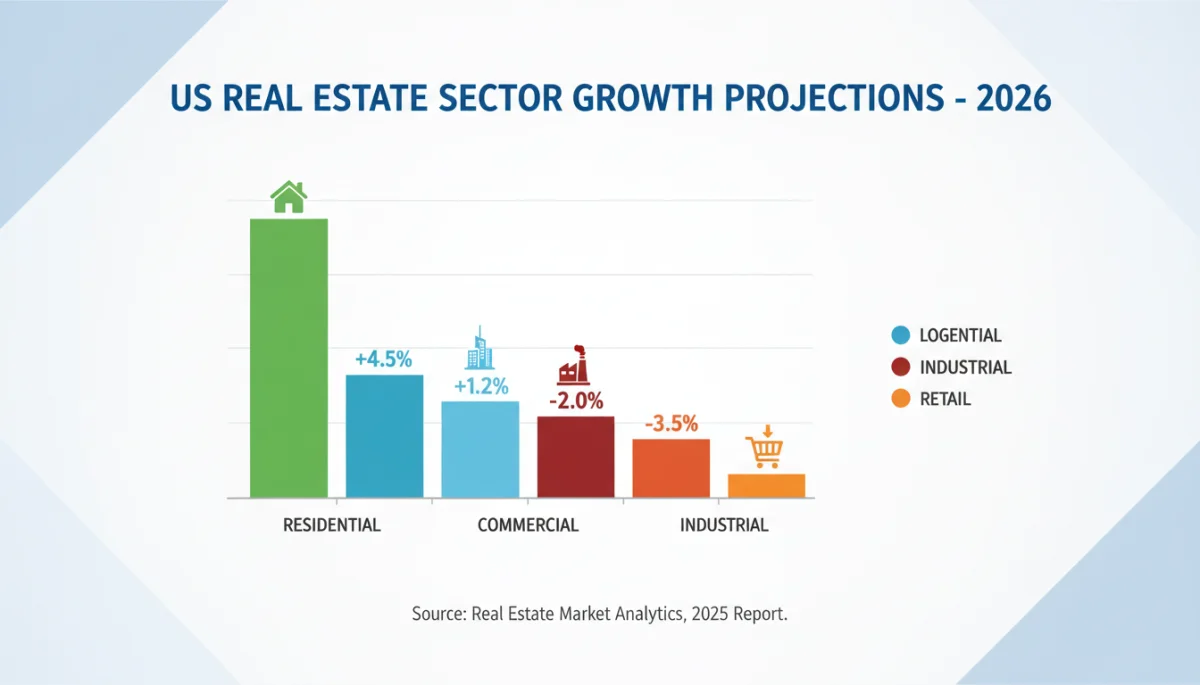
The residential real estate market in 2026 is expected to present a mixed bag of opportunities and challenges. Demographic shifts, particularly the ongoing millennial homeownership surge and the aging boomer population, will continue to shape demand patterns.
Affordability remains a central concern, especially in high-demand urban and suburban areas. While interest rates may stabilize, housing prices have seen significant appreciation in recent years. This could lead to a continued search for more affordable housing options in secondary markets or a greater reliance on rental properties.
evolving housing preferences
Consumer preferences are also evolving. There’s a growing demand for sustainable and energy-efficient homes, as well as properties that offer smart home technology. Remote work trends, while perhaps less impactful than during the pandemic’s peak, will still influence migration patterns, with some favoring larger homes in more suburban or rural settings over dense urban living.
- Single-Family Rentals: Continued strong demand for rental homes, especially in family-friendly areas.
- Affordable Housing: Persistent need for accessible housing solutions across income brackets.
- Sustainable Living: Increasing interest in eco-friendly and energy-efficient properties.
For investors, opportunities may lie in developing or acquiring properties in emerging growth markets, focusing on build-to-rent communities, or investing in properties that cater to specific demographic needs, such as active adult communities. The challenge will be navigating local market nuances and accurately assessing the long-term viability of specific submarkets.
The residential sector will require a nuanced approach, balancing national trends with hyper-local market conditions. Understanding the interplay of demographics, affordability, and evolving homeowner desires will be key to success in 2026.
commercial real estate: navigating transformation
Commercial real estate (CRE) continues its transformative journey into 2026, with significant divergence between sectors. The office market, still recalibrating from the widespread adoption of hybrid work models, faces ongoing challenges and opportunities for reinvention.
Conversely, industrial and logistics properties are expected to maintain their robust performance, driven by e-commerce expansion and the need for efficient supply chains. Retail, while facing headwinds in some areas, is also seeing a resurgence in experiential and neighborhood-focused formats.
office market adaptation
The office sector will likely see further differentiation. Premium, amenity-rich office spaces in desirable locations may continue to attract tenants, while older, less adaptable buildings could struggle with vacancies. Repurposing underutilized office buildings into residential units or mixed-use developments presents a significant opportunity for innovative investors.
- Industrial & Logistics: Strong demand driven by e-commerce and supply chain optimization.
- Experiential Retail: Growth in retail centers offering unique experiences beyond traditional shopping.
- Office Repurposing: Opportunities in converting outdated office spaces into new uses.
Hospitality and leisure properties will be influenced by travel trends and consumer spending habits. While domestic travel is expected to remain strong, international tourism recovery could further boost urban hotel markets. Investors in this sector will need to monitor economic stability and consumer confidence closely.
The commercial real estate market in 2026 demands a strategic approach, focusing on sectors with strong underlying demand drivers and adapting to the changing needs of businesses and consumers. Flexibility and innovation will be crucial for navigating this dynamic landscape.
emerging markets and regional hotspots
While national trends provide a broad overview, the US real estate market is fundamentally a collection of local markets. In 2026, certain emerging markets and regional hotspots are poised for significant growth and investment potential, often driven by specific economic factors or demographic shifts.
These areas typically exhibit strong job growth, favorable business climates, and an influx of new residents. They might not always be the traditional gateway cities but rather secondary or tertiary markets offering greater affordability and potential for appreciation.
factors driving regional growth
Technological hubs, particularly those outside of Silicon Valley, continue to attract talent and investment, fostering vibrant real estate markets. Cities investing in infrastructure, renewable energy, and advanced manufacturing are also creating fertile ground for both residential and commercial development. The Sun Belt states, in particular, are expected to continue their population and economic growth trajectories.
- Tech Hubs: Cities with growing tech industries beyond traditional centers.
- Infrastructure Investment: Regions benefiting from significant public and private infrastructure projects.
- Population Migration: Areas experiencing sustained inbound migration.
However, investing in emerging markets also carries risks. Rapid growth can lead to oversupply, and economic downturns can disproportionately impact less diversified economies. Thorough due diligence, including an understanding of local regulations, economic diversification, and future development plans, is essential.
Identifying these regional hotspots requires careful analysis of demographic data, economic forecasts, and local policy environments. The savvy investor in 2026 will look beyond the obvious and seek out markets with sustainable growth drivers and untapped potential.
risks and mitigation strategies for investors
Investing in the US Real Estate 2026 market, while offering significant potential rewards, is not without its risks. Understanding these potential pitfalls and developing robust mitigation strategies is crucial for protecting capital and ensuring long-term success.
One primary risk is economic uncertainty. While a stabilized interest rate environment is anticipated, unforeseen economic shocks, such as geopolitical events or unexpected inflation spikes, could impact market stability. Investors must consider various economic scenarios and their potential effects on property values, rental income, and financing costs.
market oversupply and valuation bubbles
Another risk is market oversupply in specific sectors or regions. Rapid development in response to perceived demand can lead to an excess of available properties, driving down rental rates and property values. This is particularly relevant in residential markets that have seen rapid price appreciation. Over-leveraging, or taking on too much debt, also poses a significant risk, especially if interest rates rise unexpectedly or property values decline.
- Economic Downturns: Prepare for potential recessionary impacts on demand and values.
- Interest Rate Hikes: Factor in higher borrowing costs and potential impact on cap rates.
- Regulatory Changes: Stay informed on zoning, environmental, and tax policy shifts.
Mitigation strategies include diversification across property types and geographic locations to spread risk. Conservative underwriting, focusing on properties with strong cash flow and manageable debt, is also vital. Additionally, staying informed about local market dynamics and having an exit strategy for each investment are critical components of risk management.
Finally, environmental risks, including climate change impacts and natural disasters, are increasingly important considerations. Investors should assess properties for resilience and potential exposure to these risks, incorporating insurance and adaptation measures into their financial planning.
innovations and technology in real estate
The 2026 real estate market will continue to be reshaped by technological advancements and innovative practices. These changes are not just about efficiency; they are fundamentally altering how properties are developed, managed, bought, and sold, creating new opportunities and demanding adaptation from industry players.
PropTech, or property technology, is at the forefront of this transformation. This encompasses everything from AI-powered analytics for market prediction to blockchain for secure property transactions and smart building technologies that enhance sustainability and tenant experience.
the rise of sustainable development
Sustainable development and green building practices are no longer niche concepts but mainstream expectations. Investors and developers are increasingly focusing on energy-efficient designs, renewable energy integration, and environmentally friendly materials, driven by both regulatory pressures and growing consumer demand for sustainable living and working spaces.
- AI & Data Analytics: Leveraging big data for market insights and predictive modeling.
- Smart Buildings: Enhancing operational efficiency and tenant comfort through integrated technology.
- Blockchain for Transactions: Increasing transparency and security in property dealings.
Virtual and augmented reality (VR/AR) are also changing the marketing and viewing experience, allowing potential buyers or tenants to tour properties remotely with immersive detail. This technology can broaden reach and streamline the sales process, particularly for international investors.
Furthermore, fractional ownership models and real estate crowdfunding platforms are democratizing access to real estate investments, allowing a broader range of individuals to participate in the market. Understanding and embracing these innovations will be key for competitive advantage and unlocking new investment avenues in the 2026 real estate landscape.
| Key Point | Brief Description |
|---|---|
| Economic Stability | Stabilized interest rates and controlled inflation are crucial for market predictability. |
| Residential Shifts | Demographics and affordability drive demand for diverse housing types. |
| CRE Transformation | Industrial strength, office adaptation, and experiential retail define commercial trends. |
| Risk Mitigation | Diversification, conservative financing, and market awareness are essential. |
frequently asked questions about the 2026 real estate market
Key factors include interest rates, inflation, and employment figures. Stabilized interest rates can boost confidence, while controlled inflation helps maintain purchasing power. Strong employment growth directly supports housing demand and commercial activity across the nation.
Opportunities are likely in emerging growth markets, build-to-rent communities, and properties catering to specific demographics like active adults. Focus on regions with strong job growth and favorable affordability trends outside traditional high-cost areas for better returns.
Remote work will continue to challenge the traditional office market, leading to demand for flexible, amenity-rich spaces. It will also drive opportunities for repurposing older office buildings and sustaining growth in suburban and secondary markets for commercial and residential properties.
Primary risks include economic uncertainty, market oversupply, and over-leveraging. Mitigation strategies involve diversifying investments across property types and locations, practicing conservative underwriting, and staying informed about local market conditions and potential regulatory changes.
Technology, or PropTech, will be crucial. AI and data analytics will enhance market predictions, smart building tech will improve efficiency, and blockchain could streamline transactions. Virtual reality will also transform property viewings, making the market more accessible and efficient.
conclusion
The Real Estate Market Outlook 2026: Investment Opportunities and Risks Across the US presents a complex yet promising landscape. While economic stability, demographic shifts, and technological innovations offer numerous avenues for growth and profit, investors must remain vigilant to potential risks such as economic downturns, market oversupply, and evolving regulatory environments. Success in this dynamic market hinges on a strategic blend of careful analysis, diversification, and adaptability. By understanding the interplay of macroeconomic forces, sector-specific transformations, and emerging regional hotspots, stakeholders can navigate the challenges and capitalize on the significant opportunities that 2026 is poised to offer.