Early College Programs 2026: Benefits & Eligibility Overview
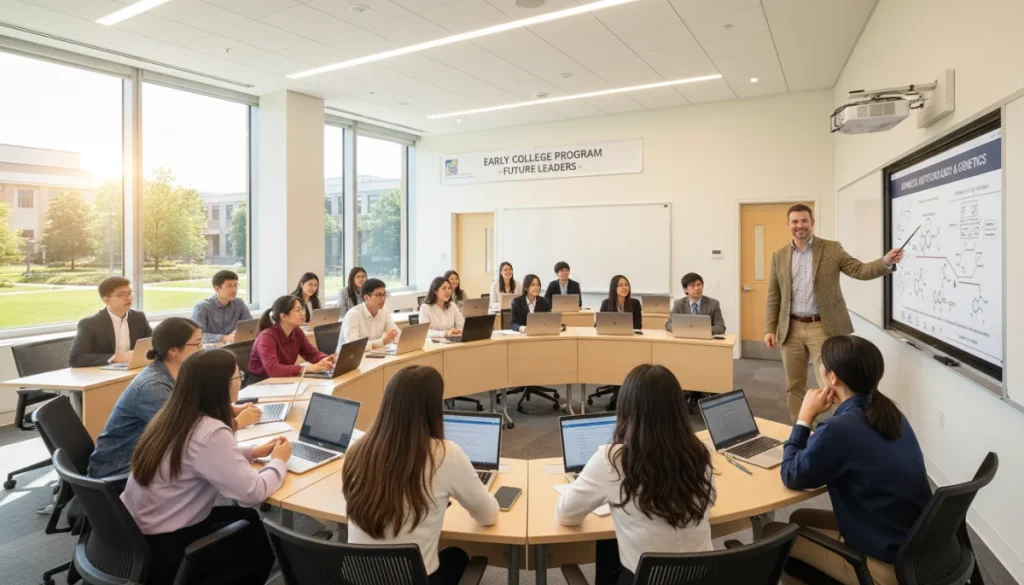
Early college programs in 2026 provide high school students with a strategic pathway to earn college credits, gain valuable higher education experience, and significantly reduce future educational expenses.
Are you a high school student or parent considering accelerating your educational journey? Early college programs in 2026 offer an exciting opportunity to earn college credits while still in high school, potentially saving significant time and money. This comprehensive guide provides a national overview of these programs, detailing their benefits, eligibility criteria, and recent updates across the United States.
Understanding Early College Programs
Early college programs are designed to give high school students a head start on their higher education. These initiatives allow students to enroll in college-level courses, often at no cost or reduced tuition, and earn credits that count towards both their high school diploma and a college degree. The philosophy behind these programs is to bridge the gap between high school and college, providing a smoother transition and fostering academic confidence.
The landscape of early college programs is diverse, encompassing various models such as dual enrollment, concurrent enrollment, and early college high schools. Each model offers a slightly different approach to integrating high school and college curricula, but all share the common goal of academic acceleration and exposure to higher education rigor. These programs are not just about earning credits; they are about cultivating a college-going culture and preparing students for the demands of university life.
Dual Enrollment vs. Concurrent Enrollment
While often used interchangeably, dual enrollment and concurrent enrollment have distinct characteristics. Dual enrollment typically involves high school students taking college courses on a college campus or online, taught by college faculty. Concurrent enrollment, on the other hand, allows high school teachers, who are often credentialed, to teach college-level courses within the high school setting, providing college credit upon successful completion.
- Dual Enrollment: Students attend classes at a college, either physically or virtually, taught by college professors.
- Concurrent Enrollment: College-level courses are taught by qualified high school teachers within the high school environment.
- Early College High Schools: Entire high schools designed around the early college model, where students can earn an associate degree alongside their high school diploma.
Understanding these distinctions is crucial for students and families to choose the program that best fits their academic goals and logistical needs. The flexibility and varied formats ensure that a wide range of students can benefit from these accelerated pathways.
Key Benefits of Early College Programs in 2026
The advantages of participating in early college programs are numerous and extend beyond simply earning college credits. For students in 2026, these programs offer a strategic edge in an increasingly competitive academic and professional landscape. From significant cost savings to enhanced academic readiness, the benefits are compelling.
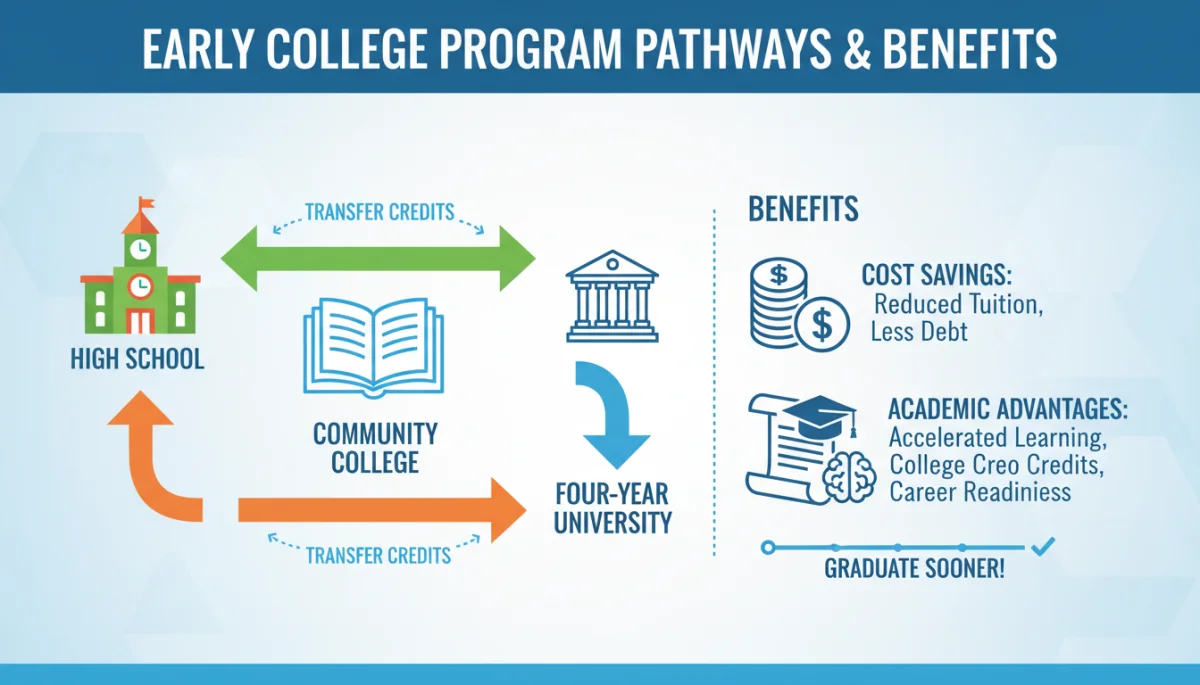
One of the most immediate and tangible benefits is the substantial reduction in college tuition costs. By earning college credits in high school, students effectively pay less for their overall degree, as these credits often transfer directly to a four-year institution. This financial relief can make higher education more accessible and less burdensome for families, potentially reducing student loan debt.
Academic and Personal Growth
Beyond the financial aspect, early college programs foster significant academic and personal growth. Students are exposed to the rigor of college-level coursework, developing critical thinking, time management, and study skills essential for success in higher education. This early exposure can demystify the college experience, making the transition smoother and less intimidating.
- Cost Savings: Reduce overall college tuition and potential student loan debt.
- Academic Acceleration: Earn college credits early, potentially shortening the time to a degree.
- Enhanced Readiness: Develop college-level study habits and critical thinking skills.
- Exposure to College Environment: Familiarize oneself with college campuses and academic expectations.
Students often report increased confidence and a clearer understanding of their academic and career paths after participating in these programs. The opportunity to explore different subjects at a college level can also help students make more informed decisions about their major and future career choices.
Eligibility Requirements: A National Overview
Eligibility for early college programs can vary significantly across states and even between individual institutions. However, common themes emerge when examining the criteria for participation in 2026. Typically, programs look for students who demonstrate academic readiness, maturity, and a strong commitment to their studies.
Most programs require students to be in good academic standing, often with a minimum GPA, and to have completed certain prerequisite high school courses. Standardized test scores, such as PSAT, SAT, or ACT, may also be a factor, particularly for programs that aim to place students directly into college-level English or math courses. Some programs might also require recommendations from high school counselors or teachers.
Variations by State and Institution
It is crucial for prospective students and their families to research the specific requirements of programs in their state or local area. For example, some states might prioritize students from underrepresented backgrounds or those who would be first-generation college students, aiming to broaden access to higher education. Other programs might be highly selective, targeting high-achieving students with a demonstrated aptitude for advanced coursework.
Many community colleges, which are often partners in early college initiatives, have more open enrollment policies, making their programs more accessible. Four-year universities, on the other hand, might have stricter academic criteria for their early college offerings. Understanding these nuances is key to finding the right fit.
Recent Updates and Trends in 2026
The landscape of early college programs is continually evolving, with new trends and updates emerging in 2026 to enhance accessibility and effectiveness. Policymakers and educational institutions are increasingly recognizing the value of these programs, leading to expanded funding, innovative models, and a greater emphasis on equitable access for all students.
One notable trend is the increased integration of career and technical education (CTE) pathways within early college models. This allows students to not only earn college credits but also gain industry-recognized certifications and vocational skills, preparing them for both higher education and immediate entry into the workforce. This dual focus addresses the growing demand for skilled labor while still providing academic opportunities.

Expanding Access and Support
Efforts to expand access are also a significant focus. Many states are investing in initiatives to support students from low-income backgrounds, rural areas, and underrepresented minority groups, ensuring that early college opportunities are not limited to a select few. This includes providing transportation, academic advising, and mentoring services to help students navigate the challenges of college-level work.
- CTE Integration: Blending college credits with career and technical training for workforce readiness.
- Equity Initiatives: Increased funding and support for underrepresented student populations.
- Online and Hybrid Models: Greater flexibility through virtual and blended learning environments.
- Articulation Agreements: Improved transferability of credits between institutions.
The shift towards more online and hybrid learning models, accelerated by recent global events, has also made early college programs more flexible and accessible, allowing students to participate regardless of geographical constraints. Furthermore, clearer articulation agreements between high schools, community colleges, and four-year institutions are simplifying the credit transfer process, ensuring that students’ efforts are fully recognized.
Comparing Early College Programs Across the US
A national overview of early college programs reveals a rich tapestry of approaches and successes across different states. While the core mission remains consistent – to accelerate college readiness and provide credit-earning opportunities – the implementation details and emphasis can vary significantly. Understanding these regional differences is crucial for a comprehensive perspective on early college in 2026.
States like Texas and North Carolina have been pioneers in the early college high school model, establishing numerous schools where students can earn an associate degree by the time they graduate high school. These states often have robust funding mechanisms and established partnerships between K-12 districts and higher education institutions, leading to high success rates.
Regional Strengths and Innovations
In contrast, states like California and Florida have strong dual enrollment programs primarily facilitated through community colleges, offering a wide array of courses and pathways for students to gain college credits. These programs often emphasize flexibility, allowing students to choose courses that align with their interests and future academic goals, whether in STEM, humanities, or vocational fields.
- Texas/North Carolina: Strong emphasis on early college high school models, leading to associate degrees.
- California/Florida: Robust dual enrollment through community colleges, offering broad course selections.
- Northeast States: Often feature selective early college programs linked to specific universities.
- Midwest States: Growing focus on vocational and technical early college pathways.
The Northeast region often sees early college programs linked to selective four-year universities, providing a more direct pipeline to prestigious institutions. Meanwhile, states in the Midwest are increasingly focusing on vocational and technical early college pathways, addressing regional workforce needs. These comparisons highlight the adaptability and responsiveness of early college programs to local educational and economic contexts.
Maximizing Your Early College Experience
Participating in an early college program is a significant step towards academic and professional success, but merely enrolling is just the beginning. To truly maximize the benefits, students need to approach these programs strategically, engaging fully with the opportunities they present and planning thoughtfully for their future academic journey.
One of the most important aspects is to engage actively with academic advisors and counselors. These professionals can provide invaluable guidance on course selection, ensuring that the college credits earned will transfer seamlessly to the student’s desired four-year institution. They can also help students navigate the academic rigor and access support services if needed.
Strategic Planning and Engagement
Students should also take advantage of the broader college environment, even if they are primarily taking classes at their high school. This could involve participating in college clubs, utilizing library resources, or attending campus events. This exposure helps in building a sense of belonging and familiarity with higher education culture, making the eventual transition much smoother.
- Engage with Advisors: Seek guidance on course selection and credit transferability.
- Utilize College Resources: Access libraries, tutoring centers, and campus events.
- Maintain Strong Grades: Ensure eligibility for continued participation and future college admissions.
- Plan for Transfer: Understand how credits will apply to your intended degree program.
Maintaining strong academic performance is also crucial, as grades earned in early college courses will often appear on a student’s permanent college transcript. These grades can impact future college admissions and scholarship opportunities. By being proactive and engaged, students can fully leverage their early college experience to build a strong foundation for their educational and career aspirations.
| Key Aspect | Brief Description |
|---|---|
| Cost Savings | Earn college credits at reduced or no cost, significantly lowering overall tuition expenses. |
| Academic Acceleration | Complete college coursework early, potentially shortening the path to a degree. |
| Eligibility Factors | Vary by program, typically include GPA, test scores, and recommendations. |
| Recent Trends | Increased CTE integration, expanded equity initiatives, and flexible online models. |
Frequently Asked Questions About Early College Programs
Dual enrollment allows students to take individual college courses for credit, often at a college campus. Early college high schools are distinct high schools where students can earn an associate degree alongside their high school diploma.
While many early college credits are transferable, it’s crucial to verify specific articulation agreements with the receiving institution. Transfer policies can vary significantly, so proactive planning with advisors is essential.
Many early college programs are offered at no or significantly reduced cost, especially those partnered with public community colleges. However, some programs or institutions might charge tuition or fees, so always check specific program details.
Students who are academically motivated, responsible, and seeking a challenge often thrive in early college programs. They are particularly beneficial for those aiming to accelerate their education and reduce college costs.
Start by contacting your high school counselor, local community colleges, and state departments of education. Online searches for “early college programs [your state]” or “dual enrollment [your city]” can also yield relevant results.
Conclusion
Early college programs in 2026 represent a powerful and evolving pathway for high school students across the United States to gain a significant advantage in their educational journey. By offering college-level coursework, reducing financial burdens, and fostering crucial academic skills, these programs are instrumental in preparing the next generation for success in higher education and beyond. As these initiatives continue to expand and adapt, they promise to unlock greater opportunities and ensure a smoother transition for countless aspiring college students.
Autor