Retail Industry Update: E-commerce to Hit 25% by 2026
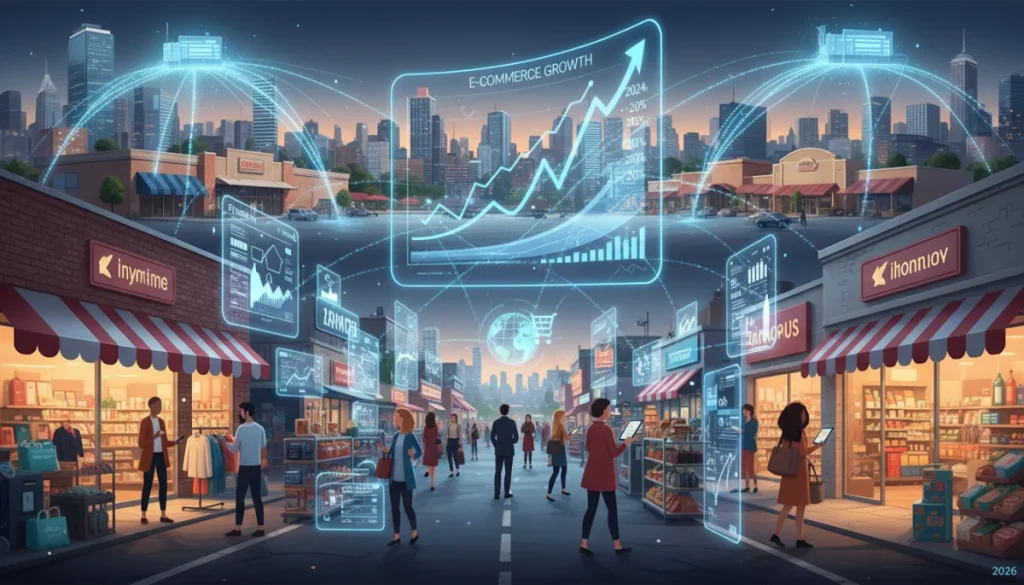
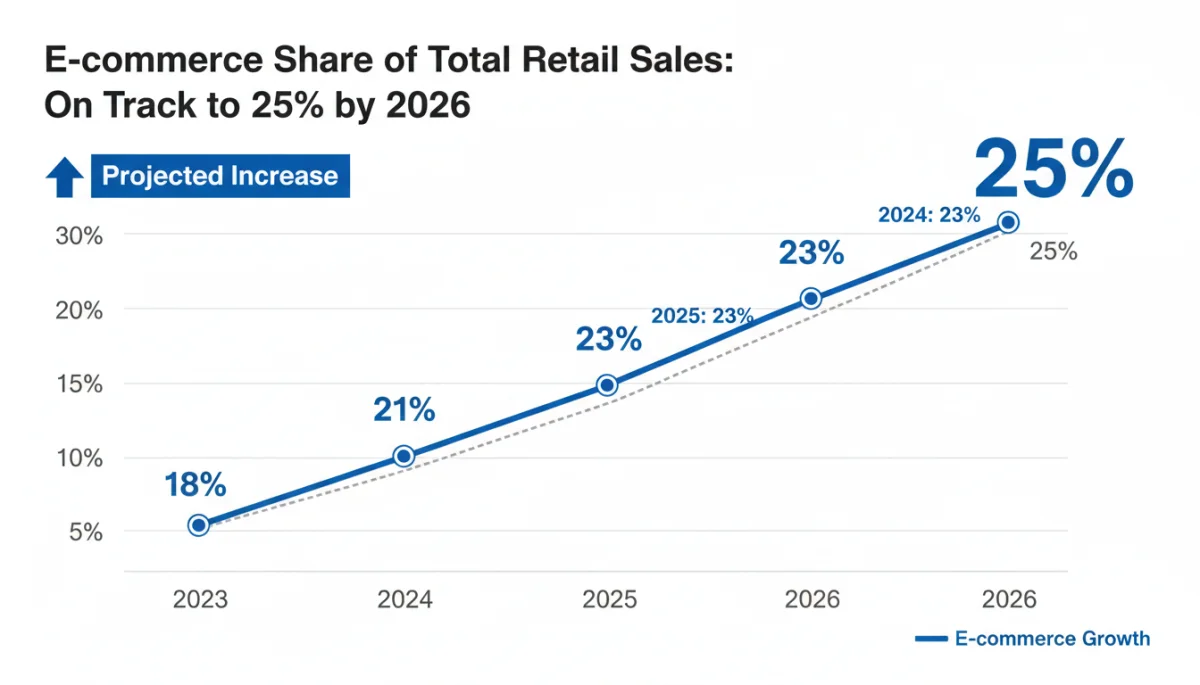
E-commerce sales are expected to account for 25% of total retail by the end of 2026, signaling a profound and ongoing transformation in consumer purchasing habits.
The e-commerce retail growth trajectory continues its impressive ascent, with industry analysts now projecting that online sales will constitute a quarter of all retail transactions by the close of 2026. This isn’t merely a statistic; it represents a fundamental reshaping of how consumers shop, how businesses operate, and the strategic imperatives for survival and success in the modern marketplace.
The Accelerating Shift to Online Retail
The retail landscape is in constant flux, but few trends have been as consistently disruptive and transformative as the rise of e-commerce. What once seemed like a niche market has grown into a dominant force, challenging traditional brick-and-mortar models and forcing businesses to innovate at an unprecedented pace. This acceleration isn’t just a post-pandemic anomaly; it’s a structural shift.
Understanding this shift requires looking beyond simple transaction numbers. It encompasses evolving consumer expectations, technological advancements, and a globalized supply chain that makes online purchasing more convenient and accessible than ever before. Retailers who fail to adapt risk obsolescence.
Consumer Behavior and Digital Adoption
Consumers are increasingly digitally native, expecting seamless online experiences. This includes everything from intuitive website navigation to personalized recommendations and frictionless checkout processes. The comfort level with online shopping has solidified across all demographics.
- Convenience: Shopping anytime, anywhere, without geographical limitations.
- Selection: Access to a wider array of products than typically found in physical stores.
- Personalization: AI-driven recommendations tailored to individual preferences.
The embrace of digital channels isn’t limited to younger generations; older demographics have also significantly increased their online shopping activity, driven by ease of use and necessity.
In conclusion, the accelerating shift to online retail is a multifaceted phenomenon driven by technological progress and a fundamental change in consumer preferences, demanding a proactive response from all players in the retail sector.
Technological Innovations Fueling E-commerce Expansion
Behind the impressive growth figures lies a bedrock of continuous technological innovation. From advanced logistics to artificial intelligence and immersive shopping experiences, technology is not just enabling e-commerce; it’s actively driving its evolution and expanding its capabilities. This technological push creates new opportunities for engagement and efficiency.
Retailers are investing heavily in infrastructure that supports faster delivery, more accurate inventory management, and a personalized customer journey. These investments are critical for maintaining competitiveness in a rapidly evolving market.
AI and Personalization in Online Shopping
Artificial intelligence is at the forefront of enhancing the e-commerce experience. AI algorithms analyze vast amounts of customer data to provide highly relevant product suggestions, optimize pricing, and even predict future purchasing behavior. This level of personalization makes online shopping more engaging and efficient for consumers.
- Predictive Analytics: Anticipating customer needs before they arise.
- Chatbots and Virtual Assistants: Providing instant customer support and guidance.
- Dynamic Pricing: Adjusting prices in real-time based on demand and competition.
The integration of AI extends beyond the front-end, optimizing back-end operations such as supply chain management and fraud detection, making the entire e-commerce ecosystem more robust.
Ultimately, technological innovations are not just about making e-commerce possible, but about making it better, faster, and more tailored to individual needs, securing its place as a dominant retail channel.
Impact on Traditional Retail and Omnichannel Strategies
The significant growth of e-commerce naturally raises questions about the future of traditional brick-and-mortar retail. While some predict the demise of physical stores, a more nuanced reality is emerging: the necessity of an integrated omnichannel strategy. Physical stores are not disappearing; they are evolving to complement and enhance the online experience.
Retailers are now focused on creating a cohesive customer journey that seamlessly blends online and offline touchpoints. This means leveraging the strengths of both channels to offer a richer, more convenient shopping experience.
The Rise of Experiential Retail
Physical stores are transforming into experiential hubs, offering services, events, and unique brand interactions that cannot be replicated online. These spaces become vital for brand building, customer engagement, and providing immediate gratification through services like ‘buy online, pick up in-store’ (BOPIS).
- Showrooming: Customers view products in-store before purchasing online.
- BOPIS: Enhancing convenience and reducing shipping costs.
- Community Hubs: Stores as places for events, workshops, and social interaction.
The goal is to create a symbiotic relationship where each channel drives traffic and value to the other, making the overall brand experience more robust and appealing.
In conclusion, the impact of e-commerce on traditional retail is not one of replacement but of evolution, pushing businesses towards sophisticated omnichannel strategies that prioritize customer experience above all else.
Logistics and Supply Chain Adaptations for E-commerce Growth
The projected surge in e-commerce sales, reaching 25% of total retail by 2026, places immense pressure on logistics and supply chain infrastructures. Meeting consumer expectations for fast, reliable, and often free shipping requires sophisticated networks, advanced warehousing, and efficient last-mile delivery solutions. This area is undergoing rapid innovation and significant investment.
Companies are rethinking their entire supply chain, from sourcing raw materials to delivering the final product, to optimize for the speed and scale demanded by online commerce. This includes adopting new technologies and partnering with specialized logistics providers.
Automation and Robotics in Warehousing
To handle the sheer volume of online orders, warehouses are increasingly relying on automation and robotics. Automated guided vehicles (AGVs), robotic arms, and sophisticated sorting systems significantly increase efficiency, reduce errors, and allow for 24/7 operations, speeding up order fulfillment.
- Increased Throughput: Processing more orders in less time.
- Reduced Labor Costs: Automating repetitive and strenuous tasks.
- Improved Accuracy: Minimizing picking and packing errors.
These technological advancements are crucial for managing peak shopping seasons and ensuring consistent service quality throughout the year.
The adaptations in logistics and supply chain are fundamental to supporting the continued expansion of e-commerce, ensuring that products move efficiently from seller to consumer.
Security and Trust in the Digital Retail Environment
As e-commerce becomes an even larger part of the retail industry, the importance of security and building consumer trust cannot be overstated. With 25% of retail sales expected to be online by 2026, safeguarding personal data and financial transactions is paramount. Cyber threats are constantly evolving, requiring continuous vigilance and investment in robust security measures.
Consumers need to feel confident that their information is protected when they shop online. Any breach of trust can have severe repercussions, damaging brand reputation and leading to lost sales. Retailers must prioritize transparency and proactive communication regarding their security protocols.
Protecting Consumer Data and Transactions
Implementing strong encryption, multi-factor authentication, and adhering to strict data protection regulations (like GDPR and CCPA) are essential for securing online transactions. Regular security audits and penetration testing help identify and rectify vulnerabilities before they can be exploited.
- End-to-End Encryption: Securing data during transmission and storage.
- Fraud Detection Systems: Utilizing AI to identify and prevent fraudulent activities.
- Compliance with Regulations: Adhering to legal frameworks for data privacy.
Building a secure digital environment is not just a technical challenge; it’s a foundational element of fostering long-term customer loyalty and confidence in the e-commerce ecosystem.
In essence, security and trust are non-negotiable pillars for the sustained growth and success of e-commerce, requiring continuous effort and adaptation from retailers.
The Future Outlook: Beyond 2026 and Emerging Trends
Looking beyond the 25% mark by 2026, the trajectory for e-commerce suggests continued evolution and integration into daily life. The boundaries between online and offline commerce will likely blur further, leading to even more seamless and personalized shopping experiences. Emerging technologies and changing consumer values will continue to shape this dynamic sector.
Anticipating these future trends allows businesses to strategically position themselves for long-term success. The focus will shift from simply being online to being omnipresent, offering value across every possible touchpoint.
Virtual and Augmented Reality in Shopping
Virtual Reality (VR) and Augmented Reality (AR) are poised to revolutionize how consumers interact with products online. AR allows customers to visualize products in their own environment (e.g., trying on clothes virtually or seeing furniture in their living room), while VR can create fully immersive shopping experiences, replicating the physical store visit from anywhere.
- Enhanced Product Visualization: Reducing returns due to inaccurate expectations.
- Immersive Brand Experiences: Creating memorable and engaging interactions.
- Personalized Try-Ons: Allowing customers to “experience” products before buying.
These technologies promise to bridge the gap between the tactile experience of physical retail and the convenience of online shopping, offering a hybrid future.
The future outlook for e-commerce, extending beyond 2026, is characterized by deep technological integration, personalized experiences, and a continuous drive towards innovation that will further embed digital commerce into the fabric of daily life.
| Key Point | Brief Description |
|---|---|
| E-commerce Growth | Online sales projected to reach 25% of total retail by end of 2026. |
| Consumer Behavior | Increased digital adoption and demand for convenience and personalization. |
| Omnichannel Strategies | Integration of online and physical retail for a seamless customer experience. |
| Technological Drivers | AI, AR/VR, and advanced logistics fueling further e-commerce expansion. |
Frequently Asked Questions About E-commerce Growth
It signifies a critical need for businesses to prioritize and optimize their online presence and e-commerce capabilities. Companies must invest in digital infrastructure, customer experience, and supply chain efficiency to capture this growing market share and remain competitive.
Traditional stores will need to evolve, focusing on experiential retail and integrating with online channels through omnichannel strategies. They can serve as showrooms, fulfillment centers, or community hubs, complementing the digital shopping journey rather than competing directly.
Key technologies include artificial intelligence for personalization, advanced analytics for market insights, automation and robotics in logistics, and emerging immersive technologies like augmented and virtual reality for enhanced shopping experiences.
Absolutely. As more transactions move online, robust cybersecurity measures are paramount. Retailers must invest in strong encryption, fraud detection, and adhere to data protection regulations to build and maintain consumer trust in the digital retail environment.
Beyond 2026, e-commerce is expected to continue its growth, with further blurring of online and offline boundaries. Immersive technologies like AR/VR will become more commonplace, offering highly personalized and interactive shopping experiences that deeply integrate into consumers’ daily lives.
Conclusion
The projection that e-commerce sales will command 25% of total retail by the end of 2026 underscores a pivotal moment in the retail industry. This isn’t merely a fleeting trend but a fundamental recalibration of consumer purchasing habits and business operations. Success in this evolving landscape hinges on adaptability, technological integration, and a relentless focus on the customer experience. Retailers who embrace innovation, fortify their digital infrastructure, and strategically blend online and offline channels will be best positioned to thrive, ensuring they remain relevant and competitive in an increasingly digital-first world.
Autor