AI in US Education by 2026: Opportunities and Challenges

The integration of AI into US education by 2026 promises transformative opportunities in personalized learning and operational efficiency, alongside significant challenges in equity and ethical implementation.
The landscape of learning is undergoing a profound transformation, with artificial intelligence emerging as a central catalyst. The impact of AI on US education by 2026: opportunities and challenges will redefine pedagogical approaches, administrative tasks, and the very nature of student engagement. This shift is not merely incremental but represents a fundamental rethinking of how knowledge is acquired, disseminated, and assessed across the nation.
The evolving role of AI in personalized learning
Artificial intelligence is rapidly becoming a cornerstone of personalized education, moving beyond theoretical discussions to practical applications. By 2026, AI-powered platforms are expected to offer highly tailored learning experiences, adapting to each student’s pace, style, and individual needs. This level of customization was once a distant dream, but AI algorithms can now analyze performance data in real-time, identifying strengths and weaknesses to recommend specific resources or intervention strategies.
The promise of personalized learning with AI lies in its ability to cater to diverse student populations, ensuring that no learner is left behind due to a one-size-fits-all approach. It allows educators to focus on higher-order thinking skills and creative problem-solving, while AI handles the more routine aspects of instruction and assessment. This symbiotic relationship between human teachers and AI tools is central to the future of education.
Adaptive learning platforms and intelligent tutoring systems
- Dynamic content delivery: AI systems adjust curriculum difficulty and content based on student progress.
- Real-time feedback: Instantaneous assessment and constructive criticism help students understand mistakes immediately.
- Targeted interventions: AI identifies learning gaps early, providing specific exercises or explanations.
- Personalized pace: Students can advance at their own speed, mastering concepts before moving on.
These systems are already showing promising results in improving student outcomes and engagement. They free up valuable teacher time, allowing educators to provide more individualized attention where it is most needed. The data collected by these platforms also offers invaluable insights into learning patterns, informing pedagogical strategies at both individual and systemic levels.
In conclusion, AI’s role in personalized learning is set to revolutionize how students interact with educational content. By providing adaptive pathways and intelligent support, AI can unlock the full potential of every learner, making education more equitable and effective than ever before. This evolution demands careful integration and continuous evaluation to maximize its benefits.
Operational efficiencies and administrative advancements
Beyond the classroom, AI is poised to significantly streamline administrative and operational tasks within US educational institutions by 2026. From automating routine grading to optimizing resource allocation, AI tools can alleviate the burden of non-instructional duties, allowing educators and administrators to focus on core educational goals. This shift towards greater efficiency is crucial for institutions facing budget constraints and increasing demands.
The automation of repetitive tasks not only saves time but also reduces the potential for human error, leading to more accurate record-keeping and more efficient processes. This includes everything from student enrollment and scheduling to managing campus facilities and budgeting. The goal is to create a more agile and responsive educational ecosystem.
Automating routine tasks
- Automated grading: AI can grade multiple-choice questions, essays, and even coding assignments, providing consistent and rapid feedback.
- Student enrollment and scheduling: AI-powered systems can optimize course schedules, manage waitlists, and streamline registration processes.
- Resource allocation: Predictive analytics help allocate classroom space, staff, and materials more effectively based on demand.
- Communication and support: AI chatbots can handle common student inquiries, providing 24/7 support and freeing up administrative staff.
These advancements contribute to a more efficient and less bureaucratic educational environment. Educators can dedicate more energy to teaching and mentoring, while administrators can focus on strategic planning and institutional development. The data generated by these AI systems can also provide valuable insights for continuous improvement.
Ultimately, the integration of AI into operational and administrative functions promises a more streamlined and effective educational system. By automating the mundane, AI empowers human capital to concentrate on what truly matters: fostering a rich and engaging learning experience for all students.
Challenges in equity and access
While the opportunities presented by AI in US education are vast, significant challenges concerning equity and access must be addressed by 2026. The digital divide, which disproportionately affects low-income and rural communities, could be exacerbated by the rapid adoption of AI technologies if not managed proactively. Ensuring equitable access to AI-powered tools and necessary infrastructure is paramount to prevent further disparities in educational outcomes.
Moreover, the quality of AI implementation can vary widely depending on institutional resources, potentially creating a two-tiered system where some students benefit from cutting-edge AI while others are left behind. This raises critical questions about social justice in education and the need for comprehensive policy frameworks.
Bridging the digital divide
- Infrastructure disparities: Lack of high-speed internet and devices in underserved areas hinders AI access.
- Funding gaps: Schools in affluent districts are more likely to afford advanced AI solutions.
- Teacher training: Equitable training for educators on AI tools is essential to effective implementation.
- Content bias: AI algorithms trained on biased data can perpetuate or amplify existing inequalities.
Addressing these challenges requires a concerted effort from policymakers, educators, and technology developers. Investments in robust digital infrastructure, equitable funding models, and comprehensive professional development programs are critical. Furthermore, developers must prioritize ethical AI design that mitigates bias and promotes inclusivity.
In essence, the promise of AI in education can only be fully realized if its benefits are accessible to all students, regardless of their socioeconomic background or geographic location. Overcoming these equity and access challenges is not merely a technical problem but a societal imperative to ensure a just and inclusive educational future.
Ethical considerations and data privacy
The widespread integration of AI into US education by 2026 brings with it a complex web of ethical considerations and data privacy concerns. As AI systems collect and analyze vast amounts of student data, safeguarding this sensitive information becomes a paramount responsibility. Parents, students, and educators must be assured that personal data is protected from misuse, breaches, and unauthorized access.
Beyond privacy, ethical AI development demands transparency in algorithms and a commitment to fairness. Opaque AI systems can lead to biased outcomes, particularly in assessment and student profiling, potentially reinforcing existing stereotypes or creating new forms of discrimination. The potential for AI to influence critical decisions about a student’s educational path requires rigorous ethical oversight.
Ensuring responsible AI use
- Data security: Robust encryption and secure storage protocols are essential to protect student data.
- Algorithmic transparency: Understanding how AI systems make decisions is crucial for accountability and fairness.
- Bias detection and mitigation: Regular auditing of AI algorithms to identify and correct biases is necessary.
- Informed consent: Clear policies on data collection and usage, with explicit consent from students and parents.
The ethical framework surrounding AI in education must evolve rapidly to keep pace with technological advancements. This includes developing clear guidelines for data governance, establishing independent oversight bodies, and promoting ethical literacy among all stakeholders. Without a strong ethical foundation, the transformative potential of AI could be undermined by public distrust and unintended harm.
In conclusion, navigating the ethical landscape of AI in education requires a proactive and thoughtful approach. Prioritizing data privacy, algorithmic transparency, and bias mitigation is not just about compliance, but about building trust and ensuring that AI serves to enhance, rather than compromise, the integrity of the educational experience.
Recent updates and comparative analysis
The pace of AI development in US education is accelerating, with numerous recent updates shaping its trajectory towards 2026. Comparing these developments with international trends offers valuable insights into both successes and potential pitfalls. The US is seeing a surge in AI-powered adaptive learning platforms and administrative tools, often driven by private sector innovation and significant venture capital investment.
Internationally, countries like China are heavily investing in AI for large-scale educational monitoring and personalized learning, sometimes with different ethical frameworks. European nations, while embracing AI, often place a stronger emphasis on data privacy and regulatory oversight from the outset. This comparative analysis highlights diverse approaches and the need for the US to balance innovation with ethical implementation.
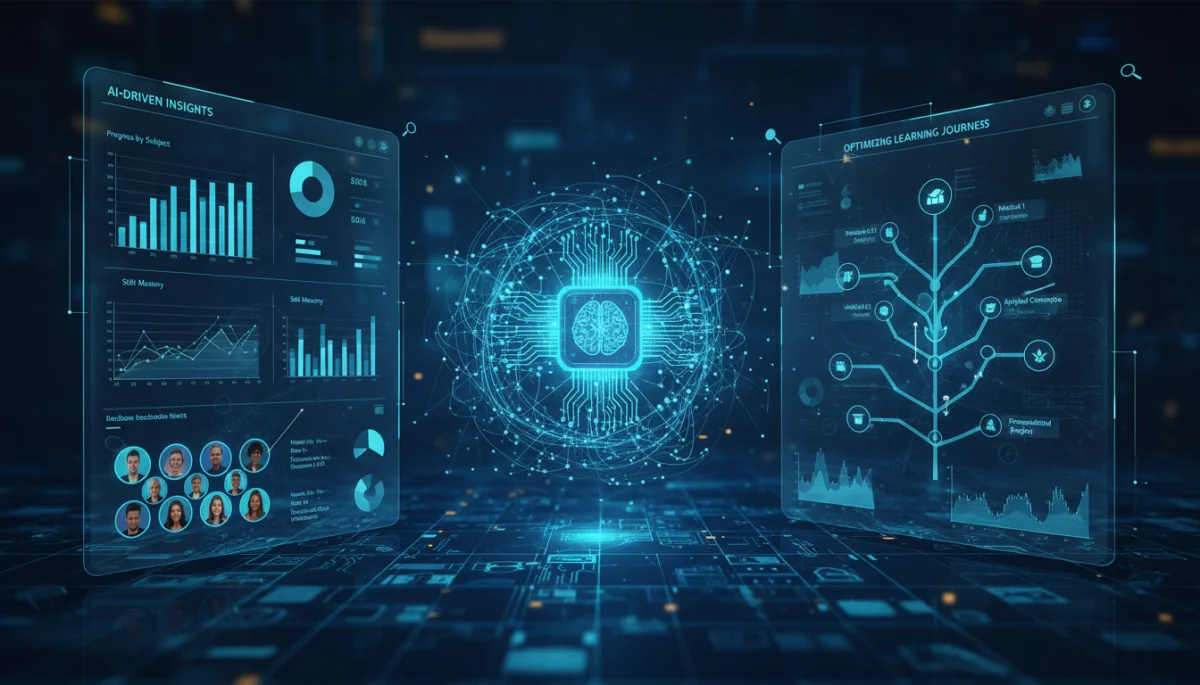
Recent updates include more sophisticated natural language processing (NLP) for essay grading and feedback, advanced predictive analytics for student retention, and AI-driven content generation tools for educators. These advancements offer unprecedented capabilities but also demand careful scrutiny regarding their impact on critical thinking and human creativity.
Key trends and global perspectives
- Increased investment: Significant funding flowing into EdTech AI startups in the US.
- Ethical AI frameworks: Growing emphasis on responsible AI development and deployment.
- Global competition: US educational AI innovation is part of a broader international race.
- Hybrid learning models: AI supports the evolution of blended and online learning environments.
A crucial update is the increasing focus on AI literacy for both students and teachers, recognizing that effective integration requires understanding the technology itself. Comparing this with countries that have national AI education strategies can inform US policy. The goal is not just to use AI, but to understand its implications and guide its development responsibly.
In summary, recent updates show a dynamic and rapidly evolving AI landscape in US education. A comparative analysis reveals both shared challenges and divergent strategies globally, underscoring the need for the US to learn from international experiences while forging its own path in responsible and effective AI integration.
Preparing the workforce and future skills
The integration of AI into US education by 2026 is not just about improving current learning processes; it’s fundamentally about preparing students for a future workforce increasingly shaped by artificial intelligence. Education systems must adapt to cultivate skills that complement, rather than compete with, AI capabilities. This includes critical thinking, creativity, complex problem-solving, emotional intelligence, and adaptability—skills that AI currently struggles to replicate.
The shift demands a curriculum overhaul, moving away from rote memorization towards project-based learning, interdisciplinary studies, and real-world applications. Students will need to understand how to work alongside AI, leveraging its power as a tool while maintaining human oversight and ethical decision-making. This preparation is vital for maintaining economic competitiveness and ensuring individual career success.
Essential skills for an AI-driven future
- Digital literacy and AI fluency: Understanding how AI works and its practical applications.
- Critical thinking and analysis: Evaluating AI outputs and making informed judgments.
- Creativity and innovation: Developing novel ideas that AI can then help execute.
- Collaboration and communication: Working effectively with both humans and AI tools.
- Ethical reasoning: Navigating the moral implications of AI technologies.
Furthermore, educators themselves require continuous professional development to effectively teach these new competencies. Universities and vocational schools must also align their programs with industry demands, ensuring that graduates possess the skills most valued in an AI-augmented economy. This proactive approach to workforce preparation is a national imperative.
In conclusion, preparing students for an AI-driven future is a critical opportunity for US education. By focusing on uniquely human skills and fostering AI literacy, the education system can empower the next generation to thrive in a rapidly changing world, transforming challenges into pathways for innovation and growth.
| Key Aspect | Description |
|---|---|
| Personalized Learning | AI tailors educational content and pace to individual student needs, enhancing engagement and outcomes. |
| Operational Efficiency | AI automates administrative tasks like grading and scheduling, freeing up educators’ time. |
| Equity Challenges | Ensuring fair access to AI tools and preventing exacerbation of the digital divide remains a significant hurdle. |
| Ethical Concerns | Data privacy, algorithmic bias, and transparency are critical issues requiring careful management in AI deployment. |
Frequently Asked Questions About AI in US Education by 2026
By 2026, AI will personalize learning through adaptive platforms that analyze student performance and learning styles in real-time. These systems will recommend tailored content, adjust difficulty levels, and provide targeted feedback, ensuring each student progresses at their optimal pace and receives customized support for their specific needs.
AI will automate numerous administrative tasks, including routine grading of assignments, optimizing student scheduling and enrollment, and managing school resources more efficiently. Chatbots will also handle common student inquiries, freeing up educators and administrators to focus on more complex and strategic aspects of education and student support.
The primary equity challenges include bridging the digital divide, ensuring equitable access to necessary technology and internet infrastructure, and addressing funding gaps between school districts. There’s also a concern about algorithmic bias, where AI systems might perpetuate existing societal inequalities if not carefully designed and monitored for fairness.
Protecting data privacy will involve implementing robust encryption, secure storage protocols, and clear data governance policies. Educational institutions will need to establish transparent practices for data collection and usage, ensuring informed consent from students and parents, and adhering to evolving regulatory standards to safeguard sensitive personal information from misuse or breaches.
AI integration will emphasize skills like critical thinking, creativity, complex problem-solving, digital literacy, and ethical reasoning. Education will shift towards teaching students how to collaborate effectively with AI, leverage its capabilities as a tool, and understand its societal implications, preparing them for an evolving job market that values human-centric competencies.
Conclusion
The journey towards 2026 positions AI as an undeniable force in transforming US education. While presenting unparalleled opportunities for personalized learning and operational efficiency, its integration demands a vigilant approach to pervasive challenges. Addressing issues of equity, ensuring data privacy, and navigating complex ethical landscapes are not merely footnotes but central pillars to harnessing AI’s full potential responsibly. By strategically investing in infrastructure, fostering AI literacy, and prioritizing human-centric skills, the US education system can navigate this transformative era, ensuring that AI serves as a powerful catalyst for inclusive growth and innovation, rather than a source of new disparities. The future of learning is poised to be profoundly shaped by these advancements, requiring continuous adaptation and thoughtful implementation to benefit all.
Autor