NHTSA New Standards: 10% Fatality Reduction by 2026
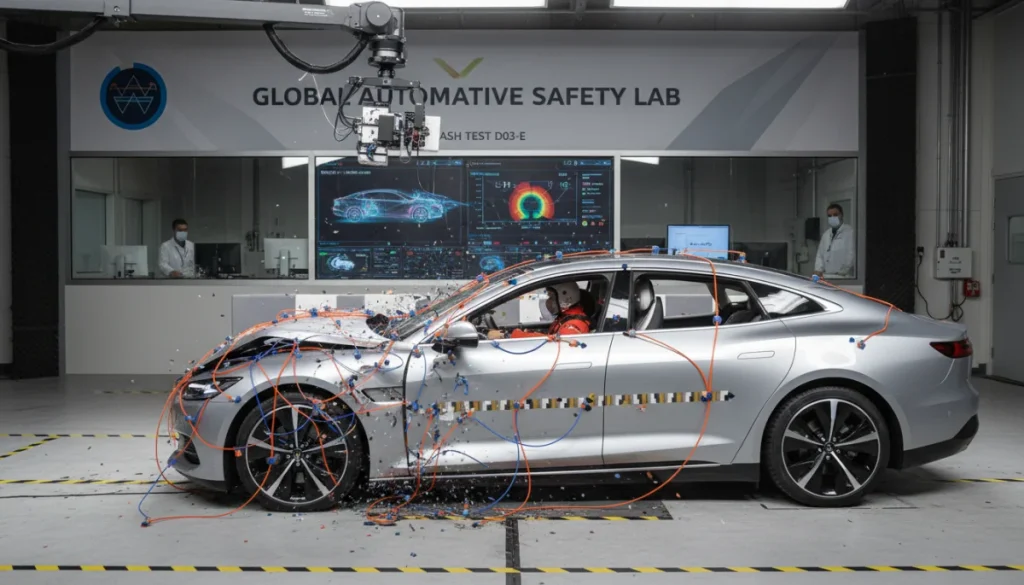
The National Highway Traffic Safety Administration (NHTSA) has introduced new vehicle standards to cut transportation fatalities by 10% by 2026.
The landscape of automotive safety is undergoing a significant transformation as the National Highway Traffic Safety Administration (NHTSA) rolls out ambitious new vehicle standards. These pivotal regulations are designed to dramatically enhance transportation safety: NHTSA announces new vehicle standards to reduce fatalities by 10% by 2026, marking a crucial step towards safer roads for all Americans. This initiative reflects a concerted effort to leverage technological advancements and stringent regulatory oversight to mitigate the tragic toll of traffic accidents.
Understanding the driving force behind NHTSA’s new standards
The push for enhanced vehicle safety is not new, but the urgency has intensified in recent years due to a concerning rise in traffic fatalities. The NHTSA’s latest announcement is a direct response to these trends, aiming to reverse the upward trajectory of deaths and serious injuries on U.S. roads. This proactive stance underscores a commitment to public welfare, recognizing that every life saved is a significant victory.
Several factors have contributed to the need for these updated regulations. While modern vehicles are generally safer than their predecessors, driver behavior, increased vehicle miles traveled, and the proliferation of larger vehicles have presented new challenges. The NHTSA’s approach seeks to address these multifaceted issues through a comprehensive regulatory framework.
Key statistics driving the change
- Rising fatality rates in recent years, despite existing safety measures.
- An increase in crashes involving vulnerable road users, such as pedestrians and cyclists.
- The growing prevalence of distracted driving and impairment as contributing factors.
The agency has meticulously analyzed accident data, identifying critical areas where improvements in vehicle design and technology can have the most profound impact. This data-driven strategy ensures that the new standards are not merely aspirational but are grounded in empirical evidence of what truly makes a difference in preventing crashes and protecting occupants.
Ultimately, the driving force behind these new standards is a clear vision for a future where roads are safer, and the human cost of transportation is drastically reduced. It’s a testament to ongoing innovation and the regulatory body’s dedication to evolving with the challenges of modern mobility.
Core components of the 2026 safety mandate
The recently unveiled NHTSA standards for 2026 are multifaceted, touching upon various aspects of vehicle design and technology. These components are strategically chosen to create a holistic safety improvement, addressing both pre-crash prevention and post-crash protection. The goal is to build safer vehicles from the ground up, integrating technologies that actively assist drivers and minimize harm in the event of an impact.
One of the primary focuses is on advanced driver-assistance systems (ADAS). These technologies, which have been steadily evolving, are now moving from optional features to mandatory requirements. The agency believes that standardizing these systems across all new vehicles will significantly reduce the likelihood of common crash scenarios, such as rear-end collisions and lane departures.
Mandatory safety technologies
- Automatic Emergency Braking (AEB): Systems that detect imminent frontal collisions and automatically apply the brakes.
- Lane Keeping Assist (LKA): Technology designed to help drivers stay within their lane markings.
- Blind Spot Detection (BSD): Alerts drivers to vehicles in their blind spots, reducing lane change accidents.
- Rear Cross-Traffic Alert (RCTA): Warns drivers of approaching vehicles when backing out of parking spaces.
Beyond ADAS, the new standards also delve into structural integrity and occupant protection. This includes updated requirements for crashworthiness, ensuring that vehicle structures are better equipped to absorb impact forces and protect passengers. Enhanced airbag systems and seatbelt technologies are also part of this comprehensive mandate, reflecting a commitment to safeguarding occupants during a collision.
The overarching aim of these core components is to create a robust safety net, where technology and design work in tandem to prevent accidents and mitigate their severity. This mandate represents a significant leap forward in automotive safety, setting a new benchmark for vehicle manufacturers.
Projected impact: reducing fatalities by 10%
The ambitious target of a 10% reduction in transportation fatalities by 2026 is not merely a number; it represents thousands of lives saved and countless injuries prevented. This projection is based on extensive research and modeling, taking into account the widespread implementation of the new vehicle standards across the entire fleet of new cars sold in the United States. The impact is expected to be profound, gradually transforming the safety landscape of American roads.
The effectiveness of these new standards hinges on several factors, including the speed of adoption by manufacturers, the integration quality of new technologies, and public acceptance. However, the NHTSA’s projections are built on conservative estimates, suggesting that the actual impact could be even greater as these technologies mature and become more sophisticated.
Areas of expected improvement
- Reduced human error: ADAS technologies will act as a co-pilot, mitigating common driving mistakes.
- Lower collision severity: Enhanced crashworthiness and occupant protection systems will lessen injury severity in unavoidable crashes.
- Increased awareness: Drivers will become more accustomed to and reliant on safety features, potentially fostering safer driving habits overall.
The economic benefits of this reduction are also substantial. Fewer fatalities and injuries mean lower healthcare costs, reduced property damage, and a decreased burden on emergency services. These societal gains, while difficult to quantify precisely, are a significant positive externality of improved vehicle safety.
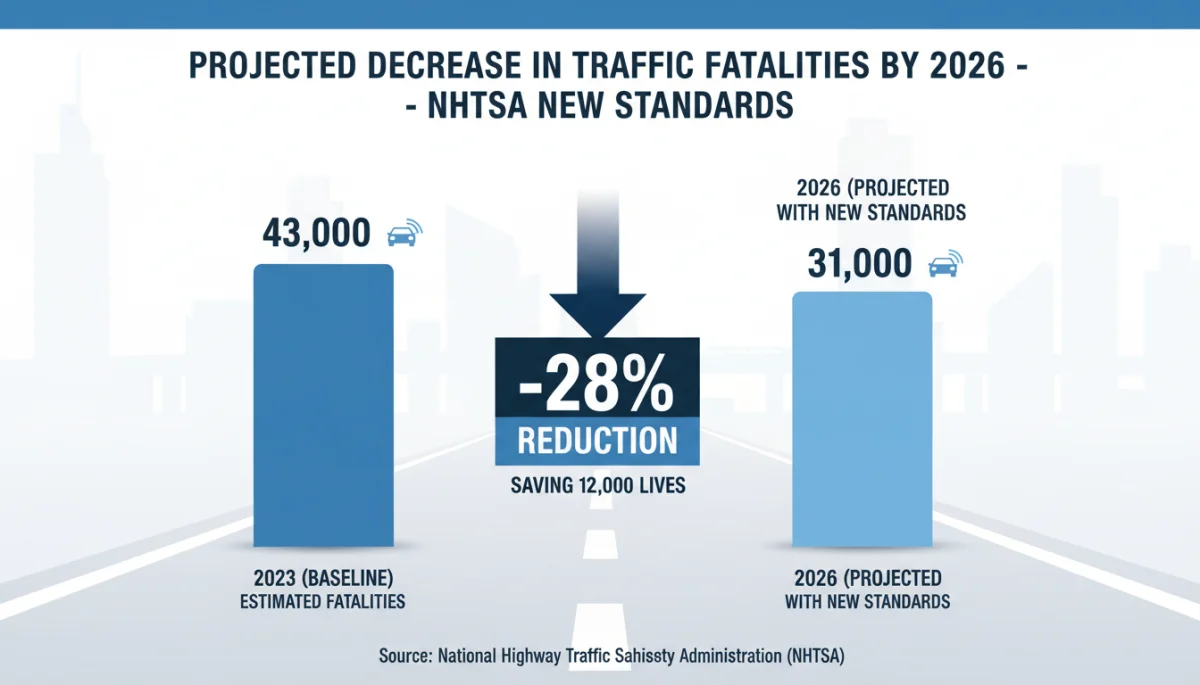

Ultimately, the 10% reduction goal serves as a powerful testament to the potential of targeted regulatory action combined with technological innovation. It’s a measurable objective that will undoubtedly lead to a safer driving environment for everyone.
Challenges and considerations for implementation
While the new NHTSA vehicle standards hold immense promise, their implementation is not without challenges. Integrating advanced safety technologies across all vehicle models, ensuring their reliability, and managing the associated costs are significant hurdles that manufacturers and regulators must address. The transition period will require careful coordination and continuous evaluation to ensure the objectives are met effectively.
One of the primary considerations is the cost of these new technologies. Mandating advanced systems will likely increase the price of new vehicles, potentially impacting affordability for some consumers. Balancing safety enhancements with economic accessibility is a delicate act that the NHTSA and manufacturers must navigate.
Key implementation challenges
- Technological integration: Ensuring seamless and reliable operation of diverse ADAS features across various vehicle platforms.
- Consumer acceptance and education: Addressing potential driver resistance to new technologies and educating the public on their benefits and limitations.
- Supply chain complexities: Managing the procurement and installation of new components on a mass scale.
- Regulatory oversight: Developing robust testing protocols and enforcement mechanisms to ensure compliance and effectiveness.
Furthermore, the rapid pace of technological change means that standards must be flexible enough to accommodate future innovations. What is cutting-edge today may be commonplace tomorrow, and the regulatory framework needs to be adaptive to maintain its relevance and effectiveness over time. This includes provisions for software updates and cybersecurity measures to protect vehicle systems.
Despite these challenges, the commitment to improving transportation safety remains paramount. Collaborative efforts between government agencies, automotive manufacturers, and technology providers will be essential to overcome these obstacles and realize the full potential of the new standards.
The role of technology in accident prevention
Technology is at the heart of the NHTSA’s new vehicle standards, playing an increasingly critical role in preventing accidents before they happen. Modern vehicles are becoming sophisticated machines, equipped with sensors, cameras, and processing units that can perceive the environment, anticipate hazards, and even intervene when necessary. This shift from passive safety (protecting occupants during a crash) to active safety (preventing the crash altogether) represents a paradigm change in automotive engineering.
Advanced algorithms and artificial intelligence are enabling vehicles to make more informed decisions, enhancing driver awareness and reducing reaction times. Features like pedestrian detection and cyclist warnings are specifically designed to protect vulnerable road users, who often bear the brunt of traffic accidents. These systems are not meant to replace human drivers but to augment their capabilities, providing an extra layer of vigilance.
Technological advancements making roads safer
- Sensor fusion: Combining data from multiple sensors (radar, lidar, cameras) for a more comprehensive view of the vehicle’s surroundings.
- Predictive analytics: Using data to anticipate potential hazards and alert drivers proactively.
- Vehicle-to-everything (V2X) communication: Enabling vehicles to communicate with each other and with infrastructure, enhancing situational awareness.
The continuous evolution of these technologies promises even greater safety benefits in the future. As vehicles become more connected and autonomous, the potential for accident prevention will expand exponentially. The NHTSA’s standards are laying the groundwork for this future, ensuring that the foundational technologies are robust and widely adopted.
In essence, technology is transforming vehicles into intelligent safety platforms, actively working to prevent collisions and protect lives. This technological frontier is key to achieving and surpassing the ambitious fatality reduction targets.
Long-term vision for transportation safety
The NHTSA’s announcement of new vehicle standards is more than just a short-term goal; it’s a significant step towards a long-term vision for transportation safety in the United States. This vision encompasses a future where traffic fatalities are a rarity, and roads are inherently safer for everyone, regardless of their mode of travel. Achieving this will require sustained effort, ongoing innovation, and a collaborative approach involving all stakeholders.
The current standards are a foundation upon which future advancements will be built. As technology evolves, so too will the regulatory framework, adapting to new possibilities and addressing emerging challenges. This continuous improvement cycle is essential to staying ahead of safety risks and ensuring that American roads remain among the safest in the world.
Pillars of the long-term safety vision
- Continuous innovation: Encouraging research and development in new safety technologies.
- Data-driven policy: Using accident data and research to inform future regulatory decisions.
- Public education and engagement: Fostering a culture of safety among drivers, passengers, and pedestrians.
- Infrastructure improvements: Collaborating with state and local governments to enhance road design and signage.
Ultimately, the long-term vision is one of zero fatalities. While this goal may seem aspirational, each step taken, like the current NHTSA standards, brings us closer. It’s a commitment to leveraging every available tool – from advanced vehicle technology to public awareness campaigns – to protect lives and promote well-being on our nation’s roads.
This holistic approach to transportation safety ensures that efforts are not isolated but are part of a larger, interconnected strategy aimed at creating a safer, more resilient transportation system for generations to come.
| Key Aspect | Brief Description | |
|---|---|---|
| Fatality Reduction Goal | Targeting a 10% decrease in transportation fatalities by 2026. | |
| Mandatory Technologies | Includes Automatic Emergency Braking, Lane Keeping Assist, and Blind Spot Detection. | |
| Implementation Challenges | Cost, technological integration, and public education are key hurdles. | |
| Long-Term Vision | Aims for zero traffic fatalities through continuous innovation and data-driven policies. |
Frequently asked questions about NHTSA’s new vehicle standards
The main objective of the new NHTSA vehicle standards is to reduce transportation fatalities by 10% across the United States by the year 2026. This aggressive target aims to enhance overall road safety through advanced vehicle technologies and improved design.
Key technologies being mandated include Automatic Emergency Braking (AEB), Lane Keeping Assist (LKA), Blind Spot Detection (BSD), and Rear Cross-Traffic Alert (RCTA. These systems are designed to prevent common types of collisions and enhance driver awareness.
Implementing advanced safety technologies will likely lead to an increase in the production costs of new vehicles. This could translate to higher sticker prices for consumers, although the long-term benefits of reduced accidents and injuries are expected to outweigh these initial costs.
The NHTSA aims for these new standards to be fully implemented and to show a measurable impact on fatality rates by 2026. This period allows manufacturers to integrate the required technologies and for the new vehicle fleet to grow on the roads.
Public education is crucial. Drivers need to understand how these new safety features work, their limitations, and how to best utilize them. Increased awareness can lead to safer driving habits and greater trust in the new technologies, maximizing their effectiveness.
Conclusion
The NHTSA’s announcement of new vehicle standards to reduce fatalities by 10% by 2026 marks a pivotal moment in American transportation safety. This comprehensive initiative, driven by data and technological innovation, promises to make roads significantly safer through mandatory advanced driver-assistance systems and enhanced vehicle design. While challenges in implementation and cost remain, the long-term vision of fewer accidents and saved lives underscores the profound importance of these regulations. It’s a forward-looking commitment to public well-being, paving the way for a future where every journey is safer for everyone.
Autor