Cybersecurity Education: Essential Programs for U.S. High School Students in 2026

Cybersecurity education programs are crucial for U.S. high school students in 2026, equipping them with essential skills to address the growing demand for digital defense professionals.
The digital landscape evolves daily, making robust cybersecurity more critical than ever. For U.S. high school students, engaging with cybersecurity education programs in 2026 isn’t just an elective; it’s a foundational step towards securing their future and the nation’s digital infrastructure. This article explores the vital programs available and why they matter.
The growing imperative for cybersecurity education
The increasing frequency and sophistication of cyber threats highlight an urgent need for a skilled workforce capable of defending digital assets. This demand extends to every sector, from government to private industry, impacting individuals and national security alike. Early exposure to cybersecurity concepts at the high school level is no longer a luxury but a strategic necessity for the United States.
Introducing cybersecurity education at this formative stage allows students to develop critical thinking skills, problem-solving abilities, and an understanding of ethical hacking principles. It also addresses the significant talent gap in the cybersecurity field, preparing a new generation to fill these crucial roles. Moreover, it empowers young people to navigate the digital world safely and responsibly.
Understanding the cybersecurity talent gap
The global cybersecurity workforce shortage is a persistent challenge. Experts predict millions of unfilled positions worldwide in the coming years. By fostering interest and providing foundational education early, high schools can play a pivotal role in bridging this gap. Programs that offer hands-on experience are particularly effective.
- Early skill development: Students acquire foundational knowledge and practical skills that are directly applicable in future careers.
- Increased awareness: Raises student awareness about digital safety, privacy, and the ethical implications of technology.
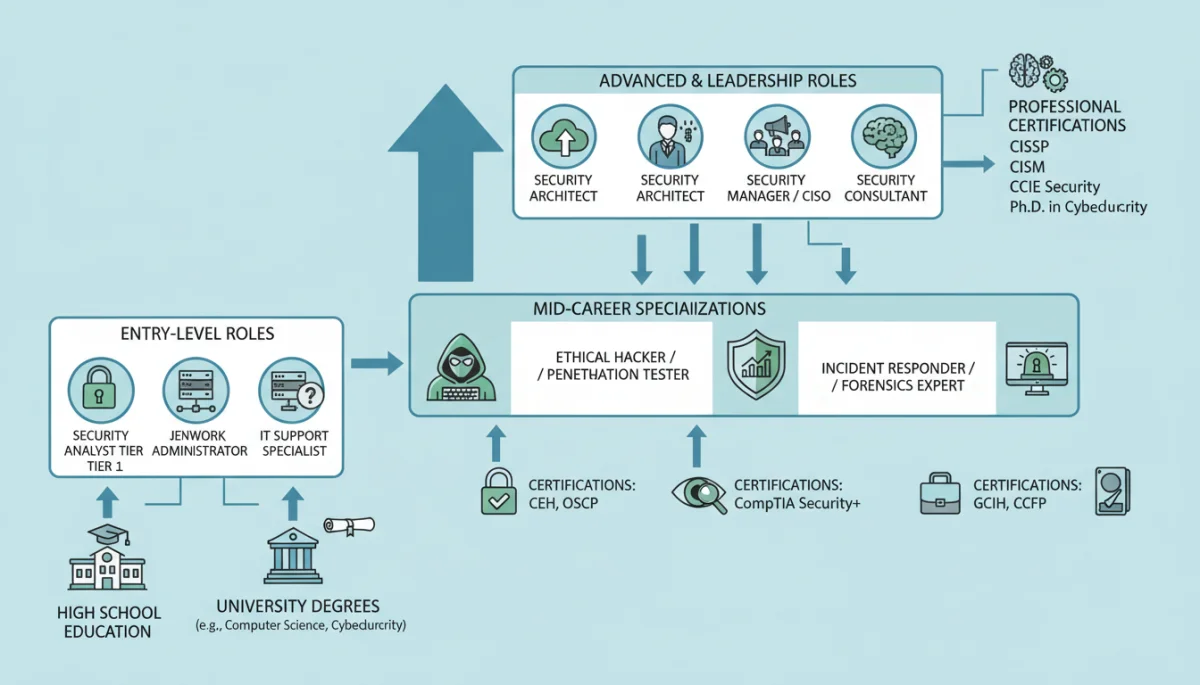
- Career pathways: Provides clear pathways into higher education and diverse cybersecurity professions.
- National security: Contributes to a stronger national defense against cyber adversaries.
In conclusion, the imperative for robust cybersecurity education for high school students is clear. It’s about more than just job creation; it’s about societal resilience, individual empowerment, and national security in an increasingly interconnected world.
Key components of effective high school cybersecurity programs
Effective cybersecurity programs for high school students are designed to be comprehensive, engaging, and relevant to the current threat landscape. They typically integrate theoretical knowledge with practical, hands-on experience. Such programs aim to build a strong foundation that can be expanded upon in college or through professional certifications.
A well-rounded curriculum often includes topics like network security, data privacy, ethical hacking, digital forensics, and secure coding. These areas provide students with a broad understanding of the field, allowing them to explore different specializations within cybersecurity. Practical exercises and simulations are vital for solidifying learning.
Curriculum design and practical applications
Modern cybersecurity curricula must evolve quickly to keep pace with technological advancements and emerging threats. Programs should prioritize active learning, encouraging students to apply concepts in realistic scenarios. This could involve setting up virtual labs where students can practice identifying vulnerabilities or responding to simulated cyberattacks.
Beyond technical skills, effective programs also emphasize soft skills like critical thinking, teamwork, and communication. These are essential for incident response, collaboration within security teams, and effectively conveying complex technical information to non-technical stakeholders.
- Hands-on labs: Provide practical experience with security tools and techniques.
- Capture the Flag (CTF) competitions: Foster problem-solving and competitive learning.
- Guest speakers: Industry professionals share real-world insights and career advice.
- Mentorship opportunities: Connect students with experienced cybersecurity professionals.
Ultimately, a successful high school cybersecurity program equips students with both the technical expertise and the transferable skills needed to thrive in a dynamic and challenging field. It prepares them not just for a job, but for a career path with continuous learning and adaptation.
Leading cybersecurity curricula and certifications for high schoolers
Several established curricula and certifications are gaining traction in U.S. high schools, providing structured pathways for students interested in cybersecurity. These programs often align with industry standards, offering recognizable credentials that can jumpstart a student’s career or college application process. They are designed to be accessible while maintaining rigor.
Examples include the CompTIA ITF+ and Security+ certifications, which offer a solid entry point into IT and cybersecurity. The CyberPatriot program, a national youth cyber education program, also provides invaluable competitive experience. These initiatives are crucial for building a pipeline of talent.
Recognized programs and their benefits
The National Initiative for Cybersecurity Education (NICE) framework, developed by NIST, provides a common language for cybersecurity education and workforce development. High school programs often align with NICE categories, ensuring that students gain skills relevant to specific job roles. This alignment makes it easier for students to transition into higher education or entry-level positions.
- CompTIA certifications: Industry-recognized, covering fundamental IT and security concepts.
- CyberPatriot: National competition fostering technical skills and teamwork in cyber defense.
- Cisco Networking Academy: Offers courses in networking and cybersecurity, leading to certifications.
- AP Computer Science Principles: Introduces foundational computing concepts, including some relevant to cybersecurity.
These leading curricula and certifications offer significant benefits, from providing a structured learning path to conferring credentials that enhance employability and academic prospects. They are instrumental in validating a student’s knowledge and skills in cybersecurity.
Integrating cybersecurity into broader STEM education
Cybersecurity education shouldn’t exist in isolation; it thrives when integrated into a broader STEM (Science, Technology, Engineering, and Mathematics) framework. This approach allows students to see the interdisciplinary nature of cybersecurity, connecting it with computer science, mathematics, and even social sciences. It enriches their overall educational experience.
By demonstrating how cybersecurity principles apply across various STEM disciplines, students can better understand its real-world impact. For instance, encryption relies heavily on mathematical concepts, while network security is deeply intertwined with computer science principles. This integrated learning fosters a more holistic understanding of technology.
Cross-disciplinary learning opportunities
Schools can create innovative learning opportunities by collaborating across departments. A computer science class might tackle secure coding, while a math class explores cryptography. Even a social studies class could discuss the ethical implications of cyber warfare or data privacy laws. These connections make learning more engaging and relevant.
Furthermore, integrating cybersecurity can attract a more diverse group of students, including those who might not traditionally consider a career in technology. By presenting cybersecurity as a field that solves complex problems with societal impact, it can appeal to a wider range of interests and talents.
- Mathematics: Cryptography, algorithms, statistical analysis for threat detection.
- Computer Science: Secure coding, network protocols, operating system security.
- Engineering: Secure system design, hardware security, embedded systems.
- Social Sciences: Ethics, privacy laws, cyber policy, human factors in security.
Integrating cybersecurity into the broader STEM curriculum ensures students develop a comprehensive understanding of the field, recognizing its connections to other disciplines and its profound impact on society. This holistic approach prepares them for diverse challenges.
The role of extracurricular activities and competitions
Beyond the classroom, extracurricular activities and competitions play a crucial role in enhancing cybersecurity education for high school students. These informal learning environments provide opportunities for practical application, teamwork, and developing a passion for the field. They often bridge the gap between theoretical knowledge and real-world challenges.
Competitions like CyberPatriot, picoCTF, and similar events allow students to test their skills against peers, solve complex problems under pressure, and discover new areas of interest. These experiences are invaluable for building confidence, fostering a competitive spirit, and developing a network of like-minded individuals.
Benefits of hands-on engagement
Participating in cybersecurity clubs or competitions offers unique benefits that traditional classroom settings might not fully provide. Students gain hands-on experience with tools and techniques used by professionals, develop problem-solving strategies, and learn to collaborate effectively in a team environment. These are highly sought-after skills in the cybersecurity industry.
Moreover, these activities often feature mentorship from industry professionals or college students, providing valuable guidance and insights into career paths. Such exposure can significantly influence a student’s decision to pursue higher education or a career in cybersecurity, offering a glimpse into the professional world.
- Skill application: Apply classroom knowledge to solve real-world cybersecurity challenges.
- Teamwork and collaboration: Develop essential soft skills for working in security teams.
- Networking: Connect with peers, mentors, and industry professionals.
- Career exploration: Gain insights into various cybersecurity roles and specializations.
Extracurricular activities and competitions are indispensable for deepening a student’s understanding and passion for cybersecurity. They provide a dynamic and engaging platform for learning that complements formal education and prepares students for future success.
Future outlook: Preparing students for 2026 and beyond
As we look towards 2026 and beyond, cybersecurity education for U.S. high school students must continue to adapt and innovate. The threat landscape is constantly evolving, driven by advancements in artificial intelligence, quantum computing, and the Internet of Things (IoT). Preparing students for this future requires foresight and flexibility in educational approaches.
Future programs will likely emphasize emerging technologies, focusing on areas like AI ethics in cybersecurity, securing IoT devices, and understanding the implications of quantum cryptography. The goal is not just to teach current best practices, but to instill a mindset of continuous learning and adaptability, essential for a long-term career in the field.
Anticipating technological shifts and job market demands
Educators and policymakers need to work closely with industry to anticipate future technological shifts and corresponding job market demands. This collaboration can ensure that high school cybersecurity programs remain relevant and produce graduates with the skills most needed by employers. Regular curriculum updates will be paramount.
Furthermore, fostering diversity and inclusion in cybersecurity education will be crucial. Encouraging students from underrepresented groups to enter the field will bring new perspectives and strengthen the workforce. Outreach programs and inclusive learning environments can help achieve this goal, broadening the talent pool.
- AI and machine learning in security: Understanding their role in threat detection and defense.
- IoT security: Securing interconnected devices and smart environments.
- Cloud security: Protecting data and applications in cloud infrastructures.
- Quantum computing implications: Preparing for post-quantum cryptography.
The future of cybersecurity education for high school students is dynamic and promising. By focusing on emerging technologies, industry collaboration, and inclusivity, these programs can effectively prepare the next generation of cybersecurity professionals to meet the challenges of 2026 and far beyond.
| Key Aspect | Brief Description |
|---|---|
| Talent Gap | High school programs address the critical shortage of cybersecurity professionals. |
| Curriculum Focus | Integrates theory with practical, hands-on experience in network security, forensics. |
| Certifications | Offers industry-recognized credentials like CompTIA and CyberPatriot experience. |
| Future Readiness | Prepares students for emerging threats and technologies like AI and IoT security. |
Frequently asked questions about cybersecurity education
Cybersecurity education is crucial for high school students because it addresses a growing talent shortage in the field, equips them with essential digital literacy skills, and prepares them for high-demand careers. It also fosters responsible digital citizenship and helps protect against evolving cyber threats.
High school students can access various cybersecurity programs, including dedicated courses, career and technical education (CTE) pathways, extracurricular clubs, and national competitions like CyberPatriot. Many programs also offer opportunities to earn industry certifications such as CompTIA ITF+ or Security+.
These programs prepare students by providing foundational technical skills, fostering critical thinking, and offering practical, hands-on experience. They also expose students to various cybersecurity specializations, helping them identify career interests and build a strong resume for college applications or entry-level positions.
Most introductory high school cybersecurity programs have minimal prerequisites, often requiring only basic computer literacy. More advanced courses might suggest prior experience in computer science or programming. The goal is usually to be accessible to a wide range of students with varying levels of prior technical knowledge.
Extracurricular activities, such as cybersecurity clubs and competitions, are vital. They provide practical application of learned skills, encourage teamwork, and foster a passion for the field in an engaging environment. These activities often include mentorship and networking opportunities, enhancing overall learning and career exploration.
Conclusion
The journey into cybersecurity for U.S. high school students in 2026 is one of immense opportunity and critical importance. By embracing comprehensive cybersecurity education programs, students are not only equipping themselves with invaluable skills for high-demand careers but also contributing to the digital resilience of the nation. These initiatives, spanning robust curricula, industry certifications, cross-disciplinary integration, and engaging extracurriculars, collectively forge a formidable defense against future cyber threats. Investing in this generation’s cybersecurity literacy is an investment in a secure and prosperous digital future for all.
Autor