EdTech Trends 2025: A Teacher’s Guide for US Classrooms
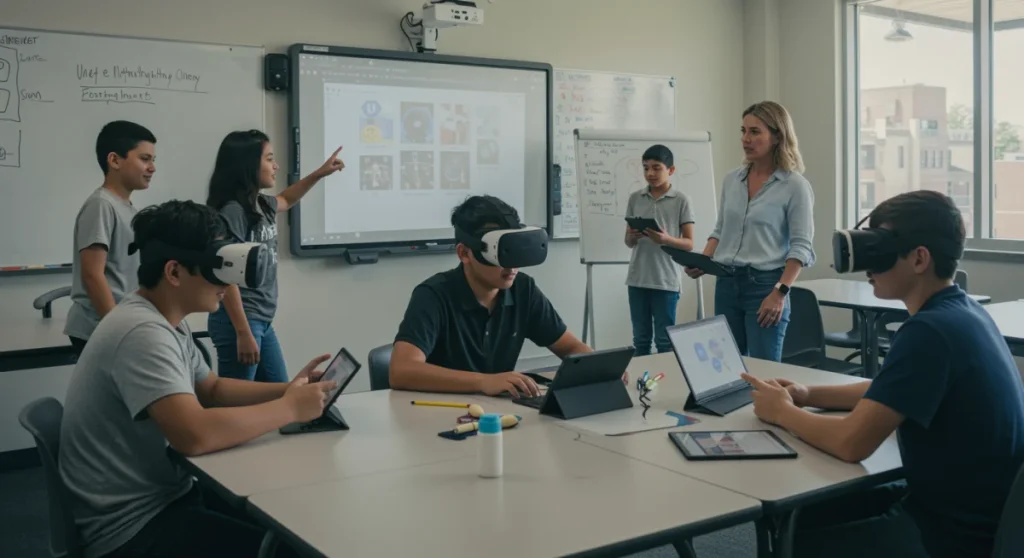
The latest trends in educational technology for US classrooms in 2025 will revolutionize teaching through AI-driven personalization, immersive learning experiences, and advanced data analytics, empowering educators to create more engaging and effective learning environments.
As we advance towards 2025, the landscape of education in the United States is undergoing a profound transformation, largely driven by technological innovation. For educators, understanding the latest trends in educational technology for US classrooms in 2025: a teacher’s guide is not just beneficial, but essential. This guide aims to demystify these emerging technologies, offering practical insights and strategies to seamlessly integrate them into daily teaching practices, ultimately enhancing student engagement and learning outcomes.
Artificial Intelligence and Adaptive Learning Platforms
Artificial Intelligence (AI) is no longer a futuristic concept; it is rapidly becoming a cornerstone of modern education. In US classrooms by 2025, AI will power sophisticated adaptive learning platforms that can tailor content and pace to each student’s individual needs. This personalization allows educators to address diverse learning styles and academic levels within a single classroom, fostering greater equity and effectiveness.
These platforms leverage AI algorithms to analyze student performance data in real-time, identifying areas where a student might struggle or excel. Based on this analysis, the system can recommend specific resources, practice problems, or even alternative explanations. This dynamic feedback loop supports continuous improvement and helps students build a deeper understanding of subjects at their own pace.
Personalized Learning Pathways
One of the most significant advantages of AI in education is its ability to create truly personalized learning pathways. Instead of a one-size-fits-all curriculum, AI systems can adapt to a student’s progress and interests, making learning more relevant and engaging.
- Customized Content Delivery: AI platforms can select and deliver educational materials that match a student’s current proficiency level and preferred learning style.
- Real-time Feedback and Support: Students receive immediate feedback on assignments and quizzes, along with explanations and suggestions for improvement.
- Proactive Intervention: AI can flag students who are falling behind, allowing teachers to intervene with targeted support before issues escalate.
The integration of AI in adaptive learning platforms promises to transform the teacher’s role from a primary content deliverer to a facilitator of personalized learning journeys. Teachers will gain valuable insights into student performance, enabling them to provide more focused and impactful instruction. This shift empowers educators to spend less time on administrative tasks and more time on meaningful interactions with students, addressing their unique challenges and celebrating their successes.
Immersive Learning: Virtual and Augmented Reality
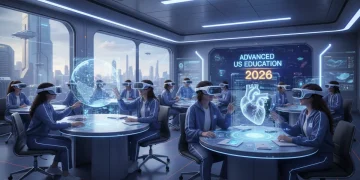
Immersive technologies, specifically Virtual Reality (VR) and Augmented Reality (AR), are set to redefine experiential learning in US classrooms by 2025. These technologies offer students unparalleled opportunities to explore complex concepts, visit historical sites, or conduct virtual experiments, all from within the classroom environment. This goes beyond traditional textbooks, creating memorable and highly engaging educational experiences.
VR allows students to step into entirely simulated environments, such as exploring ancient Rome, dissecting a virtual frog, or journeying through the human body. AR, on the other hand, overlays digital information onto the real world, enriching physical objects with interactive content. Imagine students pointing their tablets at a textbook image of a volcano and watching it erupt in 3D on their screen, or dissecting a virtual heart projected onto their desk.
Enhancing Engagement and Understanding
The power of immersive learning lies in its ability to make abstract concepts tangible and complex subjects more accessible. By actively participating in simulations, students develop a deeper understanding and retain information more effectively than through passive learning methods.
- Virtual Field Trips: Students can ‘travel’ to distant locations, historical periods, or even outer space, providing context and inspiration that traditional field trips cannot always offer.
- Interactive Simulations: Complex scientific or engineering principles become clearer through hands-on virtual experimentation without the need for expensive equipment or safety concerns.
- Gamified Learning: Immersive environments can transform learning into engaging games, increasing motivation and participation, especially in subjects that students might find challenging.
While the initial cost of VR/AR hardware might seem high, the long-term benefits in terms of student engagement, retention, and the ability to simulate otherwise impossible experiences make it a worthwhile investment for educational institutions. Teachers will need to adapt their pedagogical approaches to leverage these tools effectively, designing lessons that integrate virtual and augmented experiences seamlessly into the curriculum, moving beyond novelty to genuine educational impact.
Data Analytics and Learning Management Systems (LMS)
The strategic use of data analytics within robust Learning Management Systems (LMS) will be paramount for US classrooms in 2025. These systems are evolving beyond simple content repositories to sophisticated platforms that collect, analyze, and present valuable insights into student performance and engagement. This data empowers teachers to make informed instructional decisions, personalize learning, and identify areas for curriculum improvement.
Modern LMS platforms integrate various tools, from assignment submission and grading to discussion forums and attendance tracking. The real innovation lies in their ability to synthesize this information into actionable data points. Teachers can quickly view individual student progress, identify common misconceptions across a class, and even predict potential academic challenges before they fully manifest.
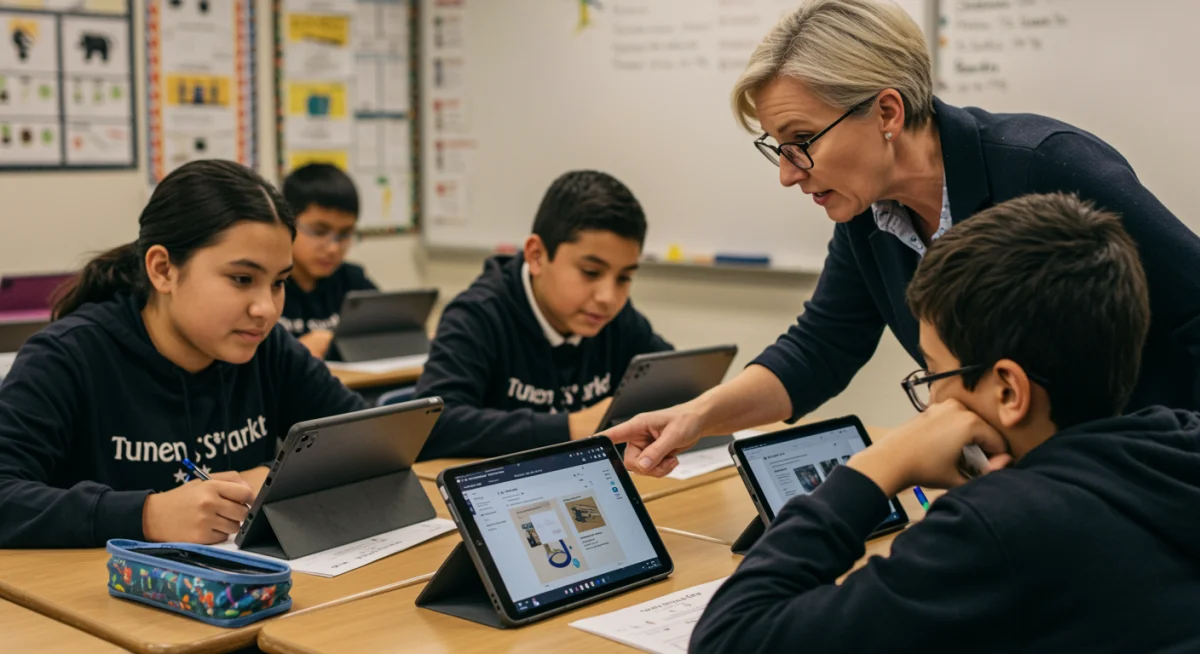
Data analytics within an LMS provides a holistic view of the learning process, moving beyond traditional test scores to encompass engagement patterns, resource utilization, and collaborative activity. This comprehensive data allows educators to understand not just what students know, but how they learn.
Leveraging Data for Instructional Improvement
The insights derived from LMS data are invaluable for refining teaching strategies and optimizing learning outcomes. Teachers can use this information to adapt their lessons, provide targeted feedback, and design more effective interventions.
- Performance Tracking: Monitor student progress on assignments, quizzes, and projects to identify trends and individual needs.
- Engagement Metrics: Analyze student participation in online discussions, resource access, and time spent on learning activities.
- Curriculum Evaluation: Use aggregated data to assess the effectiveness of specific teaching materials or instructional methods.
By 2025, teachers will be adept at interpreting these data dashboards, using them to create more responsive and effective learning environments. The focus shifts from simply collecting data to actively utilizing it to drive pedagogical improvements, ensuring that every student has the best possible chance to succeed. This data-driven approach fosters a culture of continuous improvement within the classroom and across educational institutions.
Collaborative Tools and Hybrid Learning Environments
The acceleration of digital collaboration tools and the proliferation of hybrid learning models are defining features of US classrooms in 2025. The pandemic underscored the critical need for flexible learning environments, and these tools have evolved to support seamless interaction, whether students are physically present or learning remotely. This hybrid approach offers unprecedented flexibility and accessibility, catering to diverse student needs and circumstances.
Collaborative platforms, such as shared document editors, virtual whiteboards, and video conferencing tools, enable students to work together on projects in real-time, regardless of their location. These tools mirror professional work environments, equipping students with essential 21st-century skills like teamwork, communication, and digital literacy. The hybrid model allows schools to offer a blend of in-person and online instruction, maximizing resources and providing adaptive solutions for various situations.
Fostering Connection and Engagement
Effective hybrid learning relies on tools that maintain student connection and engagement, ensuring that remote learners feel as much a part of the classroom community as those physically present. This requires thoughtful integration and pedagogical strategies.
- Synchronous and Asynchronous Collaboration: Tools support both real-time group work and flexible, self-paced contributions to projects.
- Enhanced Communication Channels: Integrated chat, video, and announcement features keep all students informed and connected with teachers and peers.
- Flexible Access to Resources: All learning materials, lectures, and assignments are accessible online, supporting students who may miss in-person sessions.
Teachers in 2025 will be skilled navigators of these hybrid environments, designing lessons that fluidly transition between in-person and online activities. They will leverage collaborative tools to foster a sense of community and shared purpose, ensuring that all students, regardless of their physical location, receive a rich and interactive educational experience. The emphasis will be on creating inclusive and adaptable learning spaces that prepare students for a future where remote collaboration is increasingly common.
Digital Citizenship and Cybersecurity Education
As technology becomes more deeply embedded in US classrooms, the importance of digital citizenship and cybersecurity education cannot be overstated. By 2025, these topics will be integral components of the curriculum, equipping students with the knowledge and skills to navigate the digital world safely, ethically, and responsibly. This goes beyond simply teaching internet safety; it encompasses understanding digital rights, responsibilities, and the broader societal impact of technology.
Digital citizenship education covers aspects like online etiquette, media literacy, privacy protection, and combating cyberbullying. Cybersecurity education focuses on practical skills for protecting personal information, recognizing phishing attempts, understanding data breaches, and creating strong passwords. These are not merely elective topics but fundamental life skills necessary for success and safety in an increasingly digital society.
Empowering Responsible Digital Natives
Educating students on digital citizenship and cybersecurity empowers them to become responsible and discerning users of technology, protecting themselves and contributing positively to online communities.
- Media Literacy: Teaching students to critically evaluate online information, identify misinformation, and understand digital biases.
- Online Safety Protocols: Instructing on safe browsing habits, privacy settings, and recognizing potential online threats.
- Ethical Digital Behavior: Fostering an understanding of digital footprints, intellectual property, and respectful online interactions.
Teachers will play a crucial role in modeling appropriate digital behaviors and integrating these lessons across various subjects, not just in dedicated tech classes. By 2025, educators will be proficient in discussing complex digital dilemmas with students, fostering critical thinking about technology’s role in their lives. This proactive approach ensures that students are not just consumers of technology, but informed, ethical, and secure participants in the digital age, capable of navigating its complexities with confidence.
Gamification and Microlearning
Gamification and microlearning are emerging as powerful pedagogical strategies that will significantly impact US classrooms by 2025. Gamification involves applying game-design elements and game principles in non-game contexts, such as learning, to enhance engagement and motivation. Microlearning, on the other hand, delivers content in small, focused bursts, optimizing for attention spans and immediate application. These two approaches complement each other, creating more dynamic and effective learning experiences.
In a gamified classroom, students might earn points, badges, or climb leaderboards for completing tasks, mastering concepts, or collaborating effectively. This adds an element of fun and competition, transforming routine assignments into engaging challenges. Microlearning modules, often presented as short videos, interactive quizzes, or quick challenges, are ideal for reinforcing concepts, introducing new topics, or providing just-in-time support. They cater to the modern student’s preference for concise, digestible information.
Boosting Engagement and Retention
Both gamification and microlearning are designed to combat disengagement and improve information retention by making learning more interactive and less overwhelming.
- Increased Motivation: Game-like elements provide immediate rewards and a sense of accomplishment, encouraging continued effort.
- Improved Focus: Microlearning’s short format helps maintain student attention and reduces cognitive overload.
- Flexible Learning: Small, self-contained modules can be accessed anytime, anywhere, supporting independent study and review.
Teachers in 2025 will creatively integrate gamified elements into their lesson plans and leverage microlearning resources to break down complex topics into manageable chunks. This approach not only makes learning more enjoyable but also caters to diverse learning paces and preferences. By adopting these strategies, educators can foster a more motivated and self-directed learning environment, where students actively seek knowledge and celebrate their progress, ultimately leading to deeper understanding and greater academic success.
| Key Trend | Brief Description |
|---|---|
| AI & Adaptive Learning | Personalized content delivery and real-time feedback tailored to individual student needs. |
| Immersive Learning (VR/AR) | Experiential education through virtual field trips and interactive simulations for deeper understanding. |
| Data Analytics & LMS | Leveraging student performance data from learning management systems for informed instructional decisions. |
| Gamification & Microlearning | Engaging students through game-like elements and delivering content in short, focused bursts for better retention. |
Frequently Asked Questions About EdTech Trends in 2025
AI will significantly streamline administrative tasks like grading and lesson planning. More importantly, it will provide teachers with detailed insights into student progress, allowing them to focus more on individualized instruction, targeted interventions, and fostering deeper student-teacher connections rather than general content delivery.
While initial costs can be a barrier, the price of VR/AR hardware is decreasing, and more affordable, accessible options are emerging. Many schools are also exploring grant opportunities or shared resource models. The educational benefits in engagement and understanding are driving wider adoption, making them increasingly accessible.
Key challenges include ensuring equitable access to technology for all students, providing adequate teacher training and professional development, securing sufficient funding, and managing potential distractions. Overcoming these requires strategic planning, ongoing support, and a clear vision for technology’s role in education.
Teachers can prepare by engaging in professional development focused on edtech integration, experimenting with available tools, collaborating with peers, and staying informed about emerging trends. Embracing a growth mindset and being open to new pedagogical approaches will be crucial for successful adaptation.
Absolutely not. These technologies are powerful tools designed to augment and enhance the teacher’s role, not replace it. The human element of teaching—empathy, mentorship, critical thinking development, and social-emotional learning—remains irreplaceable. Technology empowers teachers to be more effective and impactful.
Embracing the Future of Education
The journey towards 2025 presents an exciting era for US educators, filled with transformative technological advancements. From the personalized learning pathways enabled by AI and adaptive platforms to the immersive experiences of VR and AR, and the data-driven insights from advanced LMS, the tools available to teachers are becoming increasingly sophisticated. By also fostering digital citizenship and integrating engaging strategies like gamification and microlearning, educators can create dynamic, inclusive, and highly effective learning environments. Embracing these trends is not just about adopting new gadgets; it’s about reimagining the educational experience to better prepare students for a rapidly evolving world, ensuring they are not just consumers of information but active, engaged, and responsible learners.
Autor