2026 Student Loan Interest Rate Forecast: US Borrower Insights
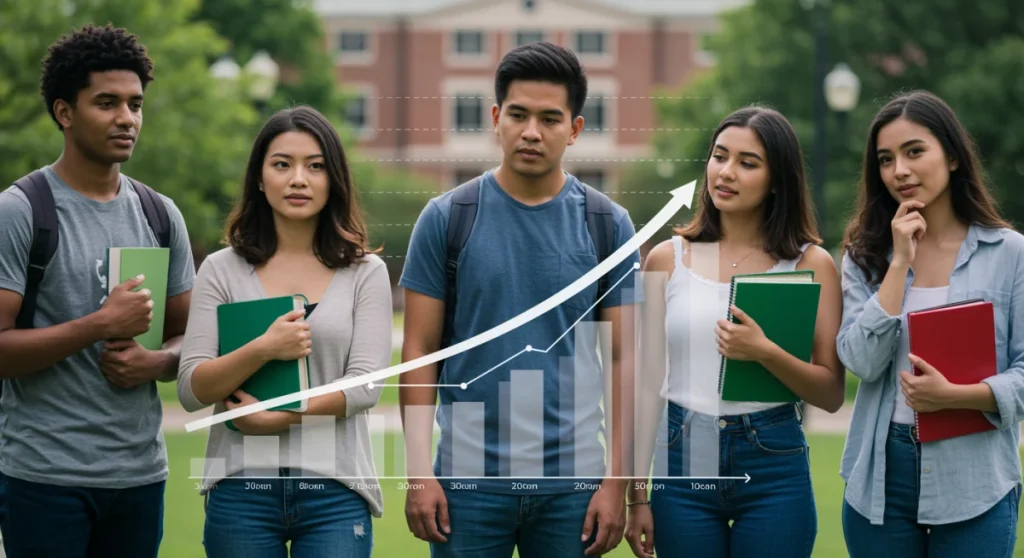
The 2026 student loan interest rate forecast suggests potential fluctuations influenced by economic indicators and policy shifts, urging US borrowers to understand these changes for effective financial planning and debt management.
As we approach 2026, understanding the trajectory of 2026 student loan rates becomes critically important for millions of US borrowers. The financial landscape is constantly evolving, and future interest rate adjustments could significantly impact your educational debt.
Understanding the Current Student Loan Interest Rate Environment
The current student loan interest rate environment is a complex interplay of economic factors, federal policy, and market dynamics. For US borrowers, these rates dictate the cost of borrowing for higher education, directly influencing monthly payments and the total amount repaid over the life of the loan. Federal student loan rates are typically set annually based on the 10-year Treasury note auction, while private loan rates are often tied to benchmarks like the prime rate or LIBOR (though LIBOR is being phased out).
Recent years have seen considerable volatility in interest rates across various financial products, including student loans. This volatility is a direct response to broader economic shifts, such as inflation, employment figures, and the Federal Reserve’s monetary policy decisions. Borrowers have experienced periods of historically low rates, particularly during the pandemic, followed by a gradual rise as the economy stabilized and inflation concerns grew.
Federal vs. Private Loan Rate Structures
It’s crucial to distinguish between federal and private student loan rate structures. Federal student loans offer fixed interest rates, meaning the rate you receive when you take out the loan remains the same for its entire life. This provides predictability in repayment. Private student loans, on the other hand, can offer both fixed and variable rates. Variable rates can change over time, potentially leading to higher or lower payments depending on market conditions.
- Federal Loan Rates: Fixed, set annually by Congress based on Treasury yields.
- Private Loan Rates: Can be fixed or variable, often tied to market indices like SOFR (Secured Overnight Financing Rate).
- Impact on Borrowers: Fixed rates offer stability, while variable rates introduce risk and potential for increased costs.
The implications of these structures are profound. Borrowers with federal loans benefit from a stable payment schedule, making long-term financial planning easier. Those with variable-rate private loans must closely monitor market trends, as even small rate increases can significantly affect their budgets. Understanding these foundational elements is the first step in anticipating the 2026 student loan rates.
Key Economic Indicators Influencing 2026 Student Loan Rates
The forecast for 2026 student loan rates is heavily influenced by a handful of critical economic indicators. These macroeconomic forces shape the broader financial landscape, directly impacting the cost of borrowing for both federal and private student loans. Keeping an eye on these indicators can provide valuable insight into potential rate movements.
One of the most significant factors is inflation. When inflation is high, the Federal Reserve typically raises interest rates to cool down the economy. This, in turn, can lead to higher borrowing costs across the board, including for student loans. Conversely, low inflation might allow for more stable or even decreasing rates. The labor market also plays a role; a strong job market often correlates with economic growth and potentially higher rates, as consumers have more disposable income.
The Federal Reserve’s Role and Monetary Policy
The Federal Reserve is arguably the most influential entity when it comes to interest rates. Their decisions on the federal funds rate, a benchmark for other interest rates, ripple throughout the economy. When the Fed raises rates, it becomes more expensive for banks to borrow money, a cost they then pass on to consumers through higher loan rates.
- Inflation Rates: Higher inflation often prompts the Fed to increase rates.
- Employment Data: Strong employment can signal economic strength, influencing rate decisions.
- GDP Growth: Robust economic growth can also contribute to rising interest rates.
- Federal Funds Rate: The Fed’s primary tool, directly impacting short-term and indirectly long-term rates.
Another crucial indicator is the 10-year Treasury note yield. Federal student loan rates are directly tied to this yield, which reflects investor expectations about future economic conditions and inflation. A rising 10-year Treasury yield typically translates to higher federal student loan rates in the subsequent academic year. Therefore, monitoring these economic signals provides a clearer picture of what US borrowers might expect for 2026 student loan rates and their financial planning.
Federal Policy and Legislative Changes Affecting Student Loans in 2026
Beyond economic indicators, federal policy and potential legislative changes are paramount in shaping the landscape of 2026 student loan rates. Government decisions can directly alter how rates are calculated, the terms of repayment, and even the availability of certain loan programs. US borrowers must remain vigilant about these political developments, as they can have a profound impact on their financial obligations.
Historically, Congress has periodically reviewed and revised the formulas used to set federal student loan interest rates. These discussions often involve balancing the need for affordable education with the fiscal responsibilities of the government. Any new legislation or adjustments to existing laws could introduce new rate-setting mechanisms or modify current ones, leading to different outcomes for borrowers than purely market-driven predictions.
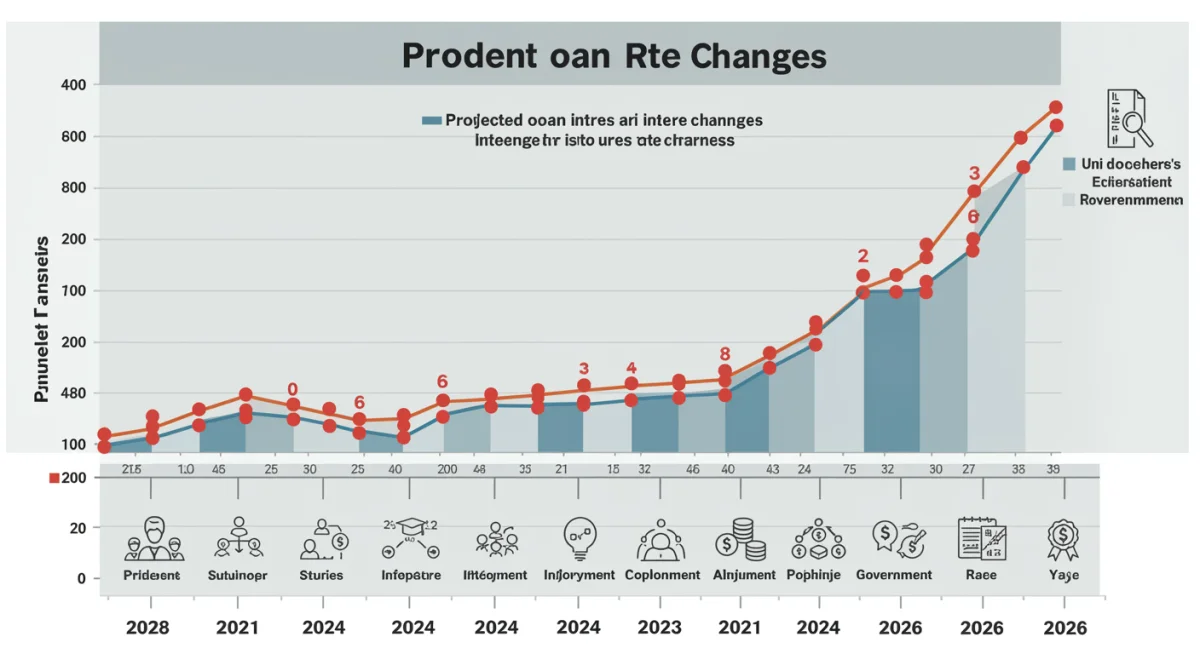
Recently, there have been ongoing debates about student loan forgiveness, income-driven repayment (IDR) plans, and the overall structure of federal student aid. While these discussions don’t always directly impact interest rates, they can influence the broader environment in which loans are administered and repaid. For instance, changes to IDR plans might make higher interest rates more manageable for some borrowers by adjusting monthly payments based on income.
Potential Legislative Reforms and Their Impact
Several legislative reforms could be on the horizon that might affect 2026 student loan rates. These range from proposals to simplify the federal student aid system to more radical ideas about eliminating interest altogether for certain types of loans. While the passage of such comprehensive reforms is uncertain, their discussion alone highlights the dynamic nature of student loan policy.
- Simplification of FAFSA: Streamlining the application process could affect eligibility and awareness of federal aid.
- Changes to Rate-Setting Formulas: Congress could revise how rates are determined, potentially delinking them from the 10-year Treasury note.
- Expansion of IDR Plans: Broader access or more generous terms for IDR could indirectly mitigate the impact of higher rates.
- Targeted Forgiveness Programs: While not directly impacting rates, these can reduce overall debt burdens for specific groups.
Moreover, the political climate surrounding higher education funding and student debt relief will play a significant role. Election cycles and shifts in legislative priorities can bring new proposals to the forefront, making predictions about 2026 student loan rates inherently tied to the political landscape. Borrowers should monitor news from the Department of Education and congressional committees for the latest developments.
Forecasted Scenarios for 2026 Student Loan Interest Rates
Projecting 2026 student loan rates involves considering a range of possible economic and policy scenarios. While no one can predict the future with absolute certainty, financial analysts and economic institutions often develop different forecasts based on varying assumptions about inflation, economic growth, and federal policy decisions. These scenarios help US borrowers prepare for diverse outcomes.
One scenario suggests a continued upward trend in interest rates, driven by persistent inflation and a hawkish stance from the Federal Reserve. Under this outlook, borrowers could face higher rates on new federal and private loans, leading to increased repayment burdens. This scenario typically assumes that economic growth remains robust enough to absorb higher borrowing costs without triggering a significant downturn.
Optimistic, Moderate, and Pessimistic Outlooks
Alternatively, an optimistic scenario might envision a stabilization or even a slight decrease in rates. This could occur if inflation moderates more quickly than expected, allowing the Federal Reserve to ease its monetary policy. Such a scenario would be favorable for borrowers, potentially reducing the cost of new loans and making existing variable-rate loans more affordable.
- Optimistic Scenario: Inflation cools, Fed eases policy, leading to stable or slightly lower rates.
- Moderate Scenario: Rates remain largely stable, with minor fluctuations mirroring gradual economic adjustments.
- Pessimistic Scenario: Persistent inflation, aggressive Fed action, resulting in higher rates across the board.
A moderate scenario often anticipates rates remaining relatively stable, with minor fluctuations reflecting ongoing economic adjustments. This outlook assumes a balanced approach by the Federal Reserve and a largely predictable economic environment, without major shocks. In this case, borrowers might not see dramatic changes but would still need to account for minor shifts. The interplay of these scenarios underscores the importance of flexible financial planning for 2026 student loan rates.
Financial Impact on US Borrowers: What to Expect
The financial impact of 2026 student loan rates on US borrowers can be substantial, influencing everything from monthly budgets to long-term financial goals. Understanding these potential effects is crucial for effective planning and mitigating adverse outcomes. Borrowers need to assess how different rate scenarios could translate into real-world costs.
Higher interest rates mean that more of each payment goes towards interest rather than the principal balance, extending the repayment period or increasing the total amount paid over the life of the loan. For new borrowers, higher rates directly translate to a more expensive education. For existing borrowers with variable-rate private loans, an increase in rates can immediately raise their monthly payments, potentially straining their finances.
Strategies for Managing Increased Costs
Conversely, stable or lower rates could provide relief, making education more affordable and freeing up funds for other financial priorities. Regardless of the forecast, proactive financial management is key. This includes exploring refinancing options, consolidating loans, or investigating income-driven repayment plans, particularly for federal loans.
- Increased Monthly Payments: Higher rates directly lead to larger required monthly payments.
- Higher Total Cost of Loan: More interest accrues over the loan’s lifetime.
- Impact on Budget: Reduced disposable income, affecting savings and other financial goals.
- Refinancing Opportunities: Potential to secure lower rates for private loans if market conditions improve.
Furthermore, the psychological impact of student loan debt cannot be overstated. Uncertainty about future rates can add stress, making it harder for borrowers to plan for major life events like buying a home or starting a family. Therefore, staying informed about the 2026 student loan rates and having a contingency plan is vital for maintaining financial well-being and peace of mind.
Strategies for US Borrowers to Prepare for 2026 Rates
Preparing for the anticipated 2026 student loan rates requires a proactive and informed approach from US borrowers. By taking strategic steps now, individuals can mitigate potential risks and position themselves to benefit from favorable conditions. This preparedness involves reviewing current loan terms, understanding available options, and making informed financial decisions.
One of the most immediate strategies is to evaluate your existing student loans. If you have private loans with variable interest rates, consider whether refinancing into a fixed-rate loan might be beneficial, especially if rates are expected to rise. This can lock in a predictable payment and protect you from future rate increases. For federal loan holders, understanding the various income-driven repayment (IDR) plans is essential, as these can adjust your monthly payments based on your income and family size, offering a safety net against higher rates.
Proactive Financial Planning and Loan Management
Another crucial step is to build an emergency fund. Having a financial cushion can provide stability if monthly payments increase unexpectedly. Additionally, making extra payments on your principal balance, if feasible, can reduce the total interest paid over the life of the loan, effectively counteracting the impact of higher rates.
- Review Loan Terms: Understand fixed vs. variable rates, and repayment schedules.
- Consider Refinancing: Evaluate if refinancing private variable-rate loans to fixed rates is advantageous.
- Explore IDR Plans: Understand federal income-driven repayment options for flexibility.
- Build Emergency Savings: Create a financial buffer for unexpected payment increases.
- Make Extra Payments: Reduce principal to lower overall interest costs.
Staying informed about economic forecasts and legislative updates is also a key strategy. Subscribe to financial news, follow reputable economic analysts, and monitor official government announcements regarding education policy. The more informed you are, the better equipped you will be to react to changes in 2026 student loan rates. By combining these strategies, US borrowers can navigate the evolving student loan landscape with greater confidence and control over their financial future.
| Key Point | Brief Description |
|---|---|
| Economic Influences | Inflation, Federal Reserve decisions, and Treasury yields are primary drivers of 2026 rates. |
| Federal vs. Private Loans | Fixed rates for federal loans, variable/fixed for private; different rate-setting mechanisms. |
| Policy & Legislation | Government decisions and potential reforms can significantly alter future loan terms. |
| Borrower Preparedness | Strategies like refinancing, IDR, and emergency funds are crucial for managing impact. |
Frequently asked questions about 2026 student loan rates
Federal student loan interest rates are typically set annually by Congress. They are often tied to the yield of the 10-year Treasury note, plus a fixed add-on percentage, determined each spring for loans disbursed in the upcoming academic year.
Private student loan rates, whether fixed or variable, are influenced by broader market conditions, including the Federal Reserve’s actions and benchmark rates like SOFR. If the Fed continues to raise rates, private loan rates are likely to follow suit.
Key indicators include inflation rates, the Federal Reserve’s federal funds rate decisions, and the yield on the 10-year Treasury note. Monitoring these can provide early clues about potential shifts in student loan interest rates for 2026.
Federal student loans have fixed rates set at disbursement. For private loans, you might be able to refinance to a fixed rate if you originally had a variable rate, potentially securing a more predictable payment if rates are expected to rise.
Consider building an emergency fund, exploring income-driven repayment plans for federal loans, or making extra principal payments now. Reviewing refinancing options for private loans is also a smart preparatory step.
Conclusion
The landscape of 2026 student loan rates remains fluid, shaped by a confluence of economic indicators, Federal Reserve policies, and potential legislative actions. For US borrowers, understanding these dynamics is not merely an academic exercise but a critical component of sound financial planning. Proactive engagement with personal loan terms, exploration of repayment options, and diligent monitoring of economic forecasts are essential steps. By staying informed and adopting strategic measures, borrowers can navigate the evolving interest rate environment with greater confidence, ensuring their educational debt remains manageable and aligns with their broader financial goals.
Autor