Federal Budget 2026: Impact on Your US Investments
The Federal Budget 2026 significantly influences US investments by directing government spending, adjusting tax policies, and impacting economic growth, creating both opportunities and challenges for investors.
Understanding how the Federal Budget 2026: How Spending and Revenue Affect Your US Investments is crucial for any savvy investor. The decisions made in Washington regarding government spending and taxation cast a long shadow over every sector of the American economy, directly influencing market performance and the value of your portfolio. Let’s delve into the intricacies of this vital financial blueprint.
Understanding the Federal Budget 2026 Framework
The Federal Budget 2026 represents a comprehensive financial plan outlining the U.S. government’s projected revenues and expenditures for the fiscal year. This intricate document is not merely a collection of numbers; it’s a statement of national priorities, detailing where taxpayer money will be allocated and how the government plans to fund its operations. Its formulation involves extensive negotiation and compromise between various political factions, reflecting the diverse needs and demands of the nation.
Looking ahead to 2026, the budget will likely grapple with ongoing fiscal challenges, including national debt, inflationary pressures, and the evolving demands of a modern economy. These factors will shape the overall fiscal stance, influencing everything from interest rates to consumer confidence. Investors need to pay close attention to the budget’s underlying assumptions and projections, as these can signal future economic trends and potential policy shifts.
Key Components of Federal Spending
Federal spending is broadly categorized into mandatory and discretionary outlays. Mandatory spending includes programs like Social Security and Medicare, which are determined by existing laws and are not subject to annual appropriation decisions. Discretionary spending, on the other hand, is allocated annually through the appropriations process and covers areas such as defense, education, transportation, and scientific research.
- Mandatory Spending: Programs like Social Security, Medicare, and Medicaid constitute the largest portion of federal outlays, often growing due to demographic shifts and healthcare costs.
- Discretionary Spending: This includes defense, education, infrastructure, and research, areas where changes can directly impact specific industries and companies.
- Interest on National Debt: A growing share of the budget is dedicated to servicing the national debt, which can divert funds from other critical areas and influence bond markets.
The balance between these spending categories has significant implications for economic growth and stability. Increased discretionary spending in certain sectors can stimulate innovation and create jobs, while rising mandatory spending might necessitate higher taxes or increased borrowing, potentially affecting investment returns.
The 2026 budget will undoubtedly aim to balance competing priorities, from national security to social welfare, all while attempting to maintain fiscal responsibility. Understanding these foundational elements provides a crucial lens through which to analyze the budget’s potential impact on your investment portfolio.
Revenue Streams: Taxation and Economic Growth
The federal government primarily funds its operations through various revenue streams, with taxation being the most significant. Understanding these sources and how they are projected to perform in 2026 is critical for anticipating potential policy changes and their subsequent effects on the economy and markets. The overall health of the economy directly influences tax receipts, creating a cyclical relationship where economic growth boosts revenue, which in turn can be reinvested to foster further growth.
Major revenue sources include individual income taxes, corporate income taxes, and social insurance taxes. Any adjustments to these tax rates or their underlying structures can have profound effects on disposable income, corporate profitability, and consumer spending patterns. For instance, a reduction in corporate tax rates might encourage investment and share buybacks, while an increase could deter them.
Primary Sources of Federal Revenue
The composition of federal revenue is diverse, but heavily reliant on a few key areas. Shifts in economic activity or legislative changes can dramatically alter the contribution of each source, leading to either budget surpluses or deficits.
- Individual Income Taxes: The largest single source of federal revenue, directly impacted by employment levels, wage growth, and tax bracket adjustments.
- Corporate Income Taxes: Influenced by corporate profits and tax rates, these can affect companies’ ability to invest and distribute dividends.
- Social Insurance and Retirement Receipts: Primarily payroll taxes funding Social Security and Medicare, these are stable but sensitive to employment demographics.
Beyond these primary sources, the government also collects revenue from excise taxes, customs duties, and various fees. While smaller in scale, changes in these areas can still impact specific industries. For example, increased excise taxes on certain goods could affect consumer demand and the profitability of related businesses.
The 2026 budget will project these revenue streams based on economic forecasts, and any discrepancies between projections and actual outcomes can lead to mid-year adjustments or impact future budget cycles. Investors should monitor these revenue forecasts closely, as they offer insights into the government’s financial health and its capacity to fund future initiatives.
Government Spending and its Sectoral Impact
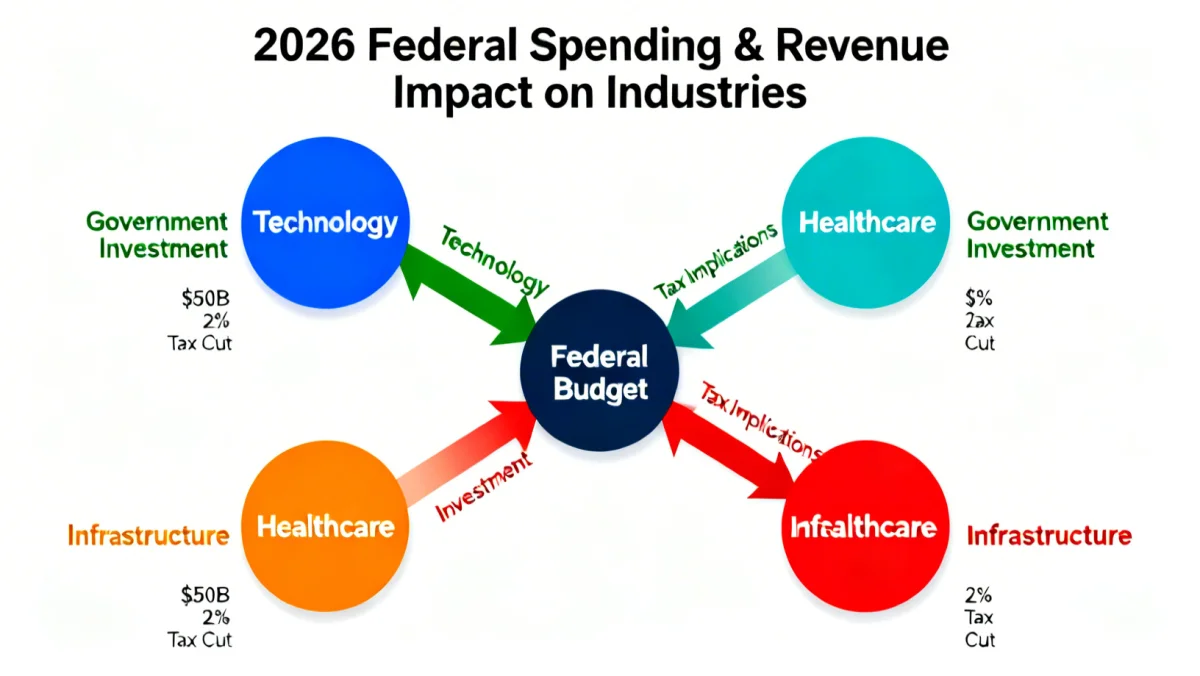
Government spending is a powerful economic lever, capable of stimulating growth, fostering innovation, and directing resources towards specific sectors. The allocation of funds in the Federal Budget 2026 will undoubtedly create winners and losers among industries, presenting both opportunities and risks for investors. Understanding these sectoral impacts is key to strategically positioning your portfolio.
For example, increased investment in infrastructure projects—roads, bridges, public transit, and broadband—can significantly benefit construction companies, materials suppliers, and technology firms involved in smart city solutions. Similarly, a boost in defense spending would likely favor aerospace and defense contractors, while enhanced funding for scientific research could spur growth in biotechnology and pharmaceutical sectors.
Key Sectors Influenced by Federal Outlays
The ripple effect of government spending extends far beyond the direct recipients of funds. Supply chains, employment figures, and regional economies are all affected, creating a complex web of interconnected impacts.
- Infrastructure: Increased spending often supports construction, engineering, and materials companies, along with related technology providers.
- Healthcare: Funding for Medicare, Medicaid, and research initiatives directly impacts pharmaceutical companies, medical device manufacturers, and healthcare service providers.
- Defense: Higher defense budgets typically benefit aerospace, defense contractors, and cybersecurity firms.
- Technology and Research: Government grants and funding for R&D can accelerate innovation in areas like AI, renewable energy, and advanced manufacturing.
Conversely, reductions in spending in certain areas can lead to contractions, job losses, and reduced demand for goods and services. For instance, cuts to environmental protection agencies might negatively affect companies focused on green technologies or compliance services. It’s not just about the absolute level of spending, but also the specific areas targeted.
Investors should analyze the detailed breakdowns of the 2026 budget to identify these potential shifts. Companies with significant government contracts or those operating in heavily regulated or government-supported industries will be particularly sensitive to these budgetary decisions. Diversification across sectors that may benefit from different spending priorities can be a prudent strategy.
Tax Policy Changes and Investment Strategies
Taxation is a fundamental component of the federal budget, and any changes to tax policy in 2026 can profoundly reshape the investment landscape. These changes can affect corporate profitability, individual disposable income, and the attractiveness of various investment vehicles. Investors must carefully evaluate proposed tax reforms to understand their potential implications for their portfolios and adjust their strategies accordingly.
Consider the impact of corporate tax rates: a reduction can boost after-tax profits, potentially leading to higher stock prices, increased dividends, or greater corporate investment. Conversely, an increase could squeeze margins, making equities less attractive. For individuals, changes to income tax rates, capital gains taxes, or inheritance taxes can alter savings incentives and investment decisions.
Potential Tax Policy Adjustments
The political climate and economic conditions often dictate the direction of tax policy. In 2026, discussions might revolve around balancing fiscal responsibility with economic stimulus, leading to targeted adjustments rather than sweeping overhauls.
- Corporate Tax Rates: Changes can influence corporate earnings, investment decisions, and the competitiveness of U.S. businesses globally.
- Individual Income Tax Brackets: Adjustments affect disposable income, consumer spending, and the ability of individuals to save and invest.
- Capital Gains and Dividends Taxes: Alterations here directly impact the after-tax returns on investments, influencing allocation decisions.
- Tax Credits and Deductions: New or modified credits for specific activities (e.g., green energy, R&D) can encourage investment in targeted sectors.
Beyond direct tax rates, other policy considerations like changes to depreciation schedules, international tax rules, or new excise taxes can also have significant, albeit more nuanced, impacts. For example, a shift towards more favorable depreciation rules could incentivize businesses to invest in new equipment, benefiting manufacturing and technology sectors.
Keeping abreast of proposed tax legislation and understanding its potential effects on different asset classes and industries is paramount. Investors might consider rebalancing portfolios to favor assets that benefit from new tax incentives or to reduce exposure to those that face increased tax burdens. Professional financial advice can be invaluable in navigating these complex changes.
Macroeconomic Implications for Investors
The Federal Budget 2026 doesn’t just affect individual sectors or tax burdens; it has profound macroeconomic implications that reverberate throughout the entire U.S. economy, influencing factors like inflation, interest rates, and overall economic growth. These larger trends are critical for investors to monitor, as they can dictate the performance of broad asset classes and the overall market environment.
A budget that leads to significant deficits, for example, might increase the national debt, potentially putting upward pressure on interest rates as the government borrows more. Higher interest rates can make borrowing more expensive for businesses and consumers, slowing economic activity and making fixed-income investments more attractive relative to equities. Conversely, a fiscally conservative budget might lead to lower interest rates and potentially slower growth in the short term.
Influence on Key Economic Indicators
The budget’s impact on macroeconomic indicators creates a complex interplay of forces that investors must consider. No single factor acts in isolation, and understanding these interdependencies is crucial for making informed decisions.
- Inflation: Large government spending programs, especially if unfunded by equivalent revenue, can increase the money supply and demand, potentially leading to inflationary pressures.
- Interest Rates: Government borrowing to finance deficits can increase demand for credit, pushing up interest rates and affecting bonds, mortgages, and corporate borrowing costs.
- GDP Growth: Fiscal stimulus through spending or tax cuts can boost economic activity, but excessive borrowing can crowd out private investment, potentially hindering long-term growth.
- Currency Value: Fiscal policies and economic health can influence the strength of the U.S. dollar, impacting international trade and foreign investment returns.
The budget’s stance on trade policies, regulatory frameworks, and international relations can also have significant macroeconomic effects. For instance, policies that encourage domestic manufacturing might lead to job growth in certain regions but could also spark trade disputes. These broader economic shifts necessitate a flexible and adaptable investment strategy.
Investors should consider how the 2026 budget’s aggregate impact on these macroeconomic variables aligns with their long-term financial goals. Diversifying across different asset classes—equities, bonds, real estate, and commodities—can help mitigate risks associated with specific economic outcomes and capitalize on broader market trends influenced by fiscal policy.
Strategic Investment Adjustments for 2026
Given the potential impacts of the Federal Budget 2026 on various sectors and macroeconomic conditions, investors should consider making strategic adjustments to their portfolios. Proactive planning, rather than reactive responses, can help mitigate risks and capitalize on emerging opportunities. This involves not only understanding the budget’s details but also anticipating market reactions and adapting one’s investment thesis accordingly.
One key adjustment might involve re-evaluating sector allocations. If the budget signals increased spending in renewable energy, for instance, a greater allocation to clean energy stocks might be warranted. Conversely, if certain industries face new regulatory burdens or reduced government support, investors might consider reducing exposure to those areas. The goal is to align your investments with the government’s stated priorities and the economic currents these policies create.
Portfolio Rebalancing and Risk Management
Effective strategic adjustments often involve a combination of rebalancing, diversification, and a keen eye on risk management. The dynamic nature of fiscal policy demands continuous monitoring and a willingness to adapt.
- Sector-Specific Opportunities: Identify industries poised to benefit from increased government spending or favorable tax treatments (e.g., infrastructure, defense, healthcare technology).
- Inflation Hedging: If inflation risks rise due to budgetary policies, consider assets that perform well in inflationary environments, such as real estate, commodities, or inflation-protected securities.
- Interest Rate Sensitivity: Adjust bond portfolio duration based on interest rate forecasts influenced by government borrowing and monetary policy interactions.
- Tax-Efficient Investing: Revisit tax-loss harvesting strategies and consider tax-advantaged accounts to optimize after-tax returns in light of potential tax policy changes.
Furthermore, maintaining a diversified portfolio remains a cornerstone of prudent investing, regardless of budgetary shifts. Diversification across different asset classes, geographies, and investment styles can help cushion against unexpected policy outcomes or market volatility. It’s also wise to maintain a cash reserve for liquidity and to seize opportunistic investments that may arise from market dislocations.
Ultimately, successful investing in the context of the Federal Budget 2026 requires continuous education, a long-term perspective, and the flexibility to adjust as new information emerges. Engaging with a financial advisor who specializes in macroeconomic analysis can provide valuable insights and help tailor strategies to individual financial goals and risk tolerance.
Long-Term Fiscal Outlook and Investor Confidence
Beyond the immediate allocations and tax changes of the Federal Budget 2026, investors must also consider the long-term fiscal outlook for the United States. The trajectory of national debt, persistent deficits, and the sustainability of entitlement programs can significantly impact investor confidence and the overall economic environment for years to come. A credible long-term fiscal plan can bolster confidence, while a lack thereof can introduce uncertainty and volatility.
Investor confidence is a powerful, albeit intangible, force in financial markets. When investors believe the government is on a sustainable fiscal path, they are more likely to commit capital, fostering economic growth and market stability. Conversely, concerns about long-term fiscal imbalances can lead to capital flight, higher borrowing costs, and reduced investment, creating a drag on economic performance.
Factors Influencing Long-Term Confidence
Several key factors contribute to how investors perceive the long-term fiscal health of the nation. These elements often transcend individual budget cycles and reflect deeper structural issues.
- National Debt Trajectory: A continuously rising national debt relative to GDP can raise concerns about the government’s ability to meet its obligations without resorting to inflationary measures or higher taxes.
- Entitlement Program Sustainability: The long-term solvency of programs like Social Security and Medicare is a recurring concern, and proposed reforms can significantly impact future tax burdens and healthcare costs.
- Productivity Growth: Policies that foster long-term productivity gains through investment in education, infrastructure, and R&D can improve the fiscal outlook by boosting economic growth and tax revenues.
- Political Stability and Consensus: The ability of political leaders to forge bipartisan consensus on fiscal matters can signal stability and predictability, which are highly valued by investors.
The 2026 budget, while a snapshot, will be interpreted within this broader long-term context. Investors will look for signals of commitment to fiscal responsibility, even if difficult decisions are deferred. The market’s reaction to the budget is often a reflection of how well it addresses these underlying long-term challenges.
For long-term investors, understanding these fiscal dynamics is paramount. It informs decisions about asset allocation, geographic diversification, and the types of companies to invest in. Companies with strong balance sheets and resilient business models are often better positioned to navigate periods of fiscal uncertainty. A healthy skepticism combined with a thorough analysis of long-term economic projections is essential for sustainable investment success.
| Key Impact Area | Brief Description of Influence |
|---|---|
| Sectoral Growth | Government spending directs capital to specific industries like infrastructure, defense, or healthcare. |
| Tax Policy Shifts | Changes in corporate and individual taxes affect profitability and disposable income, influencing investment. |
| Macroeconomic Trends | Budget decisions impact inflation, interest rates, GDP growth, and overall market stability. |
| Investor Confidence | Long-term fiscal outlook and debt management influence market sentiment and capital allocation. |
Frequently Asked Questions About the Federal Budget 2026
The Federal Budget 2026 affects stock market performance by influencing corporate earnings through tax policies and government contracts. Increased spending in certain sectors can boost related stock values, while higher taxes or reduced spending in others can lead to declines. Macroeconomic impacts like interest rates and inflation also play a significant role.
Key risks include potential increases in national debt leading to higher interest rates, which can devalue bonds and increase borrowing costs. Unfavorable tax policy changes could reduce corporate profitability or individual investment incentives. Additionally, budgetary instability or lack of fiscal discipline can erode investor confidence and create market volatility.
Yes, changes in federal revenue, particularly if they lead to larger budget deficits, can increase government borrowing. This heightened demand for credit can push up interest rates, which typically causes the value of existing bonds to fall. Conversely, strong revenue growth and reduced borrowing might lead to lower interest rates, benefiting bond prices.
Sectors poised to benefit most typically include infrastructure (construction, engineering), defense (aerospace, cybersecurity), and healthcare (pharmaceuticals, medical devices) if these areas receive increased government funding or favorable regulatory treatment. Technology and renewable energy can also see boosts from targeted R&D investments and tax credits.
For long-term investors, consider diversifying across sectors that may benefit from different budgetary scenarios. Focus on companies with strong fundamentals and adaptability. Monitor macroeconomic indicators like inflation and interest rates, and adjust asset allocation within your risk tolerance. Regular review with a financial advisor is recommended to align with your evolving goals.
Conclusion
The Federal Budget 2026 is far more than an accounting exercise; it is a critical determinant of the economic landscape and, by extension, the performance of your U.S. investments. From specific sectoral opportunities driven by government spending to broad macroeconomic shifts influenced by taxation and debt management, every investor must carefully analyze its implications. Staying informed about fiscal policy, understanding its potential ripple effects, and proactively adjusting your investment strategy are essential steps to navigate the complexities of the market and safeguard your financial future. The decisions made today in Washington will undoubtedly shape the investment opportunities and challenges of tomorrow.
Autor