Artemis Program: NASA’s 2026 Lunar Orbital Mission Milestones
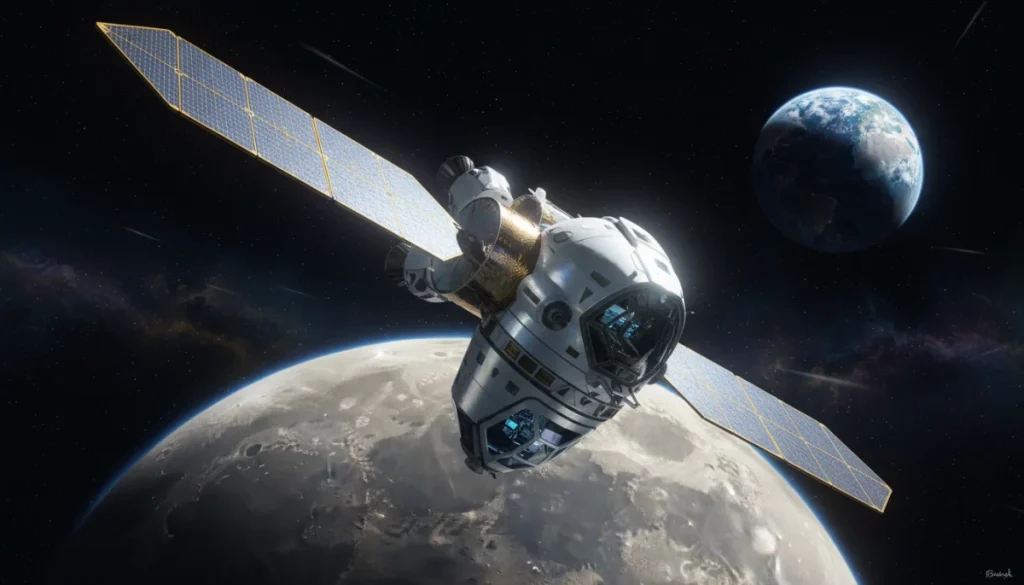
NASA’s Artemis Program is set to achieve critical milestones in late 2026, focusing on lunar orbital missions that will establish the necessary infrastructure for human exploration and a sustained presence on the Moon.
In a bold declaration that reaffirms humanity’s return to the Moon, NASA has recently announced major Artemis Program milestones for late 2026, including lunar orbital missions. This ambitious timeline underscores a pivotal phase in space exploration, moving beyond mere visits to establishing a sustained human presence on our celestial neighbor. The implications are vast, promising not only scientific breakthroughs but also technological advancements that will shape the future of space travel for generations to come.
The Vision Behind Artemis: A New Era of Lunar Exploration
The Artemis Program represents a monumental shift in how humanity approaches lunar exploration. It’s not just about planting flags; it’s about building a sustainable presence, fostering scientific discovery, and preparing for future missions to Mars. The late 2026 milestones are crucial stepping stones in this grand vision, focusing on the infrastructure and operational capabilities needed for long-duration stays.
NASA’s commitment to returning humans to the Moon, including the first woman and first person of color, signifies a more inclusive and expansive approach to space exploration. This program aims to leverage international and commercial partnerships, creating a robust ecosystem that will support lunar operations and beyond. The strategic timing of these 2026 missions is designed to optimize resource allocation and technological readiness.
Establishing a Permanent Lunar Gateway
One of the cornerstone objectives for the late 2026 timeline involves significant progress on the Lunar Gateway. This orbiting outpost will serve as a vital multi-purpose station, providing support for missions to the lunar surface and deep space. Its modular design allows for expansion and adaptation, making it a flexible hub for astronauts, scientific payloads, and logistical support.
- Orbital Rendezvous Capabilities: The Gateway will demonstrate advanced rendezvous and docking procedures, essential for transferring crew and cargo.
- Scientific Research Platform: It will host various scientific instruments to study lunar geology, space weather, and biological responses to deep-space radiation.
- Logistical Hub: Acting as a staging point, the Gateway will facilitate missions to different regions of the Moon, including the South Pole, which is rich in water ice.
The development and deployment of key Gateway modules are central to the 2026 schedule, ensuring that the foundational elements are in place for subsequent crewed missions. This orbital platform is envisioned as a long-term asset, evolving with the needs of the Artemis Program and future interplanetary endeavors.
The vision for the Gateway extends beyond simply orbiting the Moon. It is designed to be a proving ground for technologies and operational procedures that will be critical for human missions to Mars. By simulating aspects of deep-space travel and long-duration habitats, NASA aims to mitigate risks and optimize efficiency for future interplanetary journeys. The late 2026 efforts will significantly advance this strategic objective, laying the groundwork for more complex missions.
Orion’s Role in the 2026 Lunar Orbital Missions
The Orion spacecraft is the workhorse of the Artemis Program, designed to carry astronauts safely to and from lunar orbit. The late 2026 missions will undoubtedly involve further testing and validation of Orion’s capabilities, building on the successes of previous uncrewed and crewed test flights. These missions are critical for refining operational procedures and ensuring astronaut safety.
Each flight of Orion provides invaluable data, allowing engineers and mission planners to fine-tune systems, assess performance in the harsh environment of deep space, and prepare for the ultimate goal of sustained human presence. The 2026 orbital missions are expected to push the boundaries of Orion’s endurance and autonomous capabilities, essential for future long-duration voyages.
Advanced Propulsion and Life Support Systems
A key focus for the upcoming orbital missions will be the performance of Orion’s advanced propulsion and life support systems. These systems are paramount for ensuring the crew’s survival and mission success during extended stays in lunar orbit. Rigorous testing in a real-world environment is irreplaceable for validating their efficacy and reliability.
- Service Module Performance: Evaluating the European Service Module’s propulsion and power generation capabilities for lunar trajectories and orbital maneuvers.
- Environmental Control and Life Support System (ECLSS): Monitoring the closed-loop systems designed to recycle air and water, crucial for minimizing consumables on long missions.
- Radiation Shielding: Assessing the effectiveness of Orion’s shielding against solar and cosmic radiation, a persistent threat in deep space.
The data gathered from these missions will directly inform the design and operational parameters for future Artemis crewed flights, ensuring that astronauts have the safest and most efficient means to explore the Moon. The iterative process of testing, analysis, and refinement is a hallmark of NASA’s approach to human spaceflight, and 2026 will see significant strides in this area.
Beyond the technical aspects, the psychological readiness of crews for extended orbital missions is also a consideration. While not directly tested in uncrewed flights, the operational procedures and mission profiles developed during these 2026 missions will inform astronaut training and mission planning for future human endeavors. Understanding the demands of prolonged isolation and the unique challenges of deep-space living is integral to mission success.
International Collaboration and Commercial Partnerships
The Artemis Program is not solely a NASA endeavor; it is a global undertaking that leverages the expertise and resources of international partners and commercial companies. The 2026 milestones will highlight the increasing integration of these collaborations, demonstrating a shared commitment to lunar exploration and beyond. This multi-faceted approach enhances capabilities and distributes the immense costs and risks associated with such ambitious projects.
Partnerships with space agencies like ESA (European Space Agency), JAXA (Japan Aerospace Exploration Agency), and CSA (Canadian Space Agency) are crucial. These collaborations provide critical components, scientific instruments, and astronaut contributions, enriching the program’s scope and fostering global scientific cooperation. The late 2026 orbital missions will showcase the fruits of these international efforts, as integrated systems perform complex maneuvers in space.
The Role of Private Industry
Commercial entities are playing an increasingly vital role in the Artemis Program, from developing human landing systems to providing lunar surface infrastructure. NASA’s strategy involves fostering a competitive and innovative commercial space sector, which not only drives down costs but also accelerates technological development. The 2026 milestones will likely involve significant contributions from these private partners.
- Human Landing System (HLS) Development: Progress on privately developed lunar landers, essential for transporting astronauts from Gateway to the lunar surface.
- Commercial Lunar Payload Services (CLPS): Deployment of robotic landers and rovers to scout landing sites and conduct scientific investigations ahead of human missions.
- In-Situ Resource Utilization (ISRU) Technologies: Testing of technologies designed to extract and process resources directly from the Moon, such as water ice.
The synergy between government agencies and private industry is a defining characteristic of the Artemis era. This model allows NASA to focus on core research and development, while commercial partners handle operational aspects and innovate new solutions. The late 2026 missions will serve as a testament to the effectiveness of this collaborative framework, pushing the boundaries of what’s possible in space exploration.
The economic impact of these partnerships extends beyond the immediate contracts. The development of new technologies for lunar exploration stimulates job growth, fosters innovation in related industries, and creates new markets for space-related services. This ripple effect contributes to a vibrant space economy, attracting talent and investment, further solidifying the long-term viability of the Artemis Program’s ambitious goals.
Preparing for Human Lunar Landings: The Artemis III Precursors
While Artemis III, the mission targeting human lunar landings, is slated for later, the late 2026 orbital missions are critical precursors. These missions will validate key technologies and operational procedures necessary for a safe and successful return of humans to the lunar surface. Every orbital maneuver, every system test, is a step closer to that historic moment.
The data collected from these orbital missions will directly feed into the planning and execution of Artemis III. This includes refining trajectory calculations, optimizing communication protocols with the lunar surface, and perfecting emergency response procedures. The rigorous testing schedule ensures that when astronauts finally set foot on the Moon again, they do so with the highest degree of safety and preparedness.
Deep Space Communication Networks
Reliable communication is paramount for deep-space missions. The 2026 orbital missions will extensively test and enhance NASA’s Deep Space Network (DSN) and other communication assets. Ensuring seamless data transfer between Earth, Orion, and the Gateway is vital for mission control to monitor spacecraft health, transmit commands, and receive scientific data.
- High-Bandwidth Data Transmission: Verifying the ability to send and receive large volumes of scientific and telemetry data from lunar orbit.
- Low-Latency Communication: Reducing delays in communication, critical for real-time decision-making during complex orbital maneuvers and potential emergencies.
- Redundant Communication Paths: Testing multiple communication routes to ensure mission continuity even in the event of system failures.
These communication advancements are not only crucial for Artemis but also lay the groundwork for future human missions to Mars, where communication delays will be significantly longer. The 2026 orbital missions provide an invaluable opportunity to stress-test these vital systems in a near-operational environment, ensuring robustness and reliability.
The development of advanced communication technologies also has terrestrial applications, driving innovation in areas such as satellite internet, remote sensing, and disaster relief. The investment in deep space communication infrastructure yields benefits that extend far beyond the space program, fostering a more connected and resilient global communication network. This dual-use benefit underscores the broader impact of the Artemis Program.
Technological Innovations and Future Prospects
The Artemis Program, particularly with its late 2026 milestones, is a catalyst for technological innovation across numerous fields. From advanced robotics and artificial intelligence to new materials and propulsion systems, the demands of lunar exploration push the boundaries of current capabilities, leading to breakthroughs that benefit humanity both in space and on Earth.
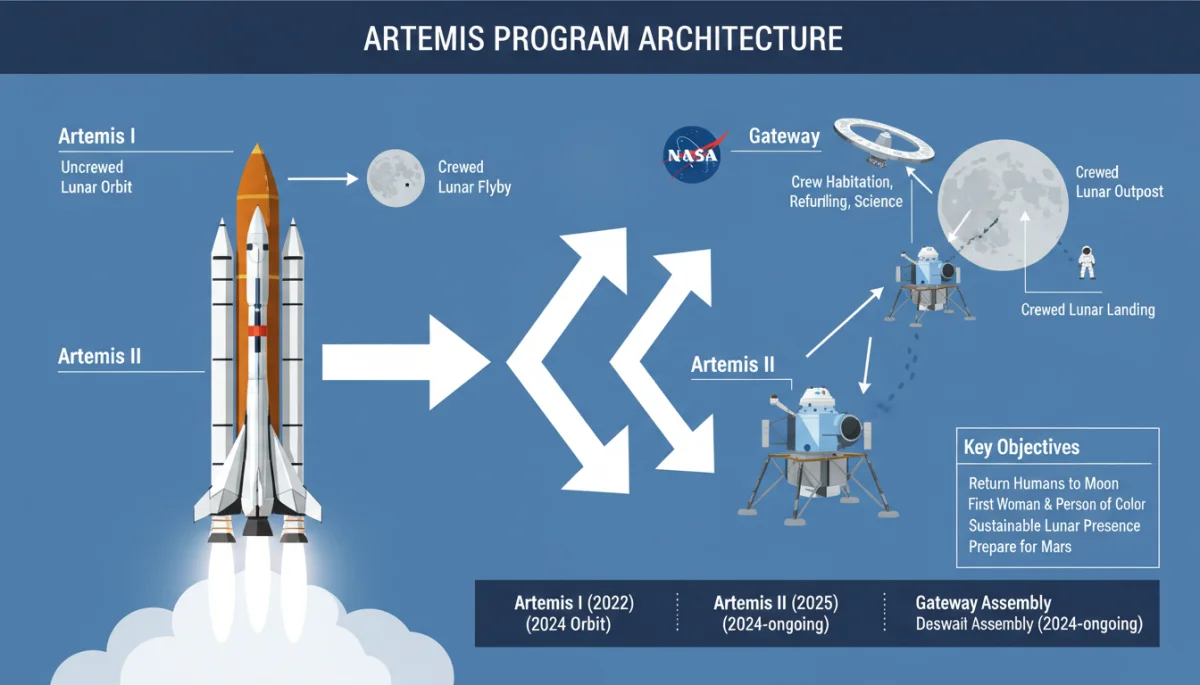
These innovations are not just theoretical; they are being actively developed and tested, with the 2026 orbital missions providing crucial validation points. The iterative process of design, testing, and refinement ensures that only the most robust and efficient technologies are incorporated into the program, setting new standards for space engineering.
Robotics and Autonomous Systems
Robotics and autonomous systems are integral to the Artemis Program, especially in preparation for human missions. Robotic explorers can scout hazardous terrains, construct infrastructure, and perform routine maintenance tasks, reducing risks for human astronauts and extending mission capabilities. The late 2026 missions will likely involve testing of advanced robotic systems in lunar orbit or in simulated lunar environments.
- Autonomous Navigation: Developing systems that allow spacecraft and rovers to navigate complex environments without constant human intervention.
- Robotic Assembly: Utilizing robotic arms and manipulators for assembling components of the Gateway or future lunar habitats.
- AI for Mission Control: Implementing artificial intelligence to assist mission controllers in analyzing vast amounts of data and making critical decisions.
The integration of these advanced systems is key to achieving the long-term goals of the Artemis Program, enabling more complex and ambitious missions while ensuring the safety and efficiency of operations. The advancements made in 2026 will pave the way for a new generation of intelligent space exploration tools, significantly enhancing our capabilities.
Furthermore, the data collected from these robotic and autonomous systems will provide invaluable insights into the lunar environment, helping to map resources, identify potential hazards, and select optimal sites for human habitation. This preparatory work is essential for mitigating the inherent risks of human spaceflight and maximizing the scientific return of lunar missions.
Challenges and the Path Forward for Artemis
Despite the ambitious goals and significant progress, the Artemis Program faces numerous challenges. These include technological hurdles, budgetary constraints, and the inherent risks associated with deep-space travel. However, NASA’s strategic planning and the collaborative nature of the program are designed to address these obstacles head-on, ensuring the continued momentum towards lunar return.
The late 2026 milestones are a testament to this resilience, demonstrating a clear path forward even in the face of complexity. Each successful orbital mission brings invaluable experience and data, allowing the program to adapt and evolve. The iterative approach to development and testing is crucial for overcoming unforeseen challenges and ensuring the long-term viability of the Artemis vision.
Overcoming Technical Complexities
Developing and integrating cutting-edge technologies for space exploration is inherently complex. From the powerful Space Launch System (SLS) rocket to the sophisticated life support systems of Orion and the Gateway, every component must perform flawlessly in an unforgiving environment. The 2026 orbital missions are vital for identifying and mitigating potential technical issues before crewed landings.
- Software and Hardware Integration: Ensuring all systems, from different international and commercial partners, work seamlessly together.
- Thermal Management: Developing effective systems to cope with extreme temperature fluctuations in deep space and on the lunar surface.
- Radiation Hardening: Designing electronics and materials that can withstand the intense radiation environment beyond Earth’s protective magnetic field.
The commitment to rigorous testing and verification, exemplified by the upcoming 2026 milestones, is paramount for ensuring the safety of astronauts and the success of the overall mission. These challenges, while daunting, also serve as powerful drivers for innovation, pushing the boundaries of scientific and engineering knowledge.
The lessons learned from these orbital missions will not only benefit the Artemis Program but also contribute to the broader scientific and engineering community. The solutions developed to overcome these technical complexities often find applications in other fields, demonstrating the far-reaching impact of space exploration on technological advancement and human ingenuity.
| Key Milestone | Brief Description |
|---|---|
| Lunar Gateway Progress | Significant advancements in deploying and integrating key modules for the orbiting lunar outpost. |
| Orion System Validation | Extensive testing of Orion spacecraft’s propulsion, life support, and autonomous capabilities in lunar orbit. |
| International Collaboration | Integration of international and commercial contributions, showcasing global partnership in lunar exploration. |
| Deep Space Communication | Enhancements and rigorous testing of communication networks for reliable data transfer in lunar orbit. |
Frequently Asked Questions About Artemis 2026 Missions
The primary goals include advancing the Lunar Gateway’s assembly, validating Orion spacecraft systems for extended missions, testing deep space communication, and integrating international and commercial contributions to establish a sustainable lunar presence.
The Lunar Gateway will serve as a vital staging point and orbiting outpost. It will facilitate crew and cargo transfers, provide a platform for scientific research, and act as a communications relay for missions to the lunar surface, especially the South Pole.
Orion will undergo further critical testing of its propulsion, life support, and autonomous systems during these orbital missions. This ensures its readiness and safety for future crewed flights carrying astronauts to lunar orbit and eventually to the Moon’s surface.
Yes, international partners like ESA, JAXA, and CSA are deeply involved, contributing key modules, scientific instruments, and expertise. Commercial companies also play a significant role in developing landing systems and providing support services for the program.
These orbital missions are crucial precursors, validating technologies, refining operational procedures, and testing communication networks essential for the safety and success of human lunar landings. They provide invaluable data for future crewed Artemis missions.
Conclusion
The announcement of major Artemis Program milestones for late 2026, including lunar orbital missions, marks a transformative period in space exploration. These missions are not merely flights but integral steps in a meticulously planned strategy to establish a sustainable human presence on the Moon and pave the way for deeper space endeavors. Through international collaboration, commercial innovation, and relentless technological development, NASA and its partners are steadily building the infrastructure and expertise required to unlock the full potential of lunar exploration. The insights gained and technologies validated in 2026 will undoubtedly propel humanity closer to its aspirations of becoming a multi-planetary species, demonstrating an unwavering commitment to pushing the boundaries of what is possible.
Autor