2026 Tax Law Changes: Impact on Your US Personal Finances

The 2026 tax law changes are poised to significantly reshape personal finances in the US, affecting everything from income tax brackets to deductions and investment strategies, requiring proactive financial planning.
As we approach 2026, understanding how the 2026 tax law changes will impact your personal finances in the US is more crucial than ever. This upcoming legislation promises significant shifts that could alter your tax obligations, investment strategies, and overall financial well-being. Being informed and prepared will empower you to navigate these changes effectively and optimize your financial future.
Understanding the Sunset Provisions of the TCJA
The Tax Cuts and Jobs Act (TCJA) of 2017 brought about sweeping changes to the US tax code, many of which are set to expire, or “sunset,” at the end of 2025. These sunset provisions are the primary drivers behind the anticipated 2026 tax law changes. It’s not necessarily new legislation being introduced, but rather the expiration of temporary measures that will revert the tax code to its pre-TCJA state in many areas, unless Congress acts to extend them.
Many taxpayers benefited from lower individual income tax rates, increased standard deductions, and various other adjustments under the TCJA. The expiration of these provisions means a return to older rules, which could lead to higher tax burdens for some individuals and families. Preparing for these shifts requires a clear understanding of what exactly is set to expire and how those expirations will translate into changes in your taxable income.
Key TCJA Provisions Set to Expire
- Individual income tax rate reductions across all brackets.
- The increased standard deduction amounts.
- The enhanced Child Tax Credit.
The sunsetting of these provisions will directly influence how much of your income is taxed and at what rate. For instance, without congressional intervention, the standard deduction will revert to its pre-TCJA levels, adjusted for inflation, potentially pushing more taxpayers to itemize deductions if their eligible expenses exceed the new, lower standard deduction.
In essence, the 2026 tax landscape will largely be defined by whether lawmakers decide to extend, modify, or allow these TCJA provisions to expire. This uncertainty underscores the importance of staying updated and consulting with financial professionals to understand potential scenarios and their implications for your personal financial planning.
Anticipated Changes to Individual Income Tax Rates
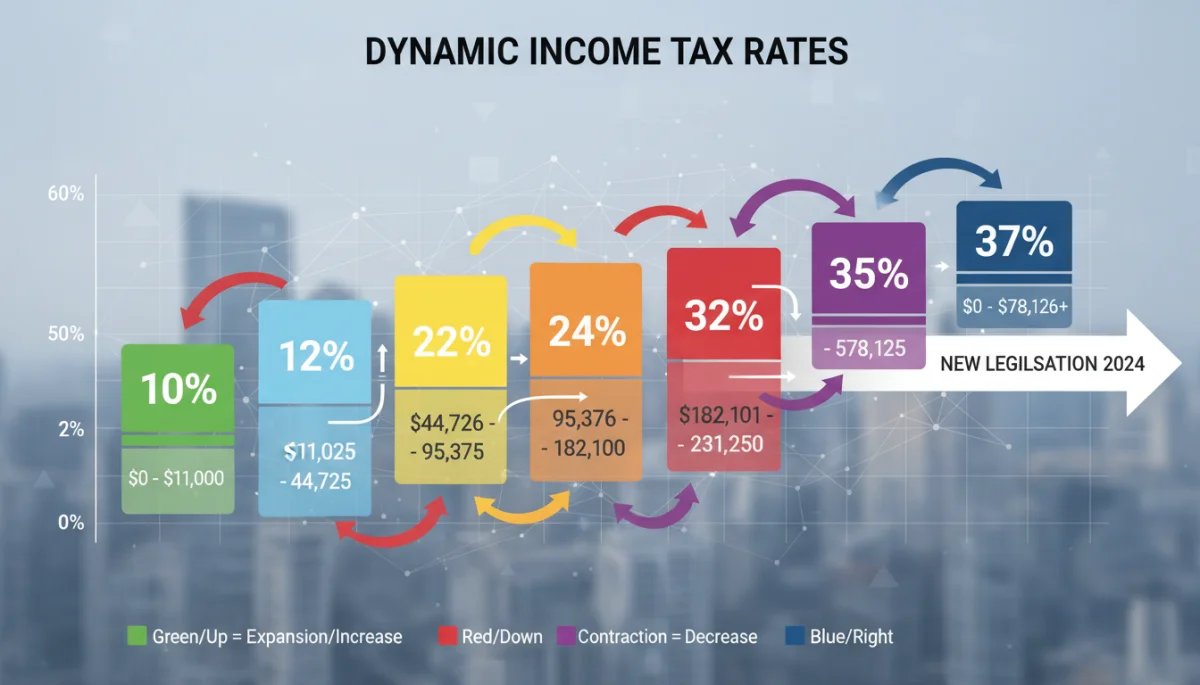
One of the most significant aspects of the 2026 tax law changes will be the adjustments to individual income tax rates. Under the TCJA, tax rates for most income brackets were reduced. With the sunset of these provisions, taxpayers can generally expect to see a return to the higher, pre-TCJA rates. This means that for the same level of income, a larger portion could be subject to taxation, or it could be taxed at a higher marginal rate.
It’s important to remember that these changes affect marginal tax rates, meaning different portions of your income are taxed at different percentages. While a return to higher rates might sound alarming, the exact impact will vary based on your income level, filing status, and other deductions or credits you may qualify for. Understanding these nuances is key to accurately forecasting your future tax liabilities.
Taxpayers should begin reviewing their current income and projected earnings to anticipate how these rate changes might affect their take-home pay and overall financial planning. This foresight allows for strategic adjustments in savings, investments, and spending habits.
Impact on Different Income Tiers
The impact of rate changes will not be uniform across all income levels. Higher earners might experience a more substantial increase in their tax burden due to returning to higher marginal rates. Conversely, lower and middle-income taxpayers could also see their tax liabilities rise, especially if the enhanced Child Tax Credit and increased standard deduction are not extended.
- Higher-income individuals may face increased marginal tax rates.
- Middle-income families could see changes in available credits.
- Lower-income taxpayers might experience a reduced standard deduction benefit.
These shifts necessitate a careful re-evaluation of tax planning strategies. What worked effectively under the TCJA might not be optimal in 2026. Proactive planning, such as adjusting paycheck withholdings or re-evaluating retirement contributions, can help mitigate potential negative impacts.
In summary, the reversion of individual income tax rates is a central component of the 2026 tax law changes. Taxpayers should prepare for potentially higher rates across various income brackets and assess how these shifts will influence their personal financial outlook.
Changes to Standard Deductions and Itemized Deductions
Another critical area affected by the 2026 tax law changes is the landscape of deductions. The TCJA significantly increased the standard deduction, leading many taxpayers to opt for it rather than itemizing. When these provisions expire, the standard deduction amounts are slated to revert to their pre-TCJA levels, adjusted for inflation. This change could have a substantial impact on your taxable income, potentially increasing it if your itemized deductions do not exceed the new, lower standard deduction.
For many households, the higher standard deduction under the TCJA simplified tax filing and reduced tax burdens. A return to lower amounts means that more taxpayers might find it advantageous to itemize their deductions once again. This requires meticulous record-keeping of eligible expenses such as state and local taxes (SALT), mortgage interest, charitable contributions, and medical expenses.
The cap on the SALT deduction, which was limited to $10,000 under the TCJA, is also scheduled to expire. If this cap is lifted, individuals in high-tax states could see a significant increase in their itemized deductions, potentially offsetting some of the impact of a lower standard deduction.
Navigating Deduction Strategies
Preparing for these changes involves a thorough review of your deductible expenses. Consider whether strategies like “bunching” charitable contributions or accelerating medical expenses into a single year might become more beneficial. This proactive approach ensures you maximize your deductions under the new rules.
- Re-evaluate if itemizing deductions becomes more advantageous.
- Understand the potential lifting of the SALT cap.
- Consider strategies to optimize your deductible expenses.
The interplay between the standard deduction and itemized deductions is a complex but vital aspect of tax planning. The 2026 changes will necessitate a fresh look at which approach yields the greatest tax savings for your specific financial situation. Consulting a tax professional can provide tailored advice on navigating these shifts effectively.
Ultimately, the modifications to standard and itemized deductions are a key facet of the 2026 tax law changes. Taxpayers should assess their current deduction strategies and prepare for potential adjustments to ensure they are taking full advantage of available tax benefits.
Impact on Child Tax Credit and Family-Related Benefits
Families in the US will also experience significant shifts as part of the 2026 tax law changes, particularly concerning the Child Tax Credit (CTC). The TCJA significantly enhanced the CTC, increasing the credit amount and making a larger portion of it refundable. These enhancements are among the provisions set to expire, which means families could see a reduction in the credit amount they receive and a stricter eligibility for refundability.
A reduction in the Child Tax Credit could have a direct impact on the financial stability of many families, particularly those with lower incomes who relied on the refundable portion. This change effectively means a lower tax refund or a higher tax liability for eligible households. Understanding the reversion to pre-TCJA CTC rules is vital for family budgeting and financial planning.
Beyond the CTC, other family-related benefits and deductions may also see adjustments. While the TCJA focused heavily on the CTC, the overall climate of tax reform in 2026 could bring about further modifications to other credits or deductions aimed at supporting families, though these are less certain than the CTC changes.
Planning for Family Financial Adjustments
Families should begin to factor in the potential reduction of the Child Tax Credit when planning their annual budgets. This might involve adjusting savings goals, reconsidering spending, or exploring other avenues for financial support. Awareness of these impending changes allows for proactive rather than reactive financial management.
- Anticipate a reduced Child Tax Credit amount.
- Understand stricter refundability rules for the CTC.
- Review overall family budgeting in light of these changes.
The impact on family-related benefits underscores the importance of a holistic approach to financial planning. These changes are not isolated; they interact with income tax rates and deduction adjustments to create a new overall tax picture for households. Seeking guidance from a financial advisor can help families navigate these complexities and identify strategies to minimize adverse effects.
In conclusion, the expiration of enhanced Child Tax Credit provisions forms a crucial part of the 2026 tax law changes. Families must prepare for potential reductions in this and other related benefits, integrating these forecasts into their broader financial strategies.
Estate and Gift Tax Implications in 2026
The 2026 tax law changes are also poised to significantly alter the landscape of estate and gift taxes. The TCJA dramatically increased the estate and gift tax exemption amounts, allowing individuals to transfer substantial wealth without incurring federal estate or gift taxes. These elevated exemption levels are temporary and are scheduled to revert to their pre-TCJA amounts, adjusted for inflation, at the end of 2025.
For high-net-worth individuals and families, this reversion means a potentially much lower threshold for estate and gift tax exemptions. This could lead to a larger portion of their wealth being subject to federal estate tax upon their passing, or gift tax if they choose to transfer assets during their lifetime. Proactive estate planning becomes even more critical under these circumstances to mitigate potential tax liabilities.
The implications extend beyond just the direct tax burden. Changes in exemption amounts can influence decisions regarding trusts, wills, and charitable giving. Wealth transfer strategies that were effective under the higher exemption might need to be re-evaluated and adjusted to align with the new, lower thresholds.
Strategic Estate Planning Adjustments
Wealthy individuals should urgently review their current estate plans with legal and financial advisors. Strategies such as making significant gifts before the end of 2025 to utilize the higher exemption amounts could be considered. Understanding the potential changes allows for timely and effective adjustments to wealth transfer plans.
- Review current estate and gift tax exemption levels.
- Consider accelerating gifts to utilize higher exemptions.
- Re-evaluate existing trusts and wills for compliance and optimization.
The potential for a substantially lower estate and gift tax exemption in 2026 highlights the importance of dynamic estate planning. These changes could have long-lasting effects on family legacies and intergenerational wealth transfer, necessitating careful consideration and expert guidance.
Therefore, the impending adjustments to estate and gift tax exemptions are a critical component of the 2026 tax law changes. High-net-worth individuals should prioritize a comprehensive review of their estate plans to adapt to these significant shifts.
Planning for Investment and Retirement in the New Tax Environment
The impending 2026 tax law changes will undoubtedly influence investment and retirement planning strategies. With potential shifts in individual income tax rates, capital gains taxes, and deduction limits, investors and retirees need to re-evaluate their portfolios and savings approaches. Understanding how these changes interact with your financial goals is crucial for maintaining and growing your wealth.
For instance, if income tax rates increase, the after-tax return on traditional investments might decrease, potentially making tax-advantaged accounts like Roth IRAs or 401(k)s even more attractive. Conversely, if capital gains rates are adjusted, it could impact decisions regarding when to sell appreciated assets or how to structure investment portfolios.
Retirement planning will also be affected. The deductibility of contributions to traditional IRAs and 401(k)s might become more or less valuable depending on your marginal tax rate. Furthermore, the tax treatment of withdrawals in retirement could change, requiring a re-assessment of distribution strategies.
Optimizing Your Financial Future
Investors should consider diversifying their holdings across different types of accounts – taxable, tax-deferred, and tax-exempt – to maintain flexibility. Consulting with a financial advisor to model various tax scenarios can help in making informed decisions about asset allocation and investment timing.
- Re-evaluate the balance between traditional and Roth retirement accounts.
- Consider the impact of potential capital gains tax adjustments on investment decisions.
- Review contribution limits and deductibility for retirement savings.
The 2026 tax law changes present both challenges and opportunities for investment and retirement planning. Those who proactively adjust their strategies based on anticipated shifts will be better positioned to optimize their financial outcomes and ensure their long-term security.
In summary, the new tax environment of 2026 demands a careful review of investment and retirement strategies. Adapting to potential changes in tax rates and deductions will be key to safeguarding and enhancing your financial future.
Proactive Steps for Personal Financial Preparedness
Given the significant nature of the 2026 tax law changes, taking proactive steps now is essential for ensuring your personal financial preparedness. Waiting until the last minute can lead to missed opportunities for optimization or unexpected tax burdens. A comprehensive review of your current financial situation, coupled with forward-looking planning, will be your best defense.
Start by gathering all relevant financial documents, including recent tax returns, investment statements, and income records. This will provide a clear snapshot of your current financial health and help identify areas that might be particularly vulnerable or advantageous under the new tax laws. Understanding your baseline is the first critical step.
Next, consider consulting with a qualified tax professional or financial advisor. These experts can provide personalized guidance, helping you understand the specific implications of the 2026 changes for your unique circumstances. They can also assist in developing tailored strategies to minimize your tax liability and optimize your financial plan.
Essential Actions to Take Now
- Review your current tax returns and financial statements.
- Consult with a tax professional or financial advisor for personalized advice.
- Adjust your payroll withholdings to prevent underpayment or overpayment.
Another crucial step is to stay informed. Tax legislation can be fluid, and while many changes are anticipated, there’s always a possibility of further modifications or extensions. Subscribing to reputable financial news sources and attending webinars on tax reform can help you remain updated on any new developments.
Finally, consider making any significant financial moves, such as large charitable donations or Roth conversions, before the end of 2025 if they are more advantageous under current tax laws. Timing can play a crucial role in maximizing benefits or minimizing liabilities.
In conclusion, proactive preparedness is paramount for navigating the 2026 tax law changes. By taking immediate steps to review your finances, seek expert advice, and stay informed, you can effectively adapt to the new tax environment and secure your financial well-being.
| Key Aspect | Brief Description |
|---|---|
| Income Tax Rates | Individual rates are expected to revert to pre-TCJA levels, potentially increasing tax burdens. |
| Standard Deduction | Amounts will likely decrease, potentially making itemizing more common for many taxpayers. |
| Child Tax Credit | Enhanced credit amounts and refundability are set to expire, impacting family finances. |
| Estate & Gift Tax | Exemption amounts are expected to decrease significantly, affecting high-net-worth individuals. |
Frequently Asked Questions About 2026 Tax Changes
The primary drivers are the sunset provisions of the Tax Cuts and Jobs Act (TCJA) of 2017. Many individual tax provisions, including lower rates and higher standard deductions, are set to expire at the end of 2025, reverting to pre-TCJA law unless Congress acts.
Individual income tax rates are generally expected to revert to the higher, pre-TCJA levels across most income brackets. This could lead to a larger portion of your income being taxed or taxed at a higher marginal rate, impacting your take-home pay.
Yes, the standard deduction amounts are projected to decrease significantly, reverting to their pre-TCJA levels, adjusted for inflation. This change may encourage more taxpayers to itemize deductions if their eligible expenses exceed the new, lower standard amount.
The enhanced Child Tax Credit (CTC) provisions from the TCJA are set to expire. This means families could see a reduced credit amount and stricter eligibility requirements for refundability, potentially affecting their overall tax benefits.
You should review your current financial situation, consult with a qualified tax professional or financial advisor, and stay informed about legislative developments. Consider adjusting investment and retirement strategies, and make any advantageous financial moves before the end of 2025.
Conclusion
The impending 2026 tax law changes represent a pivotal moment for personal finances across the United States. The sunsetting of key provisions from the Tax Cuts and Jobs Act of 2017 will bring about significant shifts in individual income tax rates, standard deductions, family-related benefits like the Child Tax Credit, and estate and gift tax exemptions. These changes necessitate a proactive and informed approach to financial planning. By understanding the potential impacts on your income, deductions, investments, and wealth transfer strategies, you can take deliberate steps to adapt and optimize your financial position. Engaging with financial professionals and staying abreast of legislative developments will be crucial in navigating this evolving tax landscape effectively and securing your financial future.
Autor