Estate Planning 2026: Navigating New Federal Tax Exemptions

Understanding the new 2026 federal gift and estate tax exemptions is crucial for effective wealth transfer and asset protection strategies.
As we approach 2026, the landscape of wealth transfer is set for significant changes, making proactive estate planning in 2026: navigating new federal gift and estate tax exemptions more critical than ever. This guide will help you understand the upcoming shifts and how they might impact your financial future, ensuring your assets are protected and your legacy is secured.
Understanding the Federal Estate and Gift Tax Landscape
The federal estate and gift tax system is a complex but essential component of wealth transfer in the United States. It dictates how much of an individual’s assets can be passed on to heirs or gifted during their lifetime without incurring federal taxes. These tax laws are not static; they evolve, often influenced by legislative action and economic conditions. For 2026, a major shift is on the horizon, primarily due to the sunsetting provisions of the Tax Cuts and Jobs Act (TCJA) of 2017.
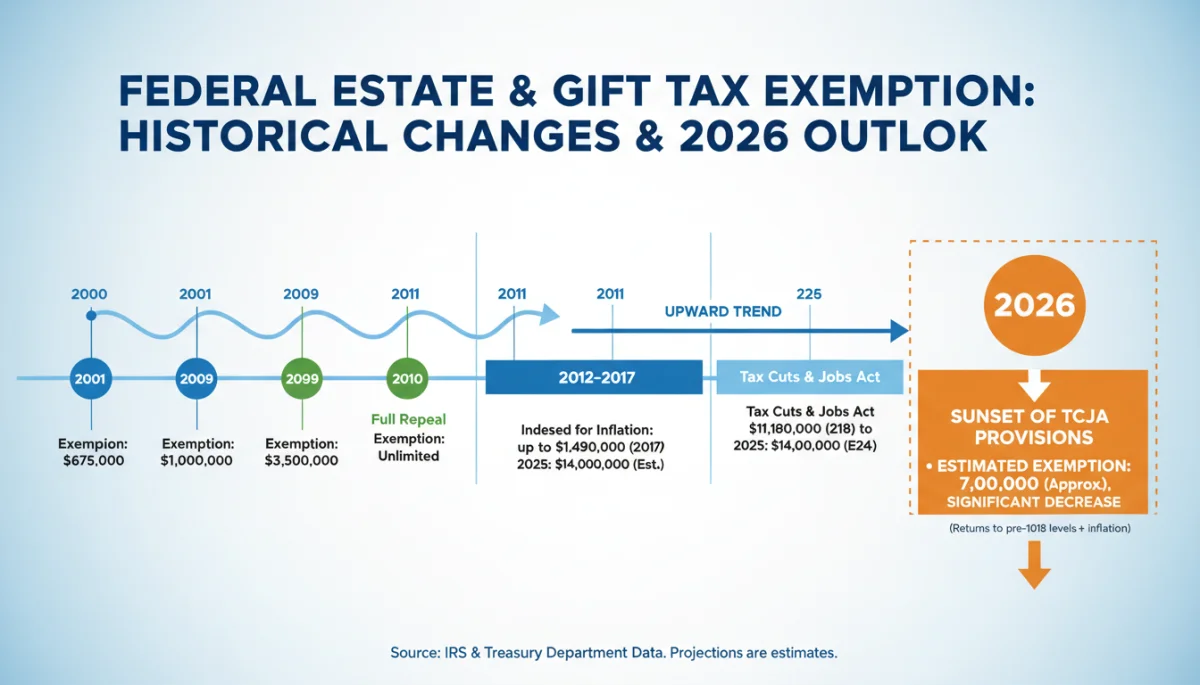
Historically, estate and gift tax exemptions have seen various adjustments, reflecting changing economic priorities and political landscapes. The TCJA dramatically increased these exemptions, offering a period of unprecedented flexibility for high-net-worth individuals to transfer wealth. However, this enhanced exemption is temporary, designed to revert to pre-TCJA levels, adjusted for inflation, by the end of 2025. This impending change requires careful consideration and strategic planning to mitigate potential tax liabilities.
Historical Context of Exemption Changes
To truly grasp the significance of 2026, it’s helpful to look at past trends. Tax laws are rarely permanent, and understanding their historical trajectory can provide context for future adjustments.
- Pre-TCJA Era: Exemptions were significantly lower, necessitating more complex planning for many families.
- TCJA (2017-2025): Introduced a substantial increase, effectively doubling the exemption amount.
- Post-2025: The exemption is set to revert, making strategic action vital before the change.
The upcoming changes are not merely a technical adjustment; they represent a fundamental shift in how wealth will be transferred and taxed. Individuals and families who fail to prepare for these changes risk substantial financial penalties and a reduction in the value of their legacies. Therefore, a thorough understanding of the current and future tax landscape is paramount for effective estate planning.
The Sunset of TCJA Provisions: What to Expect in 2026
The Tax Cuts and Jobs Act (TCJA) of 2017 brought about significant changes to the federal estate and gift tax exemptions, dramatically increasing the amount individuals could pass on tax-free. However, these provisions were temporary, set to expire or ‘sunset’ on December 31, 2025. This means that starting January 1, 2026, the exemption amounts are expected to revert to their pre-TCJA levels, adjusted for inflation. This reversion will have profound implications for estate planning strategies across the United States.
The exact exemption amount for 2026 will depend on inflation adjustments, but it is projected to be roughly half of the current exemption. For individuals who have accumulated substantial wealth, this reduction could mean a significant portion of their estate becoming subject to federal estate tax. This impending change creates a critical window of opportunity for individuals to utilize the higher exemptions while they are still available.
Projected Exemption Amounts and Their Impact
While the precise figures for 2026 are not yet finalized, projections suggest a substantial decrease from the current levels. This decrease will impact not only the ultra-wealthy but also a broader range of affluent individuals who may not have previously considered themselves subject to estate taxes.
- Reduced Gift Tax Exemption: This will affect lifetime gifting strategies, making it more challenging to transfer significant wealth to heirs without incurring gift tax.
- Lower Estate Tax Exemption: Estates that previously fell below the exemption threshold may now be subject to federal estate tax, potentially reducing the inheritance for beneficiaries.
- Increased State Estate Taxes: While federal, some states have their own estate or inheritance taxes, and a lower federal exemption might indirectly influence state-level planning.
The sunsetting of the TCJA provisions is not just a technicality; it’s a call to action for anyone involved in estate planning. The difference between planning before 2026 and after could amount to millions of dollars in tax savings or liabilities. Understanding these projected changes and their potential impact is the first step toward developing a resilient estate plan that safeguards your assets and fulfills your legacy wishes.
Key Strategies for Estate Planning Before 2026
With the federal gift and estate tax exemptions set to decrease significantly in 2026, there’s a critical window of opportunity to leverage the higher current exemptions. Proactive planning now can help preserve your wealth and ensure it is distributed according to your wishes, minimizing tax burdens on your heirs. Engaging with experienced estate planning professionals is crucial to navigate these complex changes effectively.
One of the most effective strategies involves utilizing lifetime gifting. The current high gift tax exemption allows individuals to transfer substantial assets to beneficiaries free of gift tax. This strategy not only reduces the size of your taxable estate but also allows you to see your beneficiaries enjoy the gifts during your lifetime. However, careful consideration of the type of assets gifted and the timing of these gifts is essential to maximize benefits and avoid potential pitfalls.
Advanced Gifting Techniques
Beyond simple cash gifts, several sophisticated gifting strategies can be employed to optimize wealth transfer before the 2026 changes.
- Irrevocable Life Insurance Trusts (ILITs): These trusts remove life insurance proceeds from your taxable estate, providing a tax-free inheritance for beneficiaries.
- Grantor Retained Annuity Trusts (GRATs): GRATs allow you to transfer appreciating assets out of your estate with minimal gift tax consequences, especially beneficial in a low-interest-rate environment.
- Spousal Lifetime Access Trusts (SLATs): For married couples, SLATs can provide a powerful way to utilize both spouses’ exemptions while still allowing the non-donor spouse access to trust assets if needed.
Another crucial strategy involves reviewing and updating existing estate documents. Wills, trusts, and powers of attorney should be re-evaluated in light of the impending tax changes. Beneficiary designations on retirement accounts and life insurance policies should also be confirmed to align with your overall estate plan. The period leading up to 2026 represents a unique opportunity to lock in substantial tax savings through strategic gifting and comprehensive estate plan revisions. Failure to act may lead to missed opportunities and increased tax liabilities for your estate and beneficiaries.
The Role of Trusts in a Changing Tax Environment
Trusts are fundamental tools in estate planning, offering flexibility, control, and significant tax advantages, especially in a fluctuating tax environment like the one anticipated for 2026. They allow you to dictate how and when your assets are distributed, protect them from creditors, and often reduce estate taxes. As the federal gift and estate tax exemptions are set to decrease, the strategic use of trusts becomes even more critical for high-net-worth individuals.
Different types of trusts serve various purposes, and choosing the right one depends on your specific goals and financial situation. For instance, an irrevocable trust, once established, cannot be easily modified or revoked, but it removes assets from your taxable estate, which can be highly beneficial when exemptions are high. Conversely, a revocable trust offers more flexibility during your lifetime but generally does not provide the same estate tax benefits.
Common Trust Structures and Their Benefits
Understanding the distinctions between various trust types is crucial for effective estate planning, particularly as we approach 2026.
- Irrevocable Trusts: These trusts are particularly useful for making substantial gifts before the 2026 exemption reduction, as assets transferred into them are generally removed from your taxable estate.
- Dynasty Trusts: Designed to last for generations, these trusts can shelter assets from estate taxes for extended periods, potentially spanning multiple generations.
- Charitable Trusts: For those with philanthropic goals, charitable trusts can provide income to beneficiaries for a period, with the remainder going to charity, often offering immediate income tax deductions and reducing estate taxes.
The dynamic nature of tax laws means that what works today might not be optimal tomorrow. Therefore, reviewing your trust structures with an estate planning attorney is essential to ensure they remain aligned with your objectives and the evolving tax landscape. The proper implementation of trusts can be a powerful defense against increased estate tax liabilities, preserving more of your wealth for your intended beneficiaries.
Impact on Small Business Owners and Family Farms
The impending changes to federal gift and estate tax exemptions in 2026 carry significant implications for small business owners and family farm operators. These individuals often have a substantial portion of their wealth tied up in illiquid assets, such as their business or land. A reduction in the exemption amount could mean that the next generation faces a hefty estate tax bill, potentially forcing them to sell off parts of the business or farm to cover the taxes, undermining the family legacy.
Unlike liquid assets, which can be easily converted to cash to pay taxes, a family business or farm often represents a lifetime of work and an integral part of the family’s identity. The prospect of having to liquidate these assets to satisfy estate tax obligations can be devastating. Therefore, it is imperative for business owners and farm operators to engage in proactive and specialized estate planning to navigate these challenges.
Succession Planning and Tax Mitigation
Effective succession planning, combined with tax mitigation strategies, is vital for ensuring the continuity of family businesses and farms.
- Valuation and Gifting: Obtaining accurate valuations of the business or farm is the first step. Utilizing the current higher gift tax exemptions to transfer ownership interests to the next generation can significantly reduce the taxable estate.
- Buy-Sell Agreements: These agreements can establish a clear plan for the transfer of ownership upon the owner’s death, disability, or retirement, often funded by life insurance to provide liquidity for estate taxes.
- Special Use Valuation: For qualifying family farms, Section 2032A of the Internal Revenue Code allows for the valuation of real property based on its actual use rather than its highest and best use, potentially reducing the taxable estate.
The complexity of these situations often requires a multidisciplinary approach, involving estate planning attorneys, business valuation experts, and tax advisors. Developing a comprehensive plan that addresses both business succession and tax implications before 2026 can make the difference between a thriving multi-generational enterprise and a forced sale. Early and strategic planning is the key to preserving these invaluable family assets.
Reviewing and Updating Your Estate Plan
Estate planning is not a one-time event; it is an ongoing process that requires regular review and updates, especially in anticipation of significant legislative changes like those expected in 2026. A well-crafted estate plan from years past might no longer be optimal or even effective given the new federal gift and estate tax exemptions. Failing to review your plan could result in unintended consequences, increased tax liabilities, or your wishes not being fully realized.
Life events such as marriage, divorce, birth of children or grandchildren, and significant changes in financial status also necessitate a review of your estate plan. These personal changes, combined with evolving tax laws, create a compelling reason to revisit your documents and strategies. A comprehensive review ensures that your plan reflects your current goals, beneficiaries, and asset structure, while also adapting to the impending tax environment.
Essential Elements to Revisit
When reviewing your estate plan, several key components demand particular attention to ensure they are aligned with the 2026 tax landscape.
- Wills and Trusts: Confirm that beneficiary designations are current and that the language within trusts still achieves your objectives, especially concerning wealth transfer thresholds.
- Powers of Attorney and Healthcare Directives: Ensure these documents are up-to-date and designate individuals you trust to make financial and medical decisions on your behalf.
- Asset Titling and Beneficiary Designations: Verify that all assets, including bank accounts, investment portfolios, and retirement accounts, are titled correctly and have current beneficiary designations that align with your overall plan.
Engaging with an experienced estate planning attorney is crucial for this review process. They can help identify potential issues, suggest modifications, and implement strategies that maximize your exemptions and minimize tax exposure. Proactive review and updates to your estate plan before 2026 will provide peace of mind, knowing that your assets are protected and your legacy is secure for future generations.
| Key Point | Brief Description |
|---|---|
| TCJA Sunset | Federal estate and gift tax exemptions will revert to lower, pre-2018 levels in 2026. |
| Gifting Window | Utilize higher exemptions before 2026 to transfer significant wealth tax-free. |
| Trust Utilization | Employ various trust structures to protect assets and minimize future tax liabilities. |
| Plan Review | Regularly review and update your estate plan to adapt to legislative changes and personal circumstances. |
Frequently Asked Questions About 2026 Tax Exemptions
In 2026, the federal gift and estate tax exemptions are expected to revert to pre-2018 levels, adjusted for inflation. This is due to the sunset provision of the Tax Cuts and Jobs Act of 2017, significantly reducing the amount individuals can transfer tax-free.
While the changes primarily affect high-net-worth individuals, some with moderately sized estates that previously fell below the exemption threshold might now be subject to federal estate tax. It’s crucial for everyone to review their assets.
The Treasury Department has issued regulations confirming that gifts made under the higher exemptions before 2026 will not be clawed back or taxed retroactively. This provides certainty for those utilizing the current higher limits.
You should consult with an estate planning attorney to review your current plan, consider making substantial gifts before the end of 2025, and explore advanced planning strategies like trusts to maximize current exemptions.
Irrevocable trusts can remove assets from your taxable estate, effectively using your current higher exemption. Trusts also offer asset protection and control over distribution, which become even more valuable with reduced exemptions.
Conclusion
The impending changes to federal gift and estate tax exemptions in 2026 represent a pivotal moment for estate planning. The sunsetting of the TCJA provisions will significantly alter the landscape of wealth transfer, making proactive and informed decisions more critical than ever. By understanding the projected shifts, strategically utilizing the current higher exemptions through gifting and trusts, and regularly reviewing your estate plan, you can effectively navigate these changes. Engaging with experienced legal and financial professionals is paramount to ensure your assets are protected, your legacy is preserved, and your wishes are honored for generations to come. The time to act is now, transforming potential challenges into opportunities for robust wealth preservation.
Autor