Managing Debt 2025: Reduce Credit Card Interest by 5%

Effectively managing debt in 2025 requires a proactive approach, including strategic methods to reduce credit card interest by at least 5%, paving the way for improved financial health and quicker debt elimination.
As we navigate the complexities of personal finance, understanding how to effectively tackle outstanding balances becomes paramount. Specifically, for many, the burden of credit card debt, with its often high-interest rates, can feel overwhelming. This guide offers practical, actionable strategies for managing debt in 2025: a step-by-step guide to reducing credit card interest by 5%, aiming to empower you on your journey towards financial freedom.
Understanding Your Current Debt Landscape
Before embarking on any debt reduction strategy, it is crucial to have a clear and comprehensive understanding of your current financial situation. This involves a thorough assessment of all your outstanding debts, particularly focusing on credit cards, as these typically carry the highest interest rates. Knowing exactly what you owe, to whom, and at what cost is the foundational step towards effective debt management.
Gathering All Financial Statements
The first practical step is to collect all your credit card statements, loan documents, and any other debt-related paperwork. This might seem tedious, but it provides an invaluable snapshot of your obligations. Look for key information such as:
- The total outstanding balance on each account.
- The annual percentage rate (APR) or interest rate for each debt.
- Minimum payment amounts and due dates.
- Any fees associated with your accounts, such as annual fees or late payment charges.
Having all this data in one place allows you to create a consolidated view of your debt, making it easier to prioritize and strategize. Many people are surprised by the cumulative total once they see everything laid out.
Calculating Your Total Debt Burden
Once you have all the statements, create a simple spreadsheet or use a financial app to list each debt. Include the creditor’s name, the balance, the interest rate, and the minimum payment. This exercise helps you visualize the scale of your debt and identify which accounts are costing you the most in interest. High-interest credit cards should immediately stand out as prime targets for reduction efforts.
Understanding your total debt burden isn’t just about the numbers; it’s about gaining control. When you clearly see where your money is going, you can make informed decisions about where to apply your efforts for maximum impact. This initial phase is about confronting the reality of your situation, not about feeling overwhelmed, but about preparing to take decisive action.
In conclusion, a meticulous review of your current debt landscape is the essential starting point for any successful debt management plan. By understanding the specifics of your obligations, you lay the groundwork for targeted and effective strategies to reduce your credit card interest and overall debt.
Negotiating Lower Interest Rates with Your Creditors
One of the most direct and often overlooked methods for reducing credit card interest is simply asking for a lower rate. Many consumers hesitate to do this, assuming their request will be denied, but creditors are often willing to negotiate, especially if you have a good payment history or if you represent a flight risk to a competitor. This proactive step can significantly impact your monthly payments and the total interest paid over time.
Preparing for the Call
Before you pick up the phone, gather some essential information to strengthen your case. Know your current interest rate, your payment history ( ideally, you’ve paid on time consistently), and any competitive offers you might have received from other credit card companies. This shows you’re serious and informed. Be prepared to explain why you deserve a lower rate, focusing on your reliability as a customer.
- Check your credit score. A good score gives you leverage.
- Research competitor offers with lower APRs.
- Document your consistent on-time payments.
- Be polite and firm, but avoid demanding.
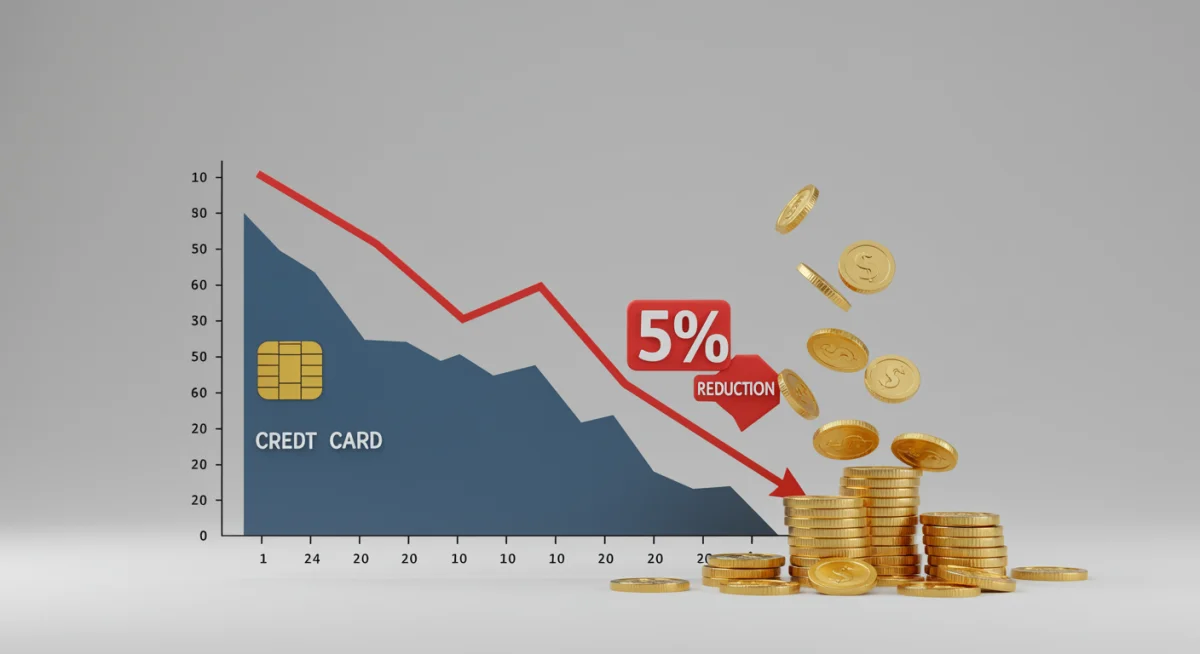
Remember, the goal is a win-win scenario: they keep you as a customer, and you get a more manageable interest rate. A 5% reduction can translate into substantial savings over the life of the debt.
Making Your Case Effectively
When you speak with a representative, clearly state your intent: you’d like to discuss lowering your interest rate. Explain your financial situation briefly, highlighting your commitment to paying off the debt. If they initially decline, don’t give up immediately. Ask to speak with a supervisor or mention that you are considering transferring your balance to a different card with a lower rate. Sometimes, the threat of losing your business is enough to prompt them to reconsider.
It’s important to be persistent but always respectful. The person on the other end of the line is more likely to help someone who is courteous. If successful, confirm the new interest rate in writing and understand when it takes effect. Even a small percentage drop can make a noticeable difference in your financial planning for 2025.
In summary, negotiating with creditors is a powerful, often underutilized tool in your debt management arsenal. With proper preparation and a confident approach, you can secure lower interest rates and accelerate your journey to becoming debt-free.
Strategic Balance Transfers to Lower APR Cards
A balance transfer involves moving debt from one or more high-interest credit cards to a new credit card, typically with a much lower, often promotional, interest rate for an introductory period. This strategy can be incredibly effective for reducing overall interest payments, especially if you can secure an introductory 0% APR. The key is to have a clear plan for paying off the transferred balance before the promotional period ends.
Identifying the Right Balance Transfer Offers
Not all balance transfer offers are created equal. Look for cards that offer a 0% APR for a substantial period (e.g., 12-18 months) and have a reasonable balance transfer fee, usually 3-5% of the transferred amount. It’s crucial to calculate whether the savings from the lower interest rate outweigh this fee. Your credit score will play a significant role in your eligibility for the best offers.
- Seek out cards with long 0% APR introductory periods.
- Compare balance transfer fees across different providers.
- Ensure the new credit limit is sufficient to cover your desired transfer amount.
- Understand the interest rate after the promotional period ends.
Carefully read the terms and conditions. Some cards may charge deferred interest if the balance isn’t paid in full by the end of the promotional period, which can negate any savings.
Executing and Maximizing Your Balance Transfer
Once you’ve chosen a card, initiate the balance transfer. Be mindful of the transfer limits and ensure you don’t overextend yourself. The real power of a balance transfer comes from committing to pay down the principal aggressively during the 0% APR period. Treat this period as a grace period to significantly reduce your debt without the drag of interest charges.
Avoid making new purchases on the balance transfer card during the promotional period, as these new purchases might accrue interest immediately, even while the transferred balance is at 0%. Focus all your additional payments on the transferred balance. If you still have a balance when the promotional period ends, be prepared for the interest rate to revert to a higher, standard APR.
In conclusion, a well-executed balance transfer can be a cornerstone of your strategy for managing debt in 2025. It provides a valuable window to pay down high-interest debt more efficiently, provided you stay disciplined and focused on eliminating the transferred balance.
Debt Consolidation Loans: A Unified Approach
For those with multiple high-interest debts, a debt consolidation loan can offer a streamlined approach to debt management. This involves taking out a new, larger loan, typically with a lower interest rate, to pay off several smaller debts. The primary benefit is simplifying your payments into a single, more manageable monthly installment, potentially at a reduced overall interest cost.
Evaluating the Benefits and Risks
A debt consolidation loan can be a powerful tool for reducing your interest burden and simplifying your financial life. The key is to secure a loan with an interest rate significantly lower than the average APR on your existing debts. This can translate directly into substantial savings and a clearer path to becoming debt-free.
- Benefit: Lower overall interest rates, reducing the cost of your debt.
- Benefit: Single monthly payment, simplifying financial management.
- Benefit: Fixed repayment schedule, offering predictability.
- Risk: May extend the repayment period, potentially increasing total interest if the rate isn’t significantly lower.
- Risk: Requires discipline to avoid accumulating new debt once old debts are paid off.
It’s vital to ensure that the new loan doesn’t come with hidden fees or a longer repayment term that could ultimately cost you more. Carefully compare the total cost of the consolidated loan versus continuing to pay your individual debts.
Choosing the Right Consolidation Option
There are various types of debt consolidation loans, including personal loans from banks or credit unions, or even home equity loans. Personal loans are unsecured and depend heavily on your credit score for favorable rates. Home equity loans, while often offering lower interest rates due to being secured by your home, carry the risk of foreclosure if you default.
When selecting a loan, focus on the APR, the loan term, and any origination fees. A good credit score will give you access to the most competitive rates. Always get pre-approved offers from multiple lenders to compare terms effectively. The goal is to reduce your average interest rate by at least 5% across your consolidated debt, making your payments more impactful.
In conclusion, debt consolidation can be an excellent strategy for managing debt in 2025, providing structure and potentially significant interest savings. However, it demands careful evaluation and a commitment to responsible spending moving forward.
Adopting a Rigorous Budget and Payment Strategy
No matter how many interest rate reductions or balance transfers you achieve, sustainable debt management ultimately hinges on a rigorous budget and a disciplined payment strategy. Without these fundamental practices, even the most effective interest rate reductions can be undermined by new spending and accumulating debt. This section focuses on creating a financial framework that supports your debt reduction goals.
Creating a Realistic and Sustainable Budget
The first step is to track all your income and expenses for at least a month to understand where your money is truly going. Once you have a clear picture, categorize your spending and identify areas where you can cut back. The goal is to free up additional funds that can be directed towards your credit card debt, beyond just the minimum payments.
- List all sources of income.
- Track every expense, no matter how small.
- Differentiate between needs and wants.
- Set realistic spending limits for each category.
- Automate savings and debt payments.
A realistic budget isn’t about deprivation; it’s about intentional spending that aligns with your financial goals. Every dollar saved from discretionary spending can be a dollar that works to reduce your high-interest debt faster.
Implementing an Accelerated Payment Strategy
Once you have freed up extra cash through budgeting, apply it strategically to your highest-interest debts. Two popular methods are the debt snowball and debt avalanche methods:
The debt avalanche method prioritizes paying off the debt with the highest interest rate first, while making minimum payments on all other debts. Once the highest-interest debt is paid off, you roll that payment amount into the next highest-interest debt. This method saves you the most money in interest over time.
The debt snowball method focuses on paying off the smallest debt first, providing psychological wins that keep you motivated. Once the smallest debt is paid, you roll that payment into the next smallest. While it might cost more in interest, it can be very effective for those who need consistent motivation.
Both methods require consistency and commitment. The critical factor is to consistently pay more than the minimum on at least one of your credit cards. This accelerated payment strategy, combined with any interest rate reductions, will dramatically shorten your debt repayment timeline.
In conclusion, a well-structured budget and a disciplined payment strategy are indispensable for long-term debt management. These practices ensure that the gains from interest rate reductions are maximized, propelling you towards financial liberation in 2025.
Leveraging Financial Tools and Resources
In today’s digital age, a wealth of financial tools and resources are available to assist you in managing debt in 2025. From budgeting apps to credit counseling services, these resources can provide invaluable support, automation, and expert guidance to help you stay on track and achieve your debt reduction goals. Utilizing these tools effectively can make the process less daunting and more efficient.
Utilizing Budgeting and Debt Tracking Apps
Modern financial apps can revolutionize how you manage your money. Many apps offer features like expense tracking, budget creation, and even debt payoff calculators. These tools can automatically sync with your bank accounts and credit cards, giving you a real-time overview of your financial health. They can help you identify spending patterns, stick to your budget, and visualize your progress as you pay down debt.
- Automated expense tracking and categorization.
- Customizable budget categories and alerts.
- Debt payoff calculators to project timelines.
- Net worth tracking and financial goal setting.
Some popular apps include Mint, YNAB (You Need A Budget), and Personal Capital. Experiment with a few to find one that best suits your needs and financial style. The right app can turn a complex task into a manageable daily routine, providing motivation as you see your balances decrease.
Seeking Professional Credit Counseling
If your debt feels overwhelming or you’re struggling to create a workable plan, consider reaching out to a non-profit credit counseling agency. These agencies offer free or low-cost services, including budget counseling, debt management plans (DMPs), and educational materials. A credit counselor can help you:
A credit counselor can review your entire financial situation, help you create a personalized budget, and even negotiate with your creditors on your behalf to reduce interest rates and monthly payments. They can also help you enroll in a Debt Management Plan, where you make one consolidated payment to the agency, and they distribute the funds to your creditors.
While a DMP can be very effective, be aware that it might have an impact on your credit score, as some creditors may close your accounts or mark them as ‘managed by credit counseling.’ However, for many, the benefits of reduced interest and a clear path out of debt outweigh these potential drawbacks.
In conclusion, leveraging the right financial tools and seeking professional guidance when needed can significantly enhance your ability to manage debt effectively. These resources provide the support and structure necessary to navigate your financial journey with greater confidence and success.
Maintaining Financial Discipline and Avoiding New Debt
Achieving a 5% reduction in credit card interest and making strides in debt repayment is a significant accomplishment. However, the long-term success of your debt management strategy hinges on one crucial factor: maintaining unwavering financial discipline and actively avoiding the accumulation of new debt. This final step is about solidifying your financial habits to ensure lasting freedom from high-interest burdens.
Building an Emergency Fund
One of the most common reasons people fall back into debt is unexpected expenses. An emergency fund acts as a financial buffer, allowing you to cover unforeseen costs without resorting to credit cards. Aim to save at least three to six months’ worth of essential living expenses in an easily accessible savings account. This fund provides peace of mind and protects your progress.
Start small if necessary, perhaps with $500 or $1,000, and gradually build it up. Automate transfers from your checking account to your emergency fund each payday. This ‘pay yourself first’ approach ensures consistent growth and reduces the temptation to spend the money elsewhere.
Practicing Mindful Spending
Beyond budgeting, mindful spending involves being conscious of every purchase you make. Before buying something, ask yourself:
- Do I truly need this, or is it a want?
- Can I afford this without going into debt?
- Is this purchase aligned with my long-term financial goals?
- Are there cheaper alternatives, or can I wait for a sale?
This introspection helps curb impulse purchases and ensures your spending decisions are deliberate and responsible. It’s about creating a healthy relationship with money where you are in control, not your impulses.
Consider implementing a ‘cooling-off period’ for larger purchases. If you want something expensive, wait 24-48 hours before buying it. Often, the urge to buy will pass, or you’ll realize it wasn’t as essential as you initially thought.
In conclusion, sustained financial discipline and a commitment to avoiding new debt are the cornerstones of lasting financial health. By building an emergency fund and practicing mindful spending, you can protect your hard-won progress and ensure a secure financial future beyond 2025.
| Key Strategy | Brief Description |
|---|---|
| Negotiate Interest Rates | Directly contact creditors to request a lower APR, leveraging good payment history or competitor offers. |
| Balance Transfers | Move high-interest debt to cards with promotional 0% APR periods, focusing on aggressive repayment. |
| Debt Consolidation | Combine multiple debts into a single loan with a lower interest rate and simplified payments. |
| Rigorous Budgeting | Create and stick to a detailed budget to free up funds for accelerated debt payments. |
Frequently Asked Questions About Debt Management in 2025
The crucial first step is to thoroughly understand your current debt landscape. Gather all financial statements, identify outstanding balances, interest rates, and minimum payments across all your accounts to get a clear picture of your obligations.
You can reduce interest by negotiating directly with your creditors, transferring balances to lower APR cards, or securing a debt consolidation loan. Each method aims to lower your effective interest rate, saving you money over time.
Balance transfers can be excellent if you have a plan to pay off the transferred amount before the promotional 0% APR period ends. Be mindful of transfer fees and avoid making new purchases on the card to maximize savings.
The debt snowball method focuses on paying off the smallest debt first for psychological wins. The debt avalanche method prioritizes paying off the debt with the highest interest rate first, saving you the most money on interest.
Consider credit counseling if your debt feels overwhelming, you struggle to create a budget, or you need help negotiating with creditors. Non-profit agencies offer guidance, debt management plans, and educational resources to support your journey.
Conclusion
Effectively managing debt in 2025 and achieving a significant reduction in credit card interest requires a multi-faceted approach, combining proactive negotiation, strategic financial tools, and unwavering personal discipline. By understanding your debt, actively seeking lower interest rates through transfers or consolidation, and committing to a rigorous budget, you can transform your financial outlook. The journey to financial freedom is a marathon, not a sprint, but with these step-by-step strategies, reducing your credit card interest by 5% or more is an achievable goal, paving the way for a more secure and prosperous future.
Autor