Navigating 2026 Fed Rate Hikes: US Investor Guide
Understanding the anticipated 2026 Federal Reserve interest rate hikes is crucial for US investors to proactively adjust their portfolios and strategies to mitigate risks and capitalize on emerging opportunities in a shifting economic climate.
As we approach 2026, the prospect of the Federal Reserve implementing further interest rate hikes looms large, presenting both challenges and opportunities for investors across the United States. This guide, Navigating the 2026 Federal Reserve Interest Rate Hikes: A Guide for US Investors, aims to equip you with the knowledge and strategies needed to prepare your financial portfolio for these anticipated economic shifts. Understanding the Fed’s motivations, the potential impacts on various asset classes, and proactive adjustments can make all the difference in safeguarding and growing your wealth.
Understanding the Federal Reserve’s Mandate and Rate Hike Rationale
The Federal Reserve, often referred to as the Fed, operates with a dual mandate: to achieve maximum employment and maintain price stability. Interest rate adjustments are among its primary tools to fulfill these objectives. When inflation rises above target levels, or the economy shows signs of overheating, the Fed typically raises interest rates to cool down economic activity.
In 2026, potential rate hikes would likely stem from persistent inflationary pressures, robust economic growth, or a combination of both. Higher rates make borrowing more expensive, which can slow consumer spending and business investment, thereby reducing demand and theoretically bringing inflation back to the Fed’s target of around 2%. For investors, anticipating these moves is key to strategic planning.
The Fed’s decision-making process
The Federal Open Market Committee (FOMC) is the monetary policy-making body of the Federal Reserve System. It comprises twelve members: the seven members of the Board of Governors, the president of the Federal Reserve Bank of New York, and presidents of four other Federal Reserve Banks on a rotating basis. They meet eight times a year to assess economic conditions and determine the appropriate course for monetary policy, including interest rates.
- Economic Indicators: The FOMC closely monitors a wide range of economic data, including inflation reports (CPI, PCE), employment figures (non-farm payrolls, unemployment rate), GDP growth, and consumer confidence.
- Forward Guidance: The Fed often provides forward guidance on its future policy intentions, which helps market participants anticipate changes and reduces volatility.
- Global Economic Landscape: International economic developments and geopolitical events also play a role in the Fed’s considerations, as they can impact US inflation and growth.
The rationale behind potential 2026 rate hikes will heavily depend on how these indicators evolve over the coming year. A strong labor market coupled with stubbornly high inflation would almost certainly trigger further tightening. Conversely, a significant slowdown in economic activity or a sharp drop in inflation could lead to a pause or even a reversal in policy.
In conclusion, understanding the Fed’s dual mandate and the factors influencing its decisions is fundamental for any US investor. The committee’s assessment of inflation and employment will be the guiding force behind any rate adjustments in 2026, making it imperative to monitor economic reports and official communications closely.
Impact on Different Asset Classes: What to Expect
Federal Reserve interest rate hikes do not affect all asset classes equally. Understanding these nuanced impacts is critical for optimizing your investment strategy as we navigate 2026. Higher rates can create headwinds for some investments while providing tailwinds for others.
Generally, rising rates tend to favor fixed-income investments with shorter durations and can put pressure on growth stocks. However, the actual impact can be complex and influenced by other economic factors.
Fixed income and bonds
When interest rates rise, newly issued bonds offer higher yields, making existing bonds with lower yields less attractive. This typically causes the prices of older, lower-yielding bonds to fall. Bonds with longer maturities are generally more sensitive to interest rate changes than those with shorter maturities.
- Short-duration bonds: These tend to be less sensitive to rate changes, making them a relatively safer option in a rising rate environment.
- Floating-rate bonds: These bonds have coupon payments that adjust periodically based on a benchmark interest rate, potentially offering increasing income as rates climb.
- Treasury inflation-protected securities (TIPS): TIPS offer protection against inflation, as their principal value adjusts with the Consumer Price Index (CPI), which can be beneficial if inflation is the driving force behind rate hikes.
Equities: growth versus value stocks
The stock market’s reaction to rate hikes is often segmented. Growth stocks, which derive a significant portion of their value from future earnings, can be negatively impacted. Higher interest rates increase the discount rate used to value these future earnings, reducing their present value.
Value stocks, on the other hand, often consist of more mature companies with stable earnings and tend to be less sensitive to interest rate changes. They may even perform better relatively, as investors seek out companies with solid current profitability rather than speculative future growth.
Real estate and alternative investments
Rising interest rates generally lead to higher mortgage rates, which can cool the housing market by making homeownership less affordable. Commercial real estate can also be affected as borrowing costs for development and acquisition increase. However, certain segments of real estate, like those tied to essential services or with strong rental demand, might prove more resilient.
Alternative investments, such as commodities or certain private equity funds, may behave differently. Commodities can sometimes act as an inflation hedge, but their performance is also tied to global demand and supply dynamics. Understanding the specific characteristics of each alternative asset is crucial.
In summary, the impact of Fed rate hikes in 2026 will vary significantly across asset classes. Investors should carefully assess their exposure to different sectors and consider rebalancing their portfolios to align with the anticipated interest rate environment.
Strategies for Adjusting Your Fixed-Income Portfolio
For fixed-income investors, the prospect of rising interest rates in 2026 necessitates a proactive approach to portfolio management. Simply holding onto long-duration bonds without adjustment could lead to significant capital losses. Strategic adjustments can help mitigate risk and even capture new opportunities.
The goal is to reduce interest rate sensitivity while potentially enhancing income in a rising rate environment. This involves a careful analysis of existing holdings and a consideration of alternative fixed-income instruments.
Shortening bond duration
One of the most common strategies in a rising rate environment is to reduce the overall duration of your bond portfolio. Duration measures a bond’s price sensitivity to changes in interest rates. Bonds with shorter durations are less sensitive to interest rate fluctuations.
- Invest in short-term bonds: Shifting allocations toward bonds and bond funds with maturities of typically one to five years can help insulate your portfolio from larger price declines.
- Laddering strategies: A bond ladder involves investing in bonds with staggered maturity dates. As shorter-term bonds mature, the proceeds can be reinvested in new, higher-yielding bonds if rates have risen, providing a continuous stream of income and flexibility.
Considering floating-rate instruments
Floating-rate notes (FRNs) and loans are debt instruments whose interest payments adjust periodically based on a benchmark rate, such as LIBOR or SOFR, plus a spread. This feature makes them attractive during periods of rising rates, as their income stream can increase.
Investing in floating-rate funds or individual FRNs can help maintain or even increase your income yield as the Federal Reserve raises rates. However, it’s important to understand the credit risk associated with these instruments, as many are issued by corporate entities.
Exploring high-yield bonds cautiously
While high-yield bonds (junk bonds) carry higher credit risk, they tend to have a lower duration sensitivity to interest rate changes compared to investment-grade bonds. This is because their yields are primarily driven by credit spreads rather than benchmark interest rates.
However, investors must exercise caution. A rising rate environment, particularly if it’s accompanied by an economic slowdown, could increase default risks for some high-yield issuers. Diversification and thorough credit analysis are paramount if considering this segment.
In conclusion, adjusting your fixed-income portfolio for 2026 Fed rate hikes involves a strategic shift towards shorter durations, an exploration of floating-rate instruments, and a cautious approach to high-yield bonds. These strategies aim to protect capital and optimize income in a dynamic interest rate landscape.
Equity Strategies for a Rising Rate Environment
Equity investors face a unique set of challenges and opportunities when the Federal Reserve signals or implements interest rate hikes. While conventional wisdom suggests rising rates are negative for stocks, particularly growth stocks, a nuanced approach can uncover resilient sectors and strategic plays.
The key is to identify companies that can maintain or grow their earnings even with higher borrowing costs and potentially slower consumer spending. This often involves focusing on strong balance sheets and pricing power.
Focus on value and dividend stocks
As discussed earlier, value stocks often outperform growth stocks in a rising rate environment. These companies are typically more mature, have established cash flows, and are less reliant on future growth projections discounted at higher rates. Industries often associated with value stocks include:
- Financials: Banks and other financial institutions can benefit from higher interest rates, as their net interest margins (the difference between what they earn on loans and pay on deposits) tend to expand.
- Utilities: These are often stable, dividend-paying companies that provide essential services. While sensitive to borrowing costs, their consistent demand can make them relatively resilient.
- Consumer staples: Companies that produce everyday necessities tend to be less volatile, as demand for their products remains relatively constant regardless of economic cycles.
Dividend-paying stocks, especially those with a history of consistent dividend growth, can also be attractive. Dividends provide a regular income stream, which can help offset potential capital depreciation in a volatile market.
Consider sectors with pricing power
In an inflationary environment that often accompanies rate hikes, companies with strong pricing power can pass on increased costs to consumers without significantly impacting demand. This ability to maintain profit margins is crucial.
Sectors that often exhibit pricing power include:
- Healthcare: Demand for healthcare services and products tends to be inelastic.
- Certain technology segments: Companies with dominant market positions or proprietary technologies can often dictate pricing.
- Branded consumer goods: Strong brands can command premium prices even when costs rise.
Investors should look for companies with wide economic moats, strong brand loyalty, or essential products/services that make them less susceptible to price sensitivity.
In conclusion, equity strategies for navigating 2026 Fed rate hikes should prioritize value, dividend income, and companies with proven pricing power. Diversification across these resilient sectors can help protect and potentially grow your equity portfolio during periods of monetary tightening.
Real Estate and Alternative Investments in a Tightening Cycle
The real estate market and various alternative investments respond distinctly to Federal Reserve interest rate hikes. While higher borrowing costs can create headwinds, particularly for debt-reliant sectors, some alternatives may offer diversification and inflation protection.
Understanding these dynamics is crucial for US investors looking to maintain a balanced and resilient portfolio as we approach 2026. The key is to evaluate how each asset class’s fundamentals align with a rising rate environment.
Real estate considerations
Rising interest rates typically translate to higher mortgage rates, which can impact both residential and commercial real estate. Affordability often decreases, potentially cooling buyer demand and slowing price appreciation. For commercial properties, increased financing costs can reduce development activity and acquisition appetites.
- Residential Real Estate: Areas with strong job growth and limited supply may show more resilience, but a general slowdown in price appreciation is likely. Investors might find opportunities in rental properties if higher mortgage rates push more people towards renting.
- Commercial Real Estate (CRE): Certain CRE sectors, like industrial properties (warehouses, logistics centers) driven by e-commerce, or specialized healthcare facilities, might fare better due to strong underlying demand. However, highly leveraged properties could face refinancing challenges.
- REITs (Real Estate Investment Trusts): REITs can be sensitive to interest rate changes. Those with strong balance sheets, long-term leases, and exposure to resilient sectors may perform better. Equity REITs often have less direct interest rate sensitivity than mortgage REITs.
Exploring alternative investments
Alternative investments can provide diversification away from traditional stocks and bonds, and some may offer a hedge against inflation or volatility during rate hike cycles.
- Commodities: Gold, silver, and other commodities can sometimes act as an inflation hedges. As the cost of goods and services rises, the value of raw materials might also increase. However, commodity prices are also influenced by global supply and demand, and economic growth.
- Private Equity/Debt: These investments are less liquid but can offer different risk-return profiles. Private debt, in particular, may benefit from higher interest rates if structured with floating-rate terms. However, they come with higher due diligence requirements and illiquidity.
- Infrastructure: Investments in infrastructure projects (e.g., utilities, transportation) often provide stable, long-term cash flows that can be inflation-linked, making them potentially attractive in a rising rate environment.
In conclusion, while higher rates pose challenges for traditional real estate, strategic choices within the sector and a thoughtful allocation to specific alternative investments can enhance portfolio resilience. Thorough research and understanding of liquidity and risk are paramount when considering these options.
Personal Finance Adjustments for US Households
Beyond investment portfolios, Federal Reserve interest rate hikes in 2026 will directly impact the personal finances of US households. From borrowing costs to savings rates, these changes necessitate careful review and proactive adjustments to maintain financial stability and optimize household budgets.
Understanding where these impacts will be felt most acutely can help individuals and families prepare effectively, turning potential challenges into opportunities for financial improvement.
Managing debt in a rising rate environment
The most immediate and significant impact for many households will be on variable-rate debt. As the Fed raises its benchmark rate, the interest rates on products like credit cards, adjustable-rate mortgages (ARMs), and home equity lines of credit (HELOCs) will likely increase, making these debts more expensive.
- Prioritize high-interest, variable debt: Focus on paying down credit card balances and other variable-rate loans first. Reducing principal balances now can save significant money as rates climb.
- Consider refinancing fixed-rate loans: If you have an ARM, evaluate refinancing into a fixed-rate mortgage before rates rise further. While current fixed rates might be higher than your initial ARM rate, they offer predictability and protection against future increases.
- Consolidate debt: Look into personal loans or balance transfer credit cards with fixed, lower interest rates to consolidate high-interest variable debt, but be wary of fees and ensure the new rate is truly advantageous.
Optimizing savings and emergency funds
On the flip side, rising interest rates are generally good news for savers. High-yield savings accounts, money market accounts, and certificates of deposit (CDs) will likely offer more attractive returns.
- Boost emergency savings: Ensure your emergency fund is robust, covering at least 3-6 months of essential expenses. Higher interest rates on these liquid accounts mean your safety net can grow faster.
- Explore high-yield savings options: Shop around for banks and credit unions offering the most competitive rates on savings accounts and money market accounts. Online banks often lead in this area.
- Consider CDs: If you have funds you won’t need for a specific period, CDs can lock in higher interest rates for a set term. Laddering CDs with different maturities can provide flexibility.
In conclusion, personal finance adjustments for 2026 Fed rate hikes should focus on aggressively tackling variable-rate debt and strategically placing savings to benefit from higher yields. These proactive steps can strengthen household balance sheets and improve overall financial well-being.
The Role of Diversification and Professional Guidance
In an environment characterized by anticipated Federal Reserve interest rate hikes in 2026, diversification and professional guidance become even more critical for US investors. A well-diversified portfolio can help mitigate risks associated with specific market segments, while expert advice can provide tailored strategies.
Relying solely on one asset class or a “set-it-and-forget-it” approach may leave investors vulnerable to market shifts. Strategic asset allocation, combined with informed counsel, is paramount.
The enduring power of diversification
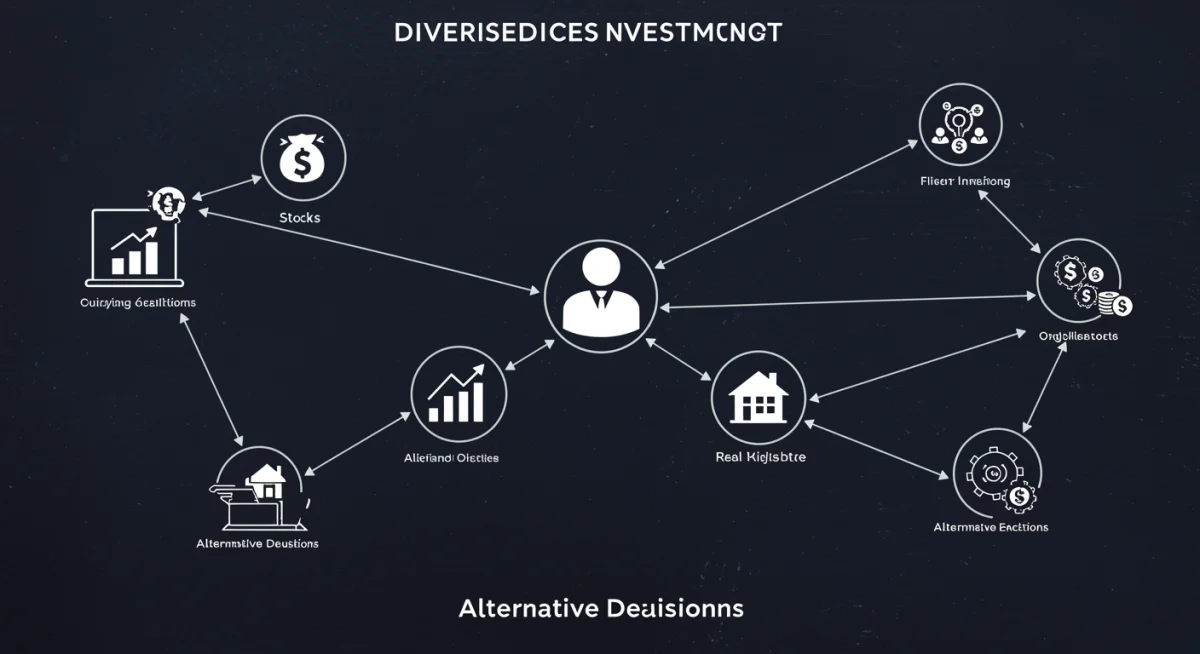
Diversification involves spreading investments across various asset classes, industries, and geographies to reduce overall portfolio risk. When one asset class underperforms, another may perform well, helping to smooth out returns. In a rising rate environment, this principle is more important than ever.
- Across asset classes: Maintain a mix of equities (both growth and value), fixed income (short-duration, floating-rate), real estate, and potentially alternatives.
- Within asset classes: Diversify within your equity holdings across different sectors (e.g., financials, healthcare, technology, consumer staples) and market capitalizations (large-cap, mid-cap, small-cap).
- Geographic diversification: Consider international equities and bonds to reduce reliance on the US economy’s performance, as different regions may be in different stages of their economic cycles.
Diversification isn’t about maximizing returns in every single market condition, but rather about optimizing risk-adjusted returns over the long term. It helps protect against the uncertainty of which specific sectors or assets will be most impacted by interest rate changes.
Seeking professional financial advice
Navigating complex economic landscapes, especially with the prospect of significant monetary policy shifts, can be challenging for even experienced investors. A qualified financial advisor can provide invaluable assistance.
- Personalized strategy: An advisor can assess your individual financial situation, risk tolerance, and long-term goals to create a customized investment plan.
- Market insights: They can offer expert insights into how anticipated Fed rate hikes might affect specific investments and help you make informed decisions.
- Portfolio rebalancing: Advisors can guide you through the process of rebalancing your portfolio to align with changing market conditions and your evolving financial objectives.
Choosing a fee-only fiduciary advisor ensures that their recommendations are always in your best interest. Regular check-ins and adjustments to your plan are essential to stay agile in a dynamic financial environment.
In conclusion, diversification remains a cornerstone of prudent investing, especially when confronting potential Fed rate hikes in 2026. Complementing this with professional financial guidance can provide clarity, confidence, and a well-structured approach to achieving your investment goals.
| Key Aspect | Impact/Strategy for 2026 Rate Hikes |
|---|---|
| Fixed Income | Shorten duration, consider floating-rate bonds, or ladder maturities to reduce interest rate sensitivity. |
| Equities | Favor value stocks, dividend payers, and companies with strong pricing power over high-growth, speculative stocks. |
| Real Estate | Anticipate slower growth due to higher mortgage rates; look for resilient sectors or rental market opportunities. |
| Personal Finance | Prioritize paying down variable-rate debt and optimize savings with high-yield accounts and CDs. |
Frequently Asked Questions About 2026 Fed Rate Hikes
The Fed typically raises interest rates to combat inflation and prevent the economy from overheating. If inflation remains stubbornly high or economic growth is robust in 2026, further hikes would be a primary tool to achieve price stability and ensure sustainable employment.
If you have a variable-rate mortgage (ARM), your monthly payments will likely increase. For those with fixed-rate mortgages, existing payments remain unchanged, but new mortgages or refinancing will be more expensive. It’s wise to assess refinancing options if you have an ARM.
Yes, rising interest rates generally lead to higher yields on savings accounts, money market accounts, and certificates of deposit (CDs). This provides an opportunity for savers to earn more on their liquid funds and emergency savings, making it a good time to shop for competitive rates.
Historically, sectors like financials (banks), utilities, and consumer staples tend to perform relatively well. Value stocks, dividend-paying companies, and businesses with strong pricing power are also often favored as they are less sensitive to higher borrowing costs and future earnings discounts.
Proactive adjustment is prudent, but avoid panic. Review your portfolio’s diversification, duration risk in fixed income, and exposure to growth versus value stocks. Consulting a financial advisor can help tailor strategies to your specific goals and risk tolerance, ensuring thoughtful adjustments.
Conclusion
The anticipation of Federal Reserve interest rate hikes in 2026 presents a pivotal moment for US investors and households. While the economic landscape may shift, being prepared with informed strategies can turn potential headwinds into opportunities. By understanding the Fed’s motivations, carefully assessing the impact on various asset classes—from fixed income and equities to real estate and alternatives—and making necessary adjustments to personal finances, individuals can navigate this period with confidence. The emphasis on diversification, strategic rebalancing, and seeking professional guidance underscores a resilient approach to wealth management in a dynamic economic environment. Proactive planning today is the cornerstone of financial success tomorrow.
Autor