BLS Report: Unemployment Rate Below 4% Through Q2 2026
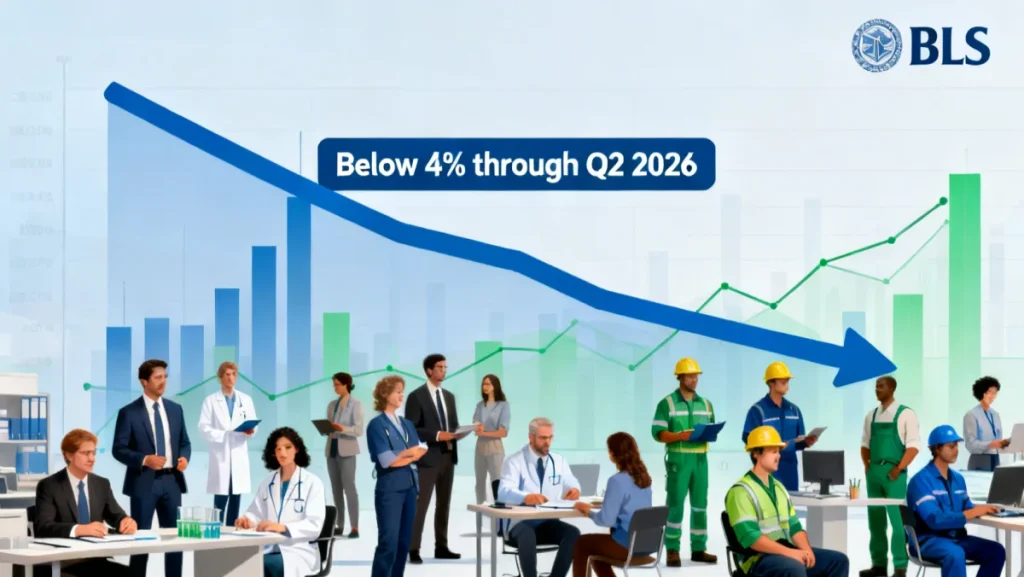
The Bureau of Labor Statistics (BLS) projects a remarkably stable US labor market, with the unemployment rate anticipated to stay below 4% through the second quarter of 2026, indicating sustained economic strength.
The latest Labor Market Report: Unemployment Rate Projected to Remain Below 4% Through Q2 2026, According to Latest BLS Data, offers a compelling snapshot of the United States’ economic resilience. This isn’t merely a statistic; it’s a critical indicator for businesses, policymakers, and individual households, shaping decisions from investment strategies to career planning. What does this sustained low unemployment mean for the average American, and what factors are contributing to such a robust outlook?
Understanding the BLS Projections
The Bureau of Labor Statistics (BLS) is a principal agency of the U.S. government responsible for measuring labor market activity, working conditions, and price changes in the economy. Their projections are not mere guesses; they are the result of rigorous analysis, employing complex econometric models and considering a multitude of economic variables. When the BLS projects the unemployment rate to remain below 4% through Q2 2026, it signals a high degree of confidence in the underlying strength and stability of the American labor market.
These forecasts take into account current economic trends, historical data, demographic shifts, and anticipated policy impacts. The consistency of this projection over several quarters suggests that the factors driving employment growth and labor force participation are expected to persist, even in the face of potential economic headwinds. It’s a testament to the adaptive nature of the U.S. economy and the resilience of its workforce.
Methodology Behind the Forecasts
The BLS employs a sophisticated methodology to generate its labor market projections. This involves several key steps and data sources, ensuring a comprehensive and reliable outlook.
- Econometric Modeling: Advanced statistical models are used to analyze relationships between economic variables like GDP, inflation, interest rates, and employment levels.
- Industry-Specific Analysis: Detailed studies are conducted across various sectors to understand growth prospects, technological advancements, and workforce needs in each industry.
- Demographic Trends: Changes in population, labor force participation rates, and age demographics are integrated to project future labor supply.
- Policy Assumptions: The impact of current and anticipated government policies, including fiscal and monetary measures, is factored into the projections.
The reliability of BLS data is paramount, as it forms the basis for numerous policy decisions and economic analyses. Their commitment to transparency and accuracy ensures that these projections serve as a credible benchmark for understanding the future of the labor market. This meticulous approach allows for a more nuanced understanding of where the economy is headed, providing valuable insights for businesses and individuals alike.
In conclusion, the BLS projections are more than just numbers; they represent a carefully constructed outlook based on robust data and analytical techniques. The consistent forecast of a sub-4% unemployment rate underscores the agency’s confidence in the enduring strength of the U.S. labor market, providing a stable foundation for economic planning.
Factors Contributing to Sustained Low Unemployment
Several intertwined factors are converging to keep the unemployment rate at historically low levels and are expected to continue doing so into 2026. Understanding these drivers is crucial for grasping the full picture of the labor market’s health.
One significant contributor is the ongoing demand for labor across various sectors. Despite economic fluctuations, many industries continue to expand, creating new job opportunities. This sustained demand is partly fueled by technological advancements, which, while sometimes displacing certain jobs, also create entirely new categories of employment requiring specialized skills. The adaptability of the American workforce and the continuous investment in upskilling and reskilling initiatives play a vital role here.
Technological Innovation and Job Creation
Technological innovation, particularly in areas like artificial intelligence, automation, and green energy, is a dual-edged sword that, in the current landscape, appears to be a net positive for job creation. While some traditional roles may be impacted, the emergence of new industries and the transformation of existing ones generate a demand for different skill sets.
- AI and Data Science: Increased demand for data scientists, machine learning engineers, and AI specialists.
- Green Economy: Growth in jobs related to renewable energy installation, sustainable manufacturing, and environmental consulting.
- Digital Transformation: Continued need for cybersecurity experts, cloud architects, and software developers across all sectors.
These emerging fields require significant human capital, driving down overall unemployment. Furthermore, the growth of the service sector, particularly in healthcare and education, continues to provide a stable base for employment, often less susceptible to rapid technological displacement.
Another key factor is government policy, which has often aimed to support economic growth and employment through various initiatives. These can range from infrastructure spending to tax incentives for businesses that invest and hire domestically. Such policies, when effectively implemented, can stimulate demand and encourage companies to expand their workforces. The current policy environment appears conducive to maintaining job growth.
Finally, demographic shifts, such as the aging population and changes in labor force participation rates, also play a role. While an aging workforce might suggest a shrinking labor pool, it also creates demand in sectors catering to an older demographic, like healthcare and elder care services. The overall balance of these factors points to a sustained period of low unemployment, reflecting a dynamic and evolving labor market.
Impact on Wages and Inflation
A persistently low unemployment rate, while generally positive, often brings discussions about its potential impact on wages and inflation. Conventional economic theory suggests that a tight labor market, where job seekers are scarce, should lead to upward pressure on wages as employers compete for talent. This wage growth, in turn, can contribute to inflationary pressures if it outpaces productivity gains.
However, the relationship isn’t always straightforward. In recent years, despite low unemployment, wage growth has sometimes been moderate, leading economists to re-evaluate the traditional Phillips Curve relationship. Several factors can influence this dynamic, including global supply chains, technological advancements that boost productivity, and shifts in worker bargaining power.
Navigating Wage Growth and Price Stability
The current economic environment presents a delicate balancing act for policymakers aiming to foster strong employment without igniting runaway inflation. Sustained low unemployment can lead to healthy wage increases, which directly improve the living standards of workers.
- Increased Consumer Spending: Higher wages can boost consumer confidence and spending, fueling economic growth.
- Improved Worker Morale: Better pay and benefits can lead to higher job satisfaction and productivity.
- Reduced Income Inequality: Strong wage growth, particularly for lower and middle-income earners, can help narrow the wealth gap.
The challenge lies in ensuring that wage increases are sustainable and do not trigger a wage-price spiral, where rising wages lead to higher prices, which then demand further wage increases. Central banks closely monitor these indicators, often adjusting monetary policy to maintain price stability while supporting full employment. The BLS projections of continued low unemployment suggest that the economy is navigating this challenge relatively well, indicating that any inflationary pressures from the labor market are likely to be manageable, or offset by other economic factors.
Ultimately, the impact of low unemployment on wages and inflation is a complex interplay of various economic forces. While there is an expectation of continued wage growth, the broader economic context, including productivity gains and global economic conditions, will determine the extent of its inflationary impact. The BLS forecast implies a scenario where the benefits of full employment can largely be realized without significant detriment to price stability.
Sector-Specific Employment Trends
While the overall unemployment rate provides a broad economic indicator, a deeper dive into sector-specific employment trends reveals a more granular picture of the labor market’s evolution. Not all industries contribute equally to job growth, nor do they face the same challenges. Understanding these nuances is vital for both job seekers and businesses planning for the future.
The services sector, encompassing areas like healthcare, education, retail, and hospitality, continues to be a dominant force in job creation. As the population ages, the demand for healthcare services is projected to grow significantly, creating numerous opportunities. Similarly, advancements in technology and the need for specialized skills ensure a steady demand in professional and business services.
Growth Areas and Emerging Opportunities
Certain sectors are consistently outperforming others in terms of employment growth, reflecting underlying shifts in consumer demand, technological progress, and demographic changes.
- Healthcare and Social Assistance: Driven by an aging population and advancements in medical technology, this sector is a consistent leader in job creation.
- Professional and Business Services: Includes IT, consulting, engineering, and administrative services, all experiencing robust demand due to digital transformation and globalization.
- Leisure and Hospitality: As consumer spending patterns shift towards experiences, this sector sees renewed growth, particularly in travel, dining, and entertainment.
- Manufacturing and Construction: While not always the fastest-growing, these sectors show stability, especially with investments in infrastructure and advanced manufacturing.
Conversely, some sectors might experience slower growth or even declines due to automation or changing consumer preferences. For example, certain administrative roles or manufacturing jobs might see reduced demand as technology takes over repetitive tasks. However, these shifts often lead to the creation of new, higher-skilled positions within the same or related industries.
The BLS data helps to highlight these disparities, guiding educational institutions in developing relevant curricula and assisting individuals in making informed career choices. For businesses, understanding these trends allows for strategic workforce planning, ensuring they can attract and retain the talent needed to thrive in a competitive market. The continued low unemployment rate is therefore a reflection of a dynamically shifting but ultimately growing and adaptive economy, with significant opportunities emerging in key sectors.
Challenges and Potential Headwinds
While the projection of sustained low unemployment is overwhelmingly positive, it’s essential to acknowledge potential challenges and headwinds that could impact this outlook. No economic forecast is without its risks, and understanding these can help in preparing for various scenarios.
One significant challenge is the ongoing global economic uncertainty. International trade disputes, geopolitical tensions, and economic slowdowns in major trading partners can all reverberate through the U.S. economy, potentially affecting export-oriented industries and overall business confidence. Supply chain disruptions, as witnessed in recent years, can also hinder production and job growth, even with strong domestic demand.
Addressing Skill Gaps and Labor Shortages
Despite low overall unemployment, many industries continue to report significant skill gaps and labor shortages. This mismatch between available jobs and qualified workers can constrain growth, even when there’s a strong demand for labor.
- Specialized Technical Skills: A persistent shortage of workers in tech-heavy roles, including cybersecurity, AI development, and data analytics.
- Healthcare Professionals: Ongoing demand for nurses, doctors, and allied health professionals, exacerbated by an aging population.
- Skilled Trades: A consistent need for electricians, plumbers, construction workers, and other skilled tradespeople.
Another potential headwind is the risk of inflation. While the BLS forecast anticipates manageable inflation, persistent price increases for goods and services could erode purchasing power, dampen consumer spending, and ultimately lead to a slowdown in economic activity. Central banks would then face the difficult decision of raising interest rates, which could cool the labor market.
Furthermore, domestic policy changes, particularly those affecting fiscal spending or regulatory environments, could alter the economic trajectory. Changes in immigration policy, for instance, could impact labor supply, while shifts in taxation or investment incentives could influence business decisions. The political landscape, especially in an election year, can introduce additional layers of uncertainty.
Finally, unexpected external shocks, such as natural disasters or new global health crises, always pose a risk to economic stability. While these are difficult to predict, their potential impact underscores the need for resilience and adaptability in economic planning. Despite these potential challenges, the BLS projection suggests that the U.S. economy is well-positioned to navigate these headwinds, maintaining a robust labor market.
The Role of Education and Workforce Development
In an evolving labor market characterized by sustained low unemployment and emerging skill gaps, the role of education and workforce development becomes increasingly critical. These systems are the backbone for ensuring that the workforce remains adaptable, skilled, and ready to meet the demands of future industries.
Educational institutions, from K-12 to universities and vocational schools, are tasked with preparing individuals for the jobs of today and tomorrow. This involves not only imparting foundational knowledge but also fostering critical thinking, problem-solving abilities, and digital literacy. The curriculum must evolve to reflect industry needs, ensuring that graduates possess the competencies employers seek.
Investing in Future-Proof Skills
To maintain a competitive and low-unemployment environment, continuous investment in skill development is paramount. This extends beyond initial education to lifelong learning and reskilling initiatives.
- STEM Education: Strengthening science, technology, engineering, and mathematics curricula to meet demand in high-growth sectors.
- Vocational Training: Expanding access to trade schools and apprenticeship programs for skilled trades and technical roles.
- Digital Literacy Programs: Ensuring all workers have essential digital skills to navigate an increasingly technology-driven workplace.
- Soft Skills Development: Emphasizing communication, collaboration, adaptability, and critical thinking, which are highly valued across all industries.
Workforce development programs, often funded by government or industry partnerships, play a crucial role in bridging the gap between current worker skills and employer needs. These programs can offer targeted training, certifications, and on-the-job learning opportunities, helping individuals transition into new careers or advance in their current ones. The focus is often on high-demand sectors where shortages are most pronounced.
Furthermore, employer-led training initiatives are vital. Companies that invest in upskilling their existing workforce not only enhance their productivity but also contribute to a more resilient and adaptable labor pool. This proactive approach helps mitigate the impact of automation and technological change, ensuring that workers remain relevant and employed.
The synergy between education, government, and industry in fostering a skilled workforce is a cornerstone of sustained low unemployment. By continuously investing in human capital, the U.S. can ensure its labor market remains dynamic, innovative, and capable of weathering future economic shifts, solidifying the BLS’s positive outlook.
Implications for Businesses and Job Seekers
The projected low unemployment rate through Q2 2026 has significant implications for both businesses and job seekers alike. For companies, a tight labor market means increased competition for talent, while for individuals, it translates into greater bargaining power and diverse career opportunities. Understanding these implications is crucial for strategic planning.
Businesses will likely face continued pressure to attract and retain skilled employees. This often necessitates offering competitive wages, robust benefits packages, and fostering positive work environments. Companies that innovate in their talent acquisition and retention strategies will be better positioned to thrive. Furthermore, investing in employee training and development becomes not just a perk, but a strategic imperative to maintain a skilled workforce.
Strategies for a Competitive Labor Market
In a landscape where unemployment remains low, both employers and job seekers need to refine their approaches to the labor market.
- For Businesses:
- Competitive Compensation: Offering attractive salaries and benefits to draw in top talent.
- Flexible Work Arrangements: Providing remote or hybrid options to enhance work-life balance and appeal to a broader candidate pool.
- Upskilling and Reskilling: Investing in training programs for current employees to fill skill gaps internally.
- Employer Branding: Cultivating a strong reputation as a desirable place to work to attract candidates.
- For Job Seekers:
- Skill Development: Continuously acquiring new skills, especially in high-demand areas, to enhance employability.
- Networking: Building professional connections to discover new opportunities and gain insights into industry trends.
- Personal Branding: Presenting a strong professional profile through resumes, portfolios, and online presence.
- Negotiation Skills: Being prepared to negotiate salary, benefits, and work conditions in a favorable job market.
For job seekers, a low unemployment rate generally means more job openings and potentially higher starting salaries. It also provides greater flexibility to seek roles that align better with personal values, career goals, and work-life preferences. However, it also means that employers will be looking for candidates who are not just competent, but also adaptable and eager to learn new skills.
The dynamic nature of this labor market encourages a proactive stance from both sides. Businesses must think creatively about how to secure and develop their workforce, while individuals must commit to continuous learning and strategic career planning. The BLS projections thus paint a picture of a robust labor market that demands strategic engagement from all participants to fully capitalize on its opportunities.
Future Outlook and Long-Term Trends
Looking beyond Q2 2026, the long-term trends shaping the U.S. labor market suggest continued evolution and adaptation. The BLS projections, while extending only to the near-term, provide a strong foundation for understanding the forces that will likely define employment for years to come. The emphasis will remain on technological integration, demographic shifts, and the imperative for lifelong learning.
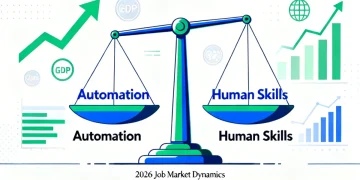
Automation and artificial intelligence are not fads; they are fundamental shifts that will continue to reshape job roles and industry structures. This means a persistent demand for workers who can collaborate with advanced technologies, manage complex data, and engage in creative problem-solving. The human element, far from being replaced, will be redefined and elevated in many contexts.
Anticipated Shifts in the Workforce
Several key shifts are expected to characterize the labor market in the longer term, building upon current trends and technological advancements.
- Increased Demand for STEM Skills: Continued growth in science, technology, engineering, and mathematics related occupations.
- Gig Economy Evolution: A more structured and integrated role for freelance and contract work within the broader economy.
- Focus on Green Jobs: Expansion of employment in renewable energy, sustainable practices, and environmental protection.
- Aging Workforce Adaptation: Policies and technologies designed to support an older working population, including flexible work arrangements and ergonomic solutions.
Demographic changes, including an aging population and evolving migration patterns, will also play a crucial role in shaping the labor supply and demand. These shifts will influence everything from the types of services in demand to the need for diverse and inclusive workplaces. Companies that proactively address these demographic realities will gain a competitive edge.
Furthermore, the globalized nature of the economy means that U.S. labor market trends will remain intertwined with international developments. Economic growth in other regions, global technological advancements, and international trade policies will all have an indirect, yet significant, impact on domestic employment. The ability to adapt to these external forces will be key to maintaining labor market stability.
In essence, the long-term outlook for the U.S. labor market is one of dynamic change, underpinned by the current strength reflected in the BLS short-term forecasts. The imperative for continuous skill development, strategic workforce planning, and adaptive policies will be central to ensuring a future of sustained low unemployment and robust economic health.
| Key Point | Brief Description |
|---|---|
| Low Unemployment Projection | BLS forecasts the US unemployment rate to remain below 4% through Q2 2026, indicating sustained labor market strength. |
| Driving Factors | Technological innovation, strong demand across sectors, and effective government policies contribute to job growth. |
| Economic Implications | Expectations of moderate wage growth and manageable inflationary pressures, closely monitored by policymakers. |
| Workforce Adaptation | Continuous education and skill development are crucial for individuals and businesses in an evolving job market. |
Frequently Asked Questions About the Labor Market Outlook
An unemployment rate below 4% typically signifies a robust and healthy economy approaching full employment. It indicates that most individuals who want to work can find jobs, leading to increased consumer spending, potential wage growth, and overall economic stability. This tight labor market can also empower workers with greater bargaining power.
The BLS utilizes a comprehensive methodology involving econometric models, analysis of industry-specific trends, demographic shifts, and assumptions about government policies. They gather data from various surveys and economic indicators to construct a detailed and informed forecast of future labor market conditions. This rigorous process aims for high accuracy.
While a low unemployment rate can create upward pressure on wages, potentially contributing to inflation, it doesn’t automatically lead to runaway prices. Factors like productivity gains, global supply chain dynamics, and central bank monetary policies play crucial roles. The BLS projection suggests that any inflation linked to the tight labor market is expected to remain manageable.
Key sectors anticipated to drive job growth include healthcare and social assistance, professional and business services (especially IT and consulting), and leisure and hospitality. Emerging fields in green energy and advanced technology are also expected to contribute significantly, reflecting ongoing shifts in consumer demand and technological innovation.
Job seekers should focus on continuous skill development, particularly in high-demand areas like STEM, digital literacy, and specialized trades. Networking, building a strong personal brand, and being adaptable to new technologies are also critical. This proactive approach will maximize opportunities in a competitive yet favorable job market.
Conclusion
The latest BLS data presenting the Labor Market Report: Unemployment Rate Projected to Remain Below 4% Through Q2 2026, According to Latest BLS Data, offers a robust and optimistic outlook for the U.S. economy. This sustained period of low unemployment underscores the resilience and adaptability of the American workforce and its underlying economic structure. While challenges such as skill gaps and global uncertainties persist, the proactive strategies in education, workforce development, and business adaptation are poised to maintain this positive trajectory. Both businesses and individuals stand to benefit from a dynamic labor market, provided they strategically navigate its evolving demands and opportunities, ensuring continued growth and stability.