Digital SAT 2026: The Ultimate Prep Guide for US High Schoolers

The 2026 Digital SAT introduces an adaptive, shorter format requiring new preparation strategies for US high schoolers to succeed in college admissions.
Preparing for the 2026 Digital SAT: A Comprehensive Guide for US High Schoolers (Practical Solutions, Recent Updates) is now more crucial than ever as the College Board transitions to a fully digital, adaptive format. This shift demands a fresh approach to study, testing strategies, and overall readiness for students aiming for higher education. Understanding these changes and implementing effective preparation techniques can significantly impact college admissions outcomes.
Understanding the Shift to the Digital SAT
The College Board’s move to a fully digital SAT by 2026 marks a significant evolution in standardized testing. This transformation is not merely about changing the delivery method but fundamentally altering the test’s structure, content, and scoring. High schoolers across the United States need to grasp these profound changes to adapt their study habits effectively and maximize their performance on this critical exam.
The digital format aims to offer a more equitable and secure testing experience, leveraging technology to provide an adaptive test that adjusts difficulty based on student performance. This adaptive nature means that every correct answer can lead to a more challenging question, while incorrect answers may lead to easier ones, ultimately tailoring the test to each student’s ability level more precisely.
Key Changes in Format and Content
- Adaptive Testing: The test is now module-adaptive, meaning performance on the first module determines the difficulty of the second.
- Shorter Duration: The Digital SAT is approximately two hours long, a considerable reduction from the previous paper-and-pencil version’s three hours.
- Integrated Reading and Writing: These sections are now combined into a single module, focusing on shorter passages with one question per passage.
- Calculator Permitted: Calculators are allowed for the entire Math section, and a built-in graphing calculator is provided.
These changes require a strategic shift in preparation. Students can no longer rely solely on past paper-based test strategies. Instead, they must familiarize themselves with the digital platform, practice with adaptive questions, and understand the nuances of the integrated sections. The digital format also brings benefits, such as instant access to a timer and annotation tools, which students should learn to leverage during their preparation.
Navigating the New Test Structure: Modules and Timing
The 2026 Digital SAT is structured into two main sections: Reading and Writing, and Math. Each section is further divided into two modules. This modular, adaptive design is at the heart of the new test, fundamentally altering how students will experience and approach the exam. Understanding this structure is paramount for effective preparation and performance.
The adaptive nature means that the second module’s difficulty in each section is determined by performance on the first module. This personalized approach ensures that the test questions are neither too easy nor too difficult, providing a more accurate measure of a student’s abilities. However, it also means that consistent performance across both modules is crucial for achieving a high score.
Reading and Writing Section Breakdown
The Reading and Writing section is now a unified module, presenting a diverse range of short passages, each followed by a single question. This format requires students to quickly comprehend, analyze, and respond to various text types, including literature, history, social studies, and science. The focus is on evaluating vocabulary in context, understanding rhetorical choices, and identifying main ideas and supporting evidence.
- Module 1: Features a mix of easy, medium, and hard questions. Performance here dictates module 2.
- Module 2: Will be either easier or harder than Module 1, based on your score, still covering a range of difficulty within that tier.
- Total Time: Approximately 64 minutes for both modules, with 27 questions per module.
Students should practice reading diverse texts and honing their ability to extract key information efficiently. The shorter passages mean less time spent on dense texts but a greater need for quick comprehension and critical analysis.
Math Section Breakdown
The Math section also follows the adaptive two-module structure. It covers a broad spectrum of mathematical concepts, including algebra, advanced math, problem-solving and data analysis, and geometry and trigonometry. The allowance of calculators throughout the entire section, coupled with the built-in graphing calculator, shifts the emphasis from complex calculations to conceptual understanding and strategic problem-solving.
The Digital SAT’s modular design for both Reading and Writing and Math sections requires students to maintain focus and adapt their strategies throughout the exam. Familiarity with the timing for each module and the types of questions presented will be key to success.
Essential Digital SAT Preparation Strategies
Effective preparation for the Digital SAT 2026 Preparation goes beyond traditional studying; it necessitates a tailored approach to the new digital and adaptive format. Students need to integrate technology, strategic practice, and mental readiness into their study plans to truly excel.
The adaptive nature of the test means that every question carries weight, and mistakes can impact the difficulty of subsequent questions. Therefore, a robust study plan that addresses both content knowledge and test-taking skills specific to the digital environment is essential.
Leveraging Official Resources and Practice Tests
The College Board provides official practice tests on their Bluebook app, which simulates the actual testing experience. Utilizing these resources is perhaps the most critical step in preparation.
- Bluebook App: Download and practice with the official tests to understand the interface and timing.
- Khan Academy: Offers free, personalized practice aligned with the Digital SAT, including adaptive exercises.
- Official Study Guides: Review the content and strategies outlined in College Board publications.
Beyond official resources, consider reputable third-party platforms that offer adaptive practice tests. These can provide additional exposure to varied question types and help students become comfortable with the adaptive logic.
Developing Digital Test-Taking Skills
The digital format introduces new skills that were not as critical for the paper-based SAT. These include efficient navigation of the testing interface, effective use of digital tools, and managing screen time.
- Annotation Tools: Practice using the built-in highlight and strike-through features to engage with passages.
- Built-in Calculator: Become proficient with the Desmos graphing calculator provided on the platform.
- Time Management: Learn to pace yourself effectively within the digital interface, utilizing the on-screen timer.
Regular practice on a device similar to what will be used on test day (e.g., a laptop or tablet) can help build stamina and reduce eye strain, which are common concerns with screen-based exams. Mastering these digital skills will ensure that technology enhances, rather than hinders, performance.
Mastering Reading and Writing for the Digital Exam
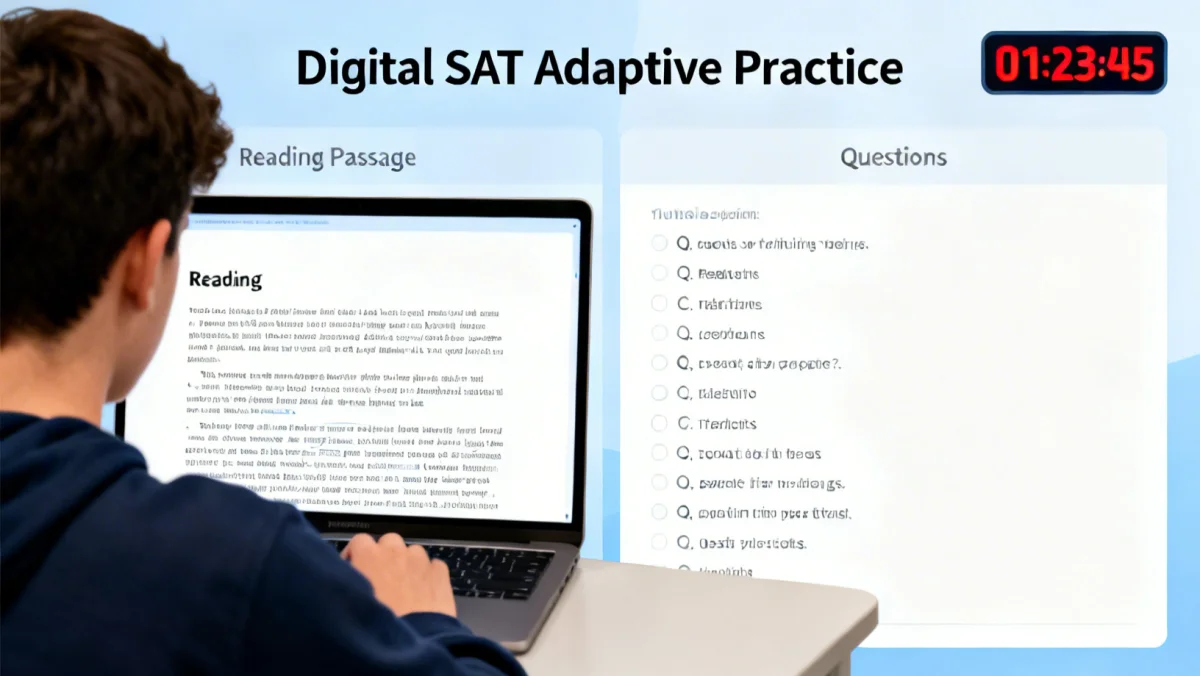
The integrated Reading and Writing section of the Digital SAT demands a refined approach to comprehension and expression. Unlike its predecessor, which featured longer passages with multiple questions, the new format presents shorter texts, each paired with a single question. This change emphasizes efficiency and precision, requiring students to quickly grasp the core idea and relevant details from a wider variety of passages.
Students must develop strong analytical reading skills to identify main arguments, understand rhetorical strategies, and interpret data presented in various formats within brief passages. Simultaneously, writing skills focus on sentence structure, grammar, punctuation, and the effective use of evidence to support claims, all within the context of concise prompts.
Reading Comprehension and Analysis
Success in the reading component hinges on the ability to rapidly process information and infer meaning. Since each passage is short and followed by only one question, thorough understanding without getting bogged down in minor details is crucial.
- Diverse Text Exposure: Read articles, essays, and short stories from various disciplines to build familiarity with different writing styles and topics.
- Active Reading: Practice highlighting and taking mental notes to identify the main idea and key evidence efficiently.
- Vocabulary in Context: Focus on understanding words based on their usage within the passage, rather than rote memorization.
Understanding the question types for reading—such as main idea, evidence support, inference, and purpose—will help students approach each passage with a clear objective.
Writing and Language Conventions
The writing portion assesses a student’s command of standard English conventions and their ability to make effective rhetorical choices. Questions will test grammar, punctuation, sentence structure, and the logical flow of ideas within a text.
- Grammar Rules Review: Reinforce understanding of common grammatical errors, including subject-verb agreement, pronoun usage, and parallelism.
- Punctuation Mastery: Practice using commas, apostrophes, semicolons, and colons correctly to ensure clarity and precision.
- Rhetorical Synthesis: Learn to identify how authors use language to achieve specific effects and how to improve text for clarity, conciseness, and impact.
Regular practice with editing and revising passages will strengthen these skills. Paying close attention to the nuances of language and how they contribute to the overall message is key to excelling in this section.
Conquering the Digital SAT Math Section
The Math section of the Digital SAT, while still covering familiar concepts, presents them in an environment where computational fluency with a calculator is assumed, allowing a greater focus on problem-solving and conceptual understanding. The entire section permits calculator use, with a built-in Desmos graphing calculator available, significantly changing the dynamics of how students approach mathematical problems.
The adaptive nature of the math modules means that students must demonstrate consistent proficiency across a range of topics to encounter and succeed on the more challenging questions. Therefore, a comprehensive review of mathematical principles, combined with strategic calculator usage, is vital.
Core Math Concepts to Master
The Digital SAT Math section broadly covers four main areas: Algebra, Advanced Math, Problem-Solving and Data Analysis, and Geometry and Trigonometry. A strong foundation in each of these areas is indispensable.
- Algebra: Focus on linear equations, inequalities, systems of equations, and functions.
- Advanced Math: Dive into quadratic equations, exponential functions, polynomials, and rational expressions.
- Problem-Solving and Data Analysis: Practice interpreting data from tables, graphs, and charts, and understanding statistical concepts like mean, median, mode, and standard deviation.
- Geometry and Trigonometry: Review area, volume, Pythagorean theorem, properties of triangles, and basic trigonometric ratios.
Beyond memorizing formulas, students should strive to understand the underlying principles and how to apply them in varied problem contexts. The Digital SAT often presents problems that require multi-step solutions or the interpretation of real-world scenarios.
Effective Calculator Usage and Problem-Solving Strategies
The allowance of calculators throughout the Math section is a double-edged sword. While it alleviates computational burden, it also means that questions might be designed to test conceptual understanding over raw calculation.
- Desmos Proficiency: Spend time familiarizing yourself with the Desmos graphing calculator’s functions, especially for graphing equations, finding intersections, and performing statistical analysis.
- Strategic Calculator Use: Learn when to use the calculator and when mental math or algebraic manipulation is more efficient. Over-reliance can sometimes slow you down.
- Estimate and Check: Develop a habit of estimating answers and checking the reasonableness of your solutions, especially for quantitative problems.
Practicing with a variety of problem types, including those that require interpreting graphs and tables or solving word problems, will enhance readiness. The goal is not just to get the right answer, but to do so efficiently and accurately, leveraging the tools available.
Beyond Academics: Mental Preparedness and Test Day Tips
While academic preparation is crucial for the Digital SAT 2026 Preparation, mental preparedness and strategic test-day execution are equally vital for maximizing performance. The digital format, with its adaptive nature and screen-based delivery, introduces unique challenges that demand specific mental and logistical considerations.
Students must cultivate a resilient mindset, manage test anxiety, and ensure they are physically ready for the demands of a two-hour digital exam. Neglecting these aspects can undermine even the most thorough academic preparation.
Managing Test Anxiety and Building Confidence
Test anxiety can significantly impair performance. Developing strategies to manage stress and build confidence is an integral part of preparation.
- Mindfulness and Relaxation: Practice deep breathing exercises, meditation, or light stretching to calm nerves before and during the test.
- Positive Visualization: Imagine yourself successfully navigating the test, answering questions confidently, and achieving your target score.
- Adequate Sleep: Ensure you get 7-9 hours of sleep in the nights leading up to the test to improve focus and cognitive function.
Confidence often stems from preparation. The more familiar you are with the test format and content, the less intimidating it will feel. Regular practice, especially under timed conditions, helps normalize the testing experience.
Logistical Considerations for Test Day
The digital format means specific logistical preparations are necessary to ensure a smooth test day experience.
- Device Readiness: Ensure your testing device (laptop or tablet) is fully charged and in good working order. Understand the College Board’s device requirements.
- Bluebook App Installed: Confirm the Bluebook app is correctly installed and updated well in advance of the test date.
- Familiarize with Test Center: If testing at a center, know the location and travel time to avoid last-minute stress.
Pack a small bag with essentials: water, a light snack, and your admission ticket/ID. Arrive early to allow time for check-in and to settle in. A calm and organized start can set a positive tone for the entire exam.
Future Outlook and Continuous Adaptation
The introduction of the Digital SAT in 2026 is not an endpoint but rather a significant step in the ongoing evolution of standardized testing. For US high schoolers, this means that preparation strategies must remain flexible and adaptive, much like the test itself. Staying informed about any further updates from the College Board and continuously refining study approaches will be key to long-term success.
The educational landscape is dynamic, and standardized tests reflect these changes. Therefore, students, educators, and parents alike should view the current transition as an opportunity to embrace new learning methods and technological advancements in assessment.
Staying Updated with College Board Announcements
The College Board is the primary source for all official information regarding the Digital SAT. Regularly checking their website for announcements, FAQs, and new practice materials is essential.
- Official Website: Make collegeboard.org a frequent stop for news and resources.
- Email Subscriptions: Sign up for College Board newsletters to receive direct updates.
- Counselor Guidance: Work closely with school counselors who often receive direct communications and training on test changes.
Any modifications to the test format, scoring, or administration policies will be communicated through these channels. Proactive information gathering ensures that your preparation remains aligned with the most current requirements.
Embracing Adaptability in Study Habits
The adaptive nature of the Digital SAT should encourage students to adopt a similar adaptability in their study habits. This means not just preparing for the current iteration of the test, but also developing a mindset that can adjust to future changes.
- Flexible Learning Tools: Utilize online platforms and apps that can easily update their content and features.
- Skill-Based Learning: Focus on mastering core academic skills (reading comprehension, mathematical reasoning) rather than just memorizing test-specific tricks.
- Feedback Utilization: Learn to effectively use feedback from practice tests to identify weaknesses and adjust study plans accordingly.
The ability to adapt, learn from experience, and adjust strategies will serve students well not only for the Digital SAT but also in their future academic and professional pursuits. The 2026 Digital SAT is more than just a test; it’s a gateway to higher education that rewards those who are prepared, informed, and resilient.
| Key Aspect | Brief Description |
|---|---|
| Adaptive Format | Test difficulty adjusts based on performance, requiring consistent effort across modules. |
| Shorter Duration | Approximately 2 hours, demanding efficient time management and focus. |
| Integrated Sections | Reading and Writing combined, with short passages and one question each. |
| Calculator Entire Math | Built-in Desmos calculator available for the whole Math section. |
Frequently Asked Questions About the Digital SAT
The most significant change is the adaptive format, where the difficulty of the second module in each section (Reading & Writing, Math) is determined by a student’s performance on the first module, personalizing the test experience.
The Digital SAT is considerably shorter, lasting approximately two hours, which is about an hour less than the previous paper-and-pencil version. This reduction aims to reduce test fatigue for students.
Yes, you can use an approved external calculator. However, the Digital SAT also provides a built-in Desmos graphing calculator directly on the testing platform, which is available for the entire Math section.
Official practice tests and resources are available through the College Board’s Bluebook app and their partnership with Khan Academy, offering free, personalized practice questions and full-length tests.
The College Board asserts that the Digital SAT scores will be accepted by all colleges that currently accept SAT scores. It’s always wise to check specific college admissions websites for their most current policies.
Conclusion
Preparing for the 2026 Digital SAT demands a proactive and informed approach from US high schoolers. The transition to a fully digital, adaptive format represents a significant shift, offering both challenges and opportunities. By understanding the new structure, leveraging official resources, mastering digital test-taking skills, and maintaining mental preparedness, students can confidently navigate this evolving landscape. Success on the Digital SAT will not only open doors to higher education but also equip students with essential adaptability skills for their future academic journeys. Staying updated with College Board announcements and continuously refining study habits will ensure students are well-positioned for optimal performance.
Autor